Cold, dark, snow-buried winters make every Canadian homeowner ask the same thing. Do solar panels work in winter, or do they just sit on the roof doing nothing until spring? The honest answer surprises most people. Panels not only keep working through a Canadian winter, the cold often helps them run better. This 2026 guide walks through the real science, the snow question, the month-by-month numbers, and the rebates worth knowing about today.
Quick Answer: Winter Solar in 60 Seconds
• Solar panels work in winter across Canada, and cold weather can lift their hourly output.
• Snow usually slides off angled panels within a day or two without any help from you.
• Your installer already builds winter losses into the annual production estimate.
• Summer carries the year. A typical Alberta system makes most of its power from May to July, then net metering credits cover the darker months.
• The smartest winter move is comparing local installers before you sign, not after.
Do Solar Panels Work in Cold Weather?
Yes, and the cold actually plays in your favour. People link the sun to heat, so they assume freezing air must hurt output. Panels do not run on heat though. They run on light. A solar cell is a semiconductor, and like most electronics it performs better when it stays cool. So a clear winter morning can squeeze more electricity out of every ray of sun than a baking July afternoon.
The Temperature Coefficient, Explained Simply
Every panel ships with a number called the temperature coefficient. For most silicon panels it sits near minus 0.3 to minus 0.4 percent per degree Celsius above 25C. In plain terms, the panel loses a little output for every degree hotter than 25C. It gains output for every degree colder. Here is how a 400 watt panel behaves in three places.
Condition | Approx. output |
50C summer rooftop (hot climate) | 360 to 370 watts |
25C mild spring day | About 400 watts |
Minus 5C clear winter morning | 410 to 415 watts |
The cold does not create more sunlight. It simply lets the panel turn each photon into power more efficiently. A five-year NAIT study in Edmonton backs this up, finding the angle of the panels matters far more than the snow itself.
Why Hot Climates Lose the Efficiency Race
A black panel on a hot roof can heat past 60C on a sunny afternoon. At that temperature, the same 400 watt panel might deliver only 340 watts. The hot region gets plenty of light, but the panels waste some of it as heat loss. Canadian winters flip that script. Fewer hours of sun, yes, but each hour converts cleanly. That trade-off matters when you study real production data, which the next section covers.
Do Solar Panels Work in Snow?
Snow is the concern that stops most homeowners cold. The real picture is far less dramatic than a roof buried under a metre of white. Panels do pause when snow fully blocks the glass. They rarely stay buried for long though, and the design works hard to keep them clear.
How Panel Angle and Glass Shed Snow Fast
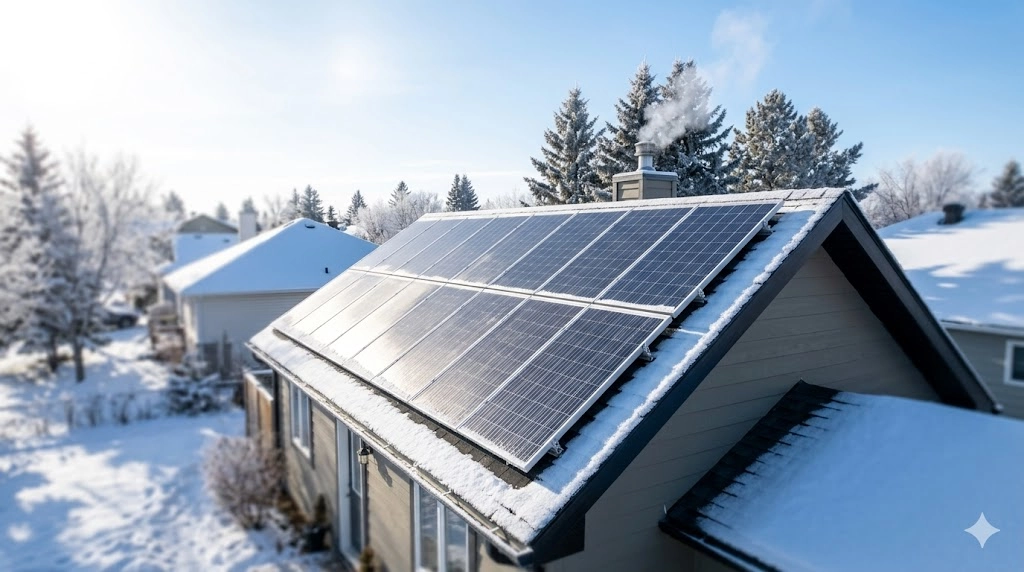
Installers mount panels on a tilt, usually between 20 and 45 degrees. That angle does two jobs. It aims the glass at the sun, and it lets snow slide off. The surface is smooth tempered glass, much slipperier than asphalt shingles. As the dark glass absorbs light it warms slightly, melts the bottom layer of snow, and the rest slides away as a sheet. Dry prairie snow often clears within hours. Heavy wet snow can take a day or two.
Does Snow Actually Boost Output?
Sometimes it does. Fresh snow reflects sunlight like a mirror, an effect known as albedo. Once your panels are clear, that bright ground bounces extra light onto them. The lift is modest, not magic, but it helps explain why winter solar holds up better than people expect. Anyone who has been skiing on a sunny day knows that glare firsthand.
When to Clear Snow Yourself, and When to Leave It
For most rooftop systems, leave it alone. Climbing an icy roof to save a few kilowatt hours is not worth the risk. A couple of exceptions are reasonable.
• Ground-mounted panels are easy and safe to brush from the ground with a soft brush.
• Low, easily reached roofs can be cleared gently from a stable position.
• Extreme storms that bury panels for weeks may justify a professional with proper gear.
Never use a metal scraper or a hard shovel. Scratched glass creates permanent micro-cracks, drops output, and can void your warranty. A soft brush or a foam-padded roof rake is the only safe tool.
How Much Do Shorter Winter Days Cut Production?
This is where the honest answer matters. Daylight, not cold, is the real limit in a Canadian winter. The sun sits low and sets early, so December and January produce far less than June. The swing is large, and you should expect it.
Daylight Hours by City, Summer Versus Winter
City | June daylight | December daylight |
Calgary | 16.5 hrs | 7.9 hrs |
Edmonton | 17.1 hrs | 7.4 hrs |
Vancouver | 16.2 hrs | 8.2 hrs |
Toronto | 15.4 hrs | 8.9 hrs |
Halifax | 15.5 hrs | 8.9 hrs |
Month-by-Month Production for a Typical Alberta System
Output is not spread evenly across the year. A typical 8 kW Alberta system lands its power roughly like this.
Months | Share of yearly output |
December and January | 3 to 5 percent combined |
February and March | 8 to 10 percent combined |
April | 10 to 12 percent |
May, June, July | 35 to 40 percent combined |
August and September | 20 to 25 percent combined |
October and November | 8 to 12 percent combined |
More than a third of your power arrives between May and July. Winter still contributes, but summer clearly carries the load. That seasonal balance is the whole reason solar works so well this far north.
Winter Is Already Built Into Your System Design
Homeowners often fear a winter surprise that wrecks the math. There is no surprise. A good installer already counts every snow day and short December afternoon before they hand you a number.
Production estimates come from modelling tools like NREL PVWatts or industry software such as PVsyst. These tools pull 30 plus years of local weather data, including snow days, cloud cover, and temperature by hour. When your proposal says 11,000 kWh per year, that figure already includes short winter days, snow coverage, and the cold-weather efficiency gain. The annual number is what drives your payback, and you can see how it shapes how much solar panels cost over time.
Where in Canada Does Solar Perform Best in Winter?
Winter solar is not one story. Sunshine totals, snow type, and temperature change the picture from coast to coast.
The Prairie Advantage: Cold, Dry, and Sunny
Alberta, Saskatchewan, and Manitoba enjoy the best winter solar conditions in the country. Calgary, Lethbridge, and Medicine Hat clear 2,400 to 2,500 hours of bright sunshine a year. The cold lifts efficiency, and dry powder snow slides off faster than wet coastal snow. If you live out west, exploring Alberta solar programs is a strong first step.
Coastal and Central Trade-Offs
Coastal British Columbia stays mild, so panels miss some of the cold boost. The upside is less snow on the glass. Atlantic Canada sits between prairie and coast conditions, with cold winters and more cloud. Ontario and Quebec see moderate winters, and solar performs reliably across both. Quebec's low power rates affect payback more than its weather affects production.
Does Winter Damage Solar Equipment?
Canadian gear is built for Canadian weather. The hardware handles deep cold and heavy snow as a matter of routine.
• Inverters and microinverters from major brands run down to minus 40C and lower.
• Batteries self-heat to protect performance. Solar battery storage keeps producing through cold snaps.
• Racking is engineered for local snow and wind loads as part of a stamped design.
• Tempered glass resists hail, and the tilt reduces direct, square-on impacts.
Hail worries many Albertans, yet a storm strong enough to crack a panel usually damages the roof and windows too. The glass is among the tougher surfaces on your home.
Simple Winter Maintenance Tips
Winter care is light work. A handful of habits keep your system running near its best.
1. Watch your monitoring app so you catch snow buildup or a fault quickly.
2. Clear ground-mount panels with a soft brush, never a hard or metal tool.
3. Skip hot water on frozen glass, since the thermal shock can crack it.
4. Leave rooftop snow to melt and slide unless it is safe and easy to reach.
Are Solar Panels Worth It Through a Canadian Winter?
Short days do not break the business case. The yearly total still delivers real savings, and a few programs sweeten the math in 2026.
Net Metering Carries Your Winter Bills
Net metering is the quiet hero of winter solar. Your summer surplus earns credits on the grid. Those credits then offset the power you pull during dark December weeks. In Alberta, the Micro-Generation Regulation sets out exactly how those credits work. You can compare net metering in your province before you commit.
2026 Rebates and Financing Worth Knowing
Program details shift, so current facts matter. The Canada Greener Homes Loan closed to new applicants on October 1, 2025, so it is no longer an option for fresh installs. Two strong paths remain in 2026.
• Alberta's Clean Energy Improvement Program lets you finance solar through your property tax bill with no big upfront cost.
• Provincial and utility rebates still help in several regions. A specialist can match you to live solar financing options for your address.
The Payback Picture
Add it together and a well-sized system pays for itself through monthly savings. The cold season trims output, the warm season more than makes up for it, and net metering smooths the gap. Over 25 years of panel life, a few slow winter weeks barely move the needle.
How to Choose a Cold-Climate Solar Installer
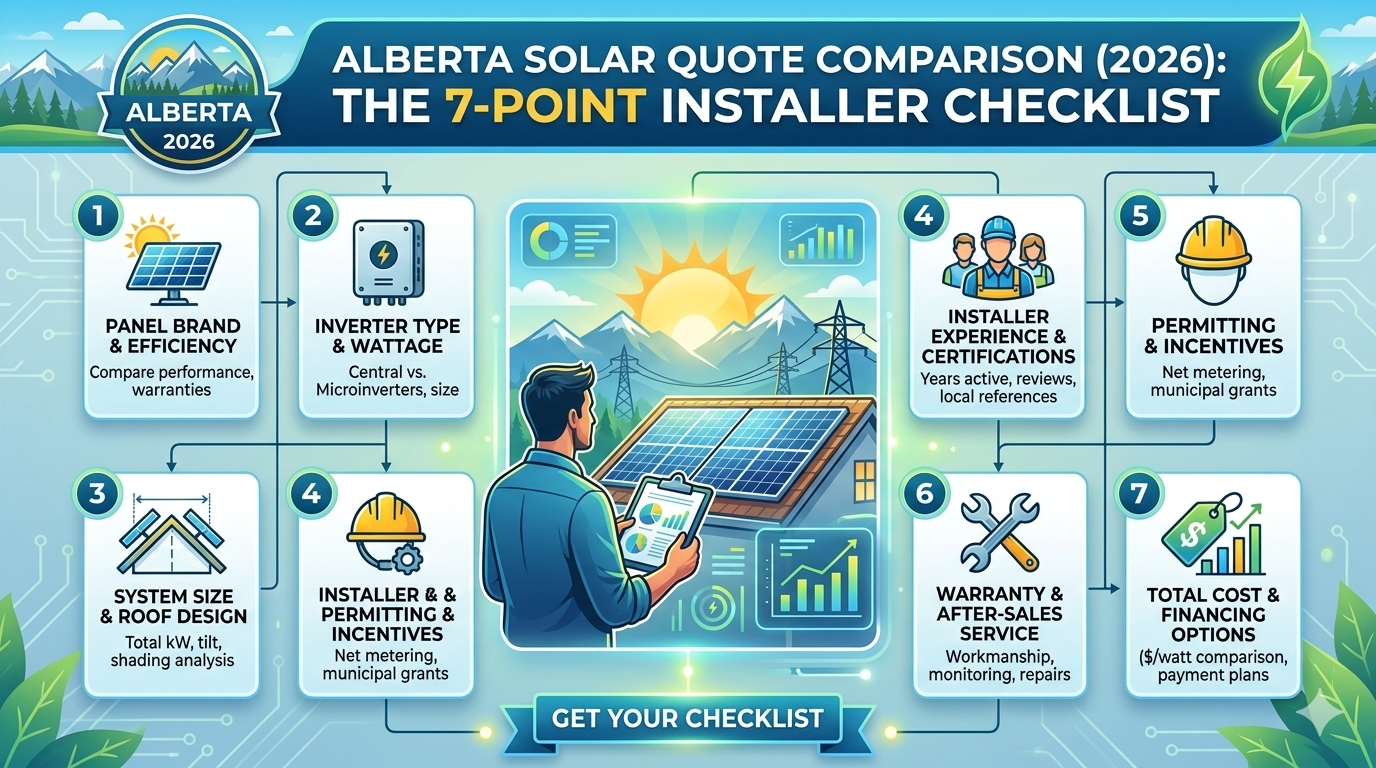
Here is the part most winter guides skip. The biggest factor in your results is not the weather. It is the company that designs and installs the system. A rushed quote from a single salesperson can cost you for decades.
Ask any installer these questions before you sign.
• Is the racking design stamped for our local snow and wind load?
• What tilt, shading, and soiling assumptions sit behind the production estimate?
• What does the warranty cover if a winter storm damages the system?
Notice that every company in your search is an installer selling its own package. That is exactly why a neutral comparison helps. Canada Solar Pro has helped thousands of homeowners since 2019 across more than 100 cities. The platform lets you compare trusted local installers, financing, and rebates in one place. You get free quote comparisons and unbiased guidance, not a single hard sell. For more standards, the Canadian Renewable Energy Association is a useful reference.
The Bottom Line on Winter Solar
So, do solar panels work in winter in Canada? They do, and often better per hour of sun than in summer heat. Snow clears fast, the cold helps, and net metering covers the short days. The real decision is not whether solar survives the cold. It is which installer designs your system right. Compare your options, check the rebates, and let the yearly numbers guide you. When you are ready,start with a free quote comparison and see what solar could do for your home through every season.