
Tired of opening your electricity bill every month only to see another increase? With electricity rates climbing 3–6% annually across most provinces and even sharper jumps in places like Ontario many Canadian homeowners are feeling the pinch on their monthly budget and wondering how much longer they can keep up.
If you're frustrated with unpredictable energy prices, hidden delivery charges, and the constant worry about the next rate hike, you're not alone. In 2026, thousands of Canadians are turning to solar panels as a smart way to take back control of their energy costs and protect themselves from future increases.
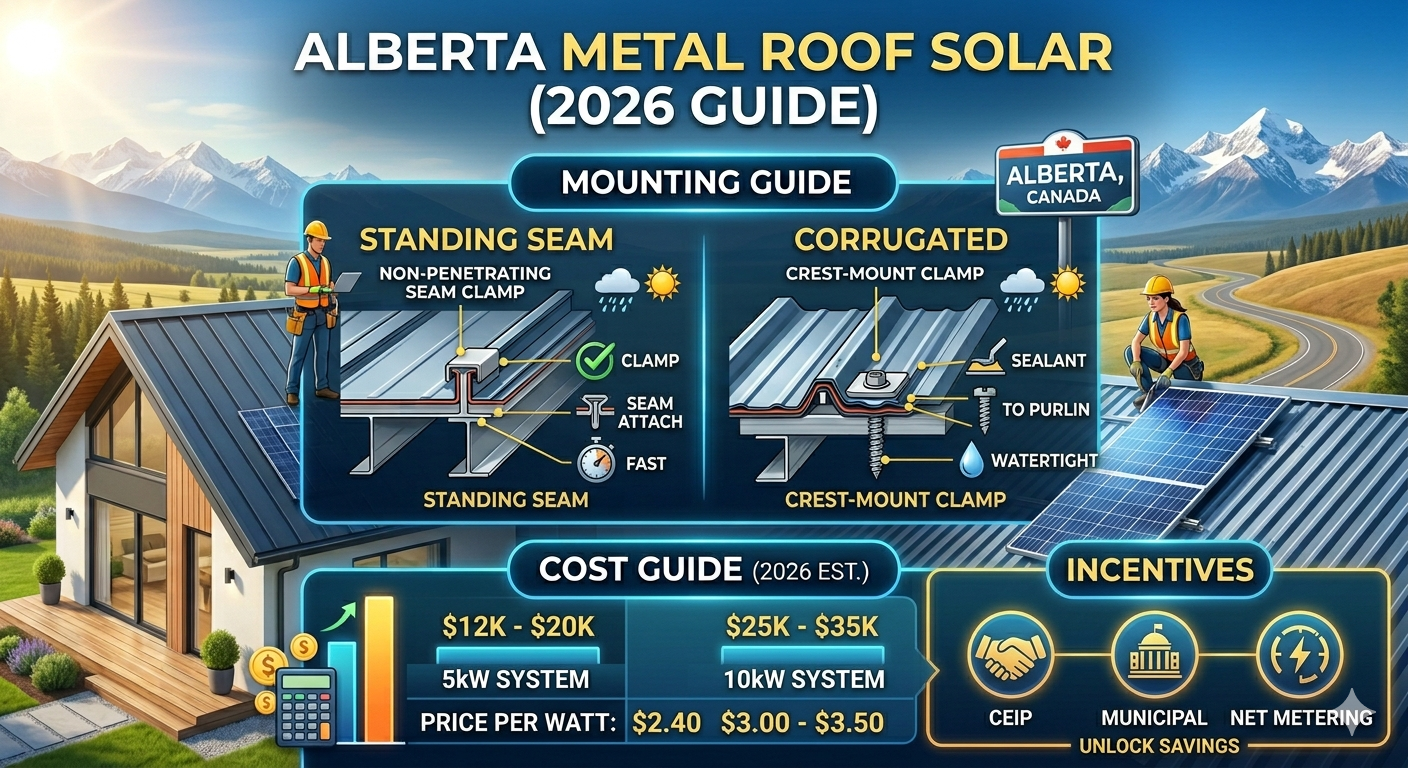
As of 2026, the average cost of residential solar panel installation in Canada ranges from $2.40 to $3.50 per watt. That puts a typical 5 kW system at roughly $12,000 – $17,500, and a popular 10 kW system between $24,000 and $35,000 before any incentives covering panels, inverter, mounting, labor, and full installation.
The best part? Thanks to provincial rebates and incentives, your net cost can drop significantly, often landing between $15,000 and $25,000 for a properly sized system. With payback periods now as short as 6 to 12 years in many provinces, solar is becoming a practical financial decision rather than just an environmental one.
How Do Solar Panel Costs Change in Canada?
Solar panel costs in Canada change every year. In 2026, you pay less than before because technology has improved and more installers compete in the market. Homeowners now enjoy lower prices and better returns on their investment.
Current Average Costs
Installers charge $2.40 to $3.50 per watt for a complete residential solar system. This price includes high-quality monocrystalline panels, inverters, mounting hardware, wiring, permits, and professional labor.
Here’s what that means for real homes:
A 5 kW system (good for small homes) costs $12,000 – $17,500 before incentives.
A 10 kW system (popular choice for average families) costs $24,000 – $35,000 before incentives.
These numbers cover everything you need to start producing your own electricity.
How Costs Have Changed Recently?
Prices dropped steadily over the past few years due to cheaper panels and more efficient manufacturing. However, in 2026 some upward pressure appears because of changes in global supply chains and raw material costs. Most homeowners still see net savings because provincial rebates grew stronger in several regions.
What Makes the Cost Go Up or Down?
Several clear factors change your final price. You control many of them:
System Size :Larger systems (10 kW+) often cost less per watt because installers apply economies of scale.
Panel Type : Monocrystalline panels (most popular) cost $2.40–$3.50/watt. Polycrystalline options run cheaper at $2.00–$2.80/watt but produce less power. Thin-film panels cost the least but work best in specific situations.
Your Roof : Simple south-facing roofs cost less to install. Steep, complex, or shaded roofs add extra labor and mounting expenses.
Your Province : Costs vary by location. Ontario often shows the lowest prices ($2.42–$3.05 per watt) because of strong competition. British Columbia and Alberta usually fall in the middle. Remote areas or provinces with fewer installers pay slightly more.
Battery Storage : Adding batteries increases the total cost by $10,000–$20,000+ but gives you power during outages and helps you save more on time-of-use rates.
Labor and Installer Choice : Experienced local installers may charge more but deliver better long-term performance and warranties.
How Incentives Change Your Real Cost?
Rebates and programs reduce your out-of-pocket expense dramatically. You can lower the price by $5,000 to $10,000 or more depending on where you live.
Ontario: Home Renovation Savings Program offers up to $10,000 for solar + battery.
British Columbia: BC Hydro provides up to $5,000 for panels and another $5,000 for batteries (total $10,000).
Manitoba: Efficiency Manitoba pays $0.50 per watt, up to $5,000.
Alberta: No big provincial rebate, but some cities offer local incentives and strong net metering benefits.
After these incentives, many families pay a net cost of $15,000 – $25,000 for a solid system.
What Influences the Cost of Solar Panels in Calgary and Edmonton, Alberta?
Solar panel costs in Calgary and Edmonton depend on several key factors. You can control many of these to keep your total investment lower. In 2026, Alberta offers some of the most competitive prices in Canada, thanks to strong installer competition and no provincial sales tax (you pay only 5% GST).
Current Average Costs in Calgary & Edmonton
Installers charge $2.50 to $3.20 per watt for a complete residential solar system.
This price includes high-quality monocrystalline panels, inverters, mounting, wiring, permits, and professional labor.
Here’s what that means for typical homes:
A 6–8 kW system (common for average families) costs $15,000 – $25,600 before incentives.
A 10 kW system usually costs $25,000 – $32,000 before incentives.
Calgary often sees slightly higher production (about 1,350 kWh per kW annually) than Edmonton (about 1,280 kWh per kW) because of more sunshine hours.
Main Factors That Influence Your Cost
System Size: Larger systems cost less per watt. A 10 kW system often drops to the lower end of $2.50–$2.80 per watt due to economies of scale.
Panel Type and Quality: Monocrystalline panels (best choice for most homes) cost $2.50–$3.20 per watt. They deliver high efficiency in Alberta’s cold, sunny climate. Premium panels with better snow-shedding or longer warranties increase the price slightly.
Roof Type and Complexity: Simple south-facing roofs with good tilt cost the least. Steep roofs, multiple stories, or heavy snow guards add $1,000–$3,000 in labor and mounting costs. Shading from trees or chimneys also raises the price because you may need microinverters.
Your Exact Location (Calgary vs Edmonton): Both cities have similar pricing, but Calgary benefits from slightly better sunlight and faster permitting in some areas. Edmonton has strong local installer competition. Remote suburbs in either city may pay 5–10% more for travel and crane access.
Inverter Choice Basic string inverters keep costs lower. Microinverters or power optimizers add $0.20–$0.50 per watt but perform better if part of your roof gets shade or snow.
Adding Battery Storage:Batteries increase the total cost by $10,000 – $18,000. They give you backup power during outages and help maximize savings with time-of-use rates.
Labor, Permits, and Installer Experience: Certified local installers charge more but deliver better results and full warranties. Permit fees and electrical upgrades vary slightly between Calgary and Edmonton.
Why Install Residential Solar Panels in Calgary and Edmonton?
Homeowners in Calgary and Edmonton install residential solar panels for powerful financial, practical, and personal reasons. Alberta’s abundant sunshine over 2,300 hours per year makes solar one of the smartest energy decisions you can make in 2026. You produce your own clean power, cut monthly bills, and gain long-term control over your household expenses.
Here are the main reasons why thousands of families in Calgary and Edmonton choose solar:
1. Significant Savings on Electricity Bills
You reduce or even eliminate your monthly electricity charges.
A well-sized 8–10 kW system offsets 70–100% of a typical home’s usage.
With current rates around 12¢/kWh (and delivery charges on top), you save $800 – $1,600+ per year through self-consumption and export credits.
Many homeowners in Calgary see payback in 5–8 years. Edmonton homeowners usually reach payback in 6–10 years.
After payback, you enjoy nearly free electricity for the remaining 15–25 years of the system’s life.
2. Protection Against Rising Energy Costs
Electricity rates in Alberta fluctuate with the market. You lock in your energy cost today instead of facing future increases.
Solar gives you predictable monthly expenses. With net billing (micro-generation), you earn credits for excess power, often up to 30–35¢/kWh in summer through programs like the Solar Club. These credits offset winter bills when production drops.
3. Excellent Solar Resource in Alberta
Calgary and Edmonton rank among Canada’s sunniest cities.
Cold temperatures actually improve panel efficiency. Snow reflection (albedo effect) can boost winter production on clear days.
Your system works reliably year-round and performs especially well during long summer days with up to 18 hours of daylight.
4. Energy Independence and Reliability
You generate your own power on-site. This reduces dependence on the grid and protects you during price spikes or outages.
Adding battery storage (optional) gives you backup power during extreme weather — a real advantage in Alberta’s harsh winters and hot summers.
5. Increase Your Home’s Value
Solar panels make your property more attractive to buyers.
They signal energy efficiency and lower future operating costs. Many studies show solar-equipped homes sell faster and at a premium.
6. Environmental Benefits
You cut your household’s carbon footprint by roughly 1.5–2 tonnes of CO₂ per year — similar to planting over 1,000 trees.
In Alberta, where much electricity still comes from natural gas and coal, rooftop solar displaces fossil fuels more effectively than in many other provinces.
7. Low Maintenance and Long-Term Peace of Mind
Modern solar panels require almost no upkeep. You simply keep them clean of snow and dust.
Most systems come with 25-year performance warranties and 10–15 year inverter warranties. Once installed, they operate quietly and reliably for decades.
How To Reduce the Cost of Solar Panels in Calgary and Edmonton?
You can lower the cost of solar panels in Calgary and Edmonton through smart planning and local tools. In 2026, a typical 8–10 kW system costs $20,000 – $32,000 before savings. Many homeowners cut their effective cost by 30–50% and reach payback in 6–10 years.
Follow this step-by-step checklist to reduce your costs and maximize savings:
Step-by-Step Checklist to Reduce Solar Costs
Calculate Your Ideal System Size: Review your last 12 electricity bills. Size the system to offset 80–100% of your annual usage. Avoid oversizing, it wastes money.
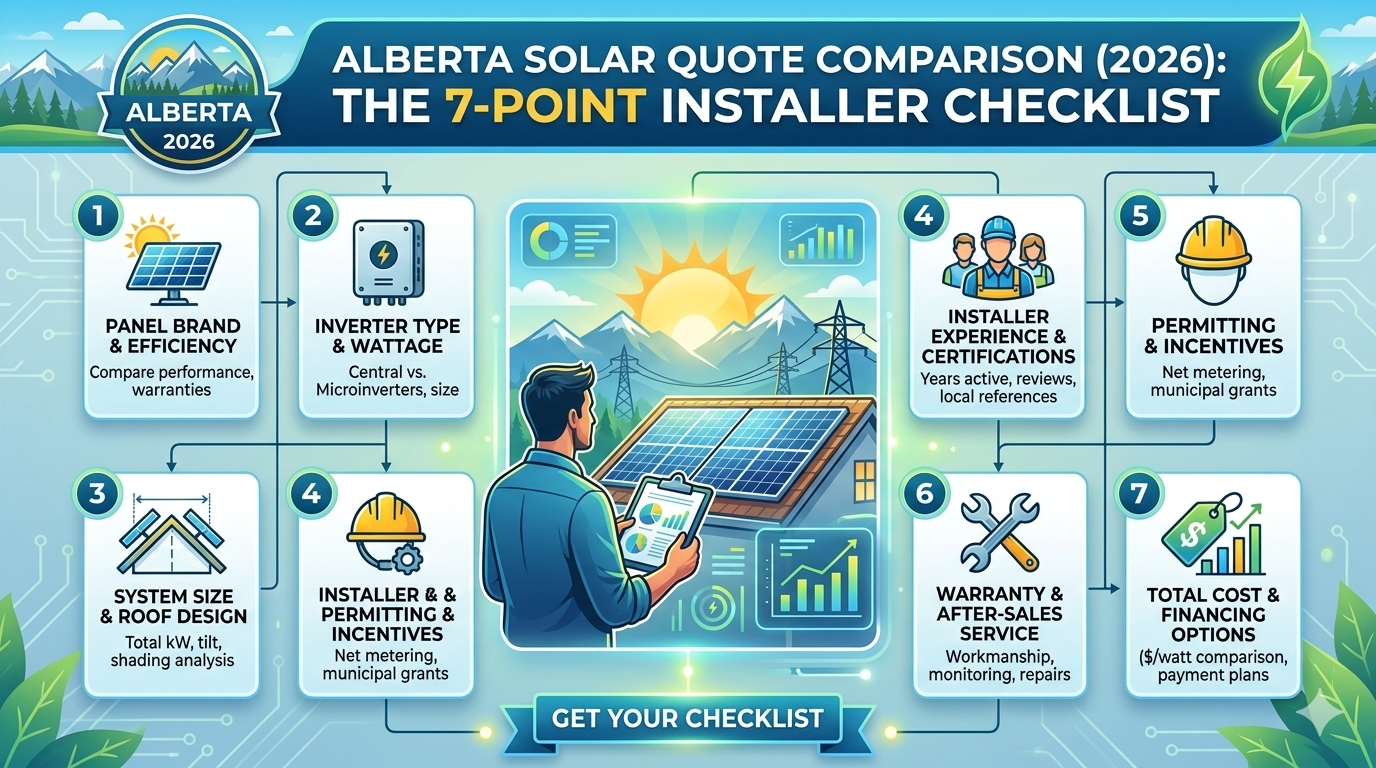
Get Competitive Quotes: Contact 3–5 certified local installers. Compare the exact price per watt (aim for $2.50–$3.00/W). Ask for details on equipment, warranties, and net cost after incentives.
Choose Cost-Effective Equipment :Select high-quality monocrystalline panels that perform well in Alberta’s cold climate. Use a basic string inverter if your roof has minimal shade. Skip unnecessary features.
Simplify Your Roof Installation: Clear shading from trees or structures. Choose a south-facing roof with a good tilt. A simple roof saves $1,000–$3,000 in labor and mounting.
Apply for CEIP Financing: Use the Clean Energy Improvement Program in Calgary or Edmonton. Finance up to $50,000 with $0 down. Repay through your property tax bill over 15–25 years at low fixed rates (around 5.7–6% in 2026). Apply early spots quickly.
Join a High-Export Rate Plan: Enroll in your utility’s micro-generation program (ENMAX in Calgary or EPCOR/ATCO in Edmonton). Join the Alberta Solar Club to earn up to 30–35¢/kWh on summer exports and pay low rates (~8¢/kWh) in winter.
Time Your Project Wisely: Schedule installation in spring or fall when demand is lower. Bundle with other energy upgrades if your city offers extra CEIP benefits.
Skip Batteries Initially: Start without battery storage (adds $10,000–$18,000). Add batteries later if you need backup power.
Savings Comparison Table (2026 Estimates for Calgary & Edmonton)
System Size | Gross Cost (Before Savings) | Typical Annual Savings | Estimated Payback Period | 25-Year Net Savings (After Payback) |
6 kW | $15,000 – $18,000 | $800 – $1,100 | 8 – 12 years | $18,000 – $25,000 |
8 kW | $20,000 – $25,000 | $1,100 – $1,500 | 7 – 10 years | $25,000 – $35,000 |
10 kW | $25,000 – $32,000 | $1,400 – $2,000 | 6 – 9 years | $35,000 – $50,000+ |
Solar Payback Period in Calgary and Edmonton
Solar payback period is the time it takes for your savings to recover the cost of the system. In 2026, most homeowners in Calgary and Edmonton recover their investment in 6 to 10 years.
After payback, you get nearly free electricity for the next 15 to 20 years.
Average Payback Time (2026)
Calgary: 6 to 9 years
Edmonton: 7 to 10 years
Calgary usually pays back slightly faster because of more sunshine hours.
Payback Comparison Table
System Size | Gross Cost | Annual Savings | Payback with CEIP | Payback without CEIP |
6–7 kW | $16,000 – $22,000 | $900 – $1,300 | 6 – 9 years | 8 – 12 years |
8–9 kW | $20,000 – $27,000 | $1,200 – $1,700 | 6 – 9 years | 8 – 11 years |
10 kW | $25,000 – $32,000 | $1,500 – $2,100 | 6 – 10 years | 9 – 12 years |
Note: Savings assume good use of net metering and Solar Club export rates (up to 35¢/kWh in summer). Actual results depend on your electricity usage.
How CEIP Financing Helps
CEIP lets you finance up to $50,000 with $0 down. You repay through your property tax bill at low interest.
Many families pay less per month on CEIP than their old electricity bill. This makes payback feel faster from day one.
Key Factors That Affect Payback
Your monthly electricity bill
System size and roof direction
How much power you export to the grid
Future electricity rate increases
How to Go Solar in Calgary and Edmonton
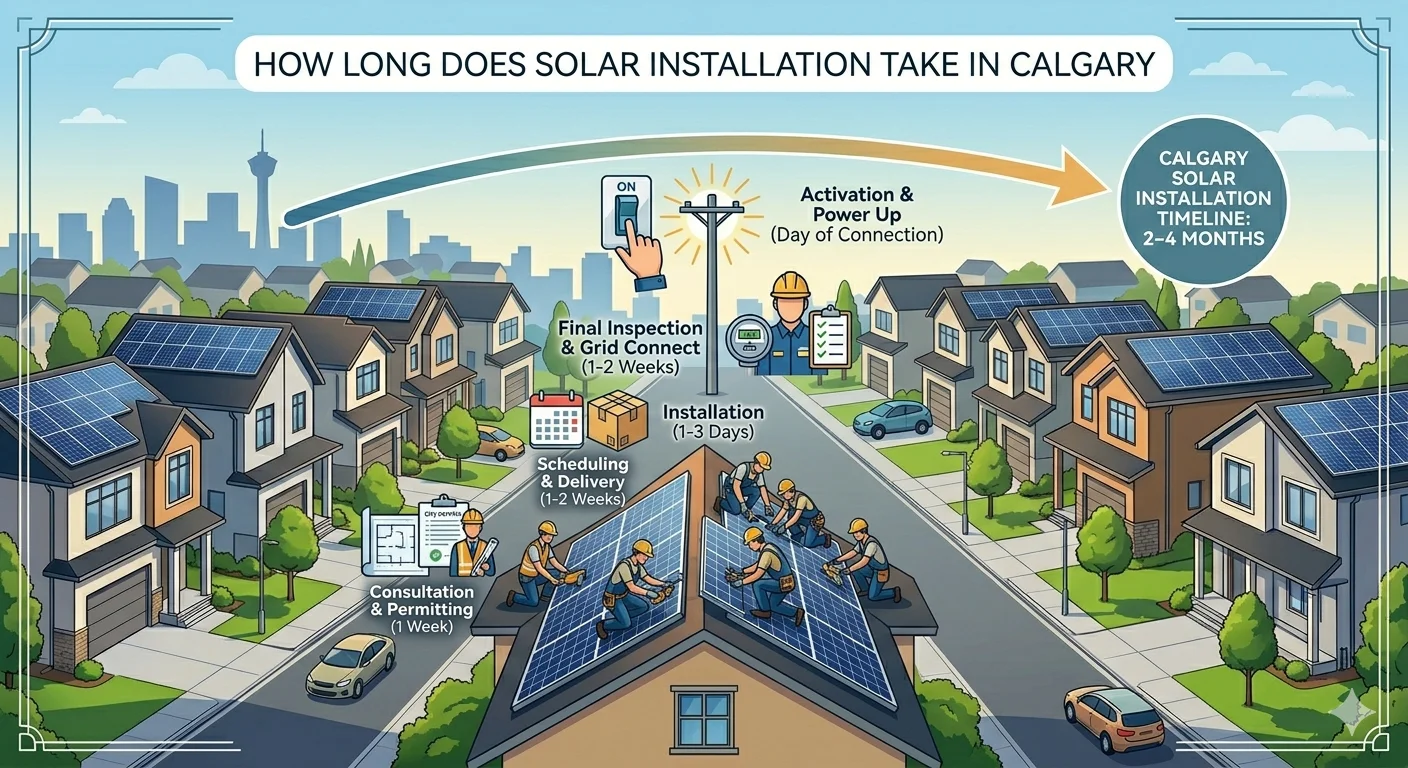
Going solar in Calgary or Edmonton is straightforward if you follow these steps. Most homeowners complete the process in 2 to 4 months.
Step 1: Check Your Eligibility
Review your last 12 months of electricity bills.
Make sure your roof gets good sun (south-facing is best).
Confirm your home is owned (not rented) and has no major shading issues.
Step 2: Calculate Your Ideal System Size
Use your annual electricity usage.
Aim for a system that covers 80–100% of your yearly consumption.
Local installers can calculate this for free.
Step 3: Get Multiple Quotes
Contact 3 to 5 certified solar installers in your city.
Ask for:
Price per watt
Equipment details
CEIP financing options
Expected annual savings
Compare quotes carefully.
Step 4: Apply for CEIP Financing
Apply for the Clean Energy Improvement Program in Calgary or Edmonton.
You can finance up to $50,000 with $0 down.
Approval usually takes 2 to 4 weeks.
The repayment goes on your property tax bill.
Step 5: Choose Your Installer and Sign Contract
Pick the installer with the best price, equipment, and warranty.
Review the contract for 25-year panel warranty and 10–15 year inverter warranty.
Step 6: Get Permits and Approvals
The installer handles building permits and utility approvals (ENMAX in Calgary, EPCOR/ATCO in Edmonton).
This step usually takes 3 to 6 weeks.
Step 7: Installation Day
Installation normally takes 1 to 3 days.
The team mounts panels, installs the inverter, and connects to your electrical system.
Step 8: Final Inspection and Activation
The city and utility inspect the system.
Once approved, your system goes live.
You start producing and saving on electricity immediately.
Best Solar Installers in Calgary and Edmonton 2026
Choosing the right solar installer is one of the most important decisions you will make. A good installer delivers high-quality workmanship, proper system design, strong warranties, smooth CEIP financing support, and reliable after-sales service. A poor choice can lead to higher costs, delays, or performance issues for years.
In 2026, Calgary and Edmonton have many experienced installers, but quality and pricing still vary significantly. Always compare at least three quotes from vetted companies
Canada Solar Pro to simplify solar in Alberta. We help Calgary and Edmonton homeowners compare vetted installers, unlock CEIP financing, and choose confidently.
Lower monthly bill by 70-90%
10,000+ homeowners helped
100% CEIP Financing available
100% Free to use
24-hour quote turnaround
5-star average rating
Canada Solar Pro is a free, unbiased platform founded in 2019. We connect you with vetted local installers without installing solar ourselves. We specialize in CEIP and Alberta’s solar regulations.
Conclusion:
Solar panel costs in Canada depend on a few key factors.
Location: Prices and production vary by province and city. Alberta often has some of the lowest costs.
Energy Needs: Your household electricity usage determines the best system size.
Incentives: CEIP financing and net metering can greatly reduce your final cost.
Prices will become more competitive due to better technology and strong installer competition. The upfront cost may look high, but long-term savings on electricity bills make it worthwhile for most homeowners.
Key factors that affect your price include system size, panel type, roof design, and how you use available incentives.
For a typical 1,500 sq ft home, a 7 kW system costs between $18,000 and $24,000 before incentives (roughly $2.60 – $3.40 per watt installed).
To get the best price and fastest payback, compare multiple quotes and maximize CEIP financing in Calgary or Edmonton.