As energy costs continue to rise and homeowners seek greater control over their electricity bills, solar power has become an increasingly attractive option in Alberta. In 2026, one of the most powerful tools enabling this shift is net metering more precisely known as Alberta’s Micro-Generation Regulation.
This framework allows residential homeowners, farmers, and small businesses to install grid-connected solar or other renewable systems, generate their own electricity, and receive credits for any excess power sent back to the grid. The grid effectively acts as a free virtual battery, helping you bank summer surpluses to offset winter deficits.
What Net Metering Means in Alberta
Under Alberta’s Micro-Generation Regulation (in effect since 2008 and still the governing framework in 2026), qualifying systems up to 5 MW with most residential and small commercial setups falling under the small-scale category (<150 kW) can offset their own consumption and earn bill credits for exports.
For small-scale micro-generators (the vast majority of homeowners), excess electricity is credited at a retail rate negotiated with your chosen electricity retailer. This is different from many US programs that have shifted toward lower wholesale or avoided-cost compensation. Alberta’s retail-rate approach, combined with strong sunshine hours (often exceeding 2,300 annually in many regions), delivers excellent economics for properly sized systems.
Key 2026 Context:
Recent updates to AUC Rule 024 (effective April 1, 2026) refined safety, eligibility evidence, and interconnection processes without fundamentally changing the credit mechanism or core benefits. Micro-generation capacity continues to grow rapidly reaching 335 MW by August 2025, with solar making up over 96% of it.
This guide explains exactly how net metering works in Alberta in 2026, from eligibility and the approval process to credit mechanics, retailer choices, system sizing strategies, savings potential, and practical tips to maximize your return on investment.
Whether you’re just exploring solar or ready to move forward, you’ll gain a clear understanding of how to turn your rooftop into a reliable energy asset reducing bills, increasing independence, and contributing to a cleaner grid.
What Is Net Metering in Alberta?
Alberta does not use traditional “net metering” in the same way as many other provinces or U.S. states. Instead, it operates under a net billing system governed by the provincial Micro-Generation Regulation.
This regulation allows homeowners, farms, and small businesses to generate electricity from renewable sources primarily solar and receive compensation for the excess power they send to the grid.
Core Mechanics of Alberta’s Micro-Generation
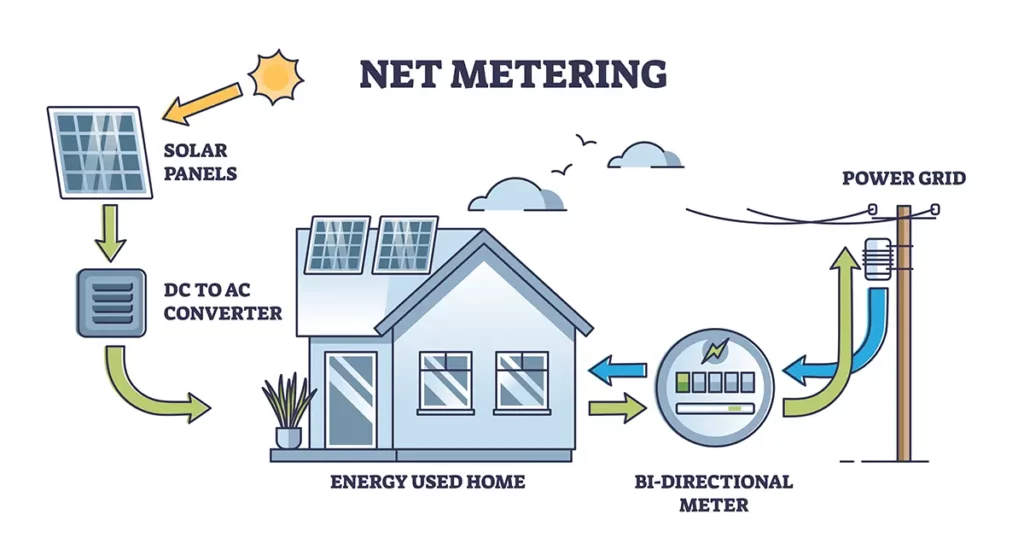
Self-consumption comes first: Electricity produced by your solar panels powers your home or business directly.
Excess export: Any surplus electricity flows through a bidirectional meter into the distribution grid.
Credits on your bill: Your electricity retailer applies credits for the exported energy, which offset your future consumption charges.
For small-scale micro-generators (systems under 150 kW the category that covers nearly all residential and small commercial installations), these credits are typically provided at a retail rate negotiated with your chosen electricity retailer. This is one of the strongest features of Alberta’s program compared to jurisdictions that pay only wholesale or avoided-cost rates.
Small vs. Large Micro-Generators
Category | Size Limit | Credit Rate | Best For |
Small-scale | < 150 kW | Retail rate (negotiated with retailer) | Homes, farms, small businesses |
Large-scale | 150 kW – 5 MW | Hourly wholesale market price | Larger commercial projects |
How Alberta’s System Differs from Traditional Net Metering
In classic net metering (common in parts of Ontario, BC, or many U.S. states), your meter literally runs backwards, and you are effectively paid the full retail rate for every exported kWh on a 1:1 basis.
In Alberta’s net billing model:
You are only credited for net exports (production minus on-site consumption) in each billing period.
Credits roll over month-to-month, usually for up to 12 months.
At the end of the annual period, any unused credits are paid out in cash by your retailer.
This structure makes proper system sizing and retailer selection especially important in Alberta’s deregulated electricity market.
Contextual Note for 2026: AUC Rule 024 (updated and effective April 1, 2026) streamlined safety standards, interconnection requirements, and documentation but preserved the core retail-credit mechanism for small micro-generators.
Why This Matters for Albertans
Alberta’s high solar resource (often 2,300+ sunshine hours per year in southern and central regions) combined with retail-rate credits creates strong potential for bill reduction. However, fixed delivery charges, transmission fees, and retailer-specific rate structures still apply meaning not every kWh on your bill can be fully offset.
How Net Metering Works Step-by-Step in Alberta (2026)
Alberta’s Micro-Generation Regulation uses a net billing system. Your solar system generates electricity that first serves your home or business. Any excess is exported to the grid and credited at a retail rate (for small-scale systems). A bidirectional meter tracks the flow in both directions, and your retailer applies the credits to your bill.
Here’s exactly how the process works in 2026:
Step-by-Step Energy Flow and Billing Process
Solar Generation Your solar panels convert sunlight into DC electricity, which your inverter converts into AC power synchronized with the grid.
Self-Consumption (Priority Use) The electricity produced powers your home or business first lights, appliances, HVAC, EV chargers, etc. This is the most valuable part because it avoids buying power at your full retail rate.
Excess Export When your system produces more than you use (common on sunny afternoons), the surplus flows backward through your electrical panel and onto the distribution grid.
Bidirectional Meter Tracking Your wires owner (e.g., FortisAlberta, ATCO Electric, ENMAX) installs or upgrades to a bidirectional meter at no extra cost. It separately measures:
Electricity imported from the grid
Electricity exported to the grid
Monthly Billing and Credits Your electricity retailer receives the meter data and calculates your bill.
You pay only for net consumption (imports minus exports).
Excess exports generate Micro-generation credits at the retail rate negotiated with your retailer (often 12–35¢/kWh depending on the plan). These credits directly reduce your energy charges.
Credit Rollover Unused credits roll forward month-to-month, typically for up to 12 months. This is especially useful in Alberta’s climate. Summer surpluses help offset higher winter consumption when solar production drops.
Annual Settlement At the end of your 12-month billing cycle, any remaining unused credits are paid out in cash by your retailer.
What Your Bill Looks Like (Key Components)
Energy Charges: Reduced or eliminated by self-consumption and export credits.
Delivery, Transmission & Distribution Fees: These fixed or volume-based charges are not fully offset by micro-generation credits.
Micro-generation Credit: Shown as a line item that lowers your subtotal.
GST: Applied on the final amount.
Important Note: Even with a large solar system, you will usually still see some charges on your bill due to the fixed delivery and service fees.
2026 Updates Affecting the Process
Amendments to AUC Rule 024 (effective April 1, 2026) improved safety documentation, eligibility evidence, and interconnection procedures but did not change the core credit mechanism or billing process for existing or new small-scale micro-generators
Who Qualifies as a Micro-Generator?
You can become a micro-generator if your system meets all of the following:
Uses renewable or alternative energy sources (solar PV is by far the most common).
Is intended to meet all or a portion of your own electricity consumption at the site (not primarily for selling power).
Has a total nameplate capacity that does not exceed 5 MW.
Supplies energy only to a site you own or lease (or adjacent properties you control).
Is grid-connected (off-grid systems do not qualify).
Small-scale micro-generators (< 150 kW) which includes almost all residential and small business systems receive the most favorable retail-rate credits. Larger systems (150 kW–5 MW) receive hourly wholesale market prices.
System sizing rule of thumb: Most wires owners expect your system to be sized based on your historical 12-month consumption (or projected load for new builds). Oversizing significantly beyond your needs may raise eligibility questions.
Key Requirements in 2026
Compliance with AUC Rule 024 (amended February 2026) includes clearer evidence of eligibility, safety standards, and documentation.
Certified electrical contractor and compliance with the Canadian Electrical Code.
Required municipal permits (building/electrical) where applicable.
Interconnection agreement with your wires owner (e.g., FortisAlberta, ATCO, EPCOR, ENMAX).
A bidirectional meter (installed at no extra cost by the wires owner).
Active contract with an electricity retailer.
Step-by-Step Approval Process (2026)
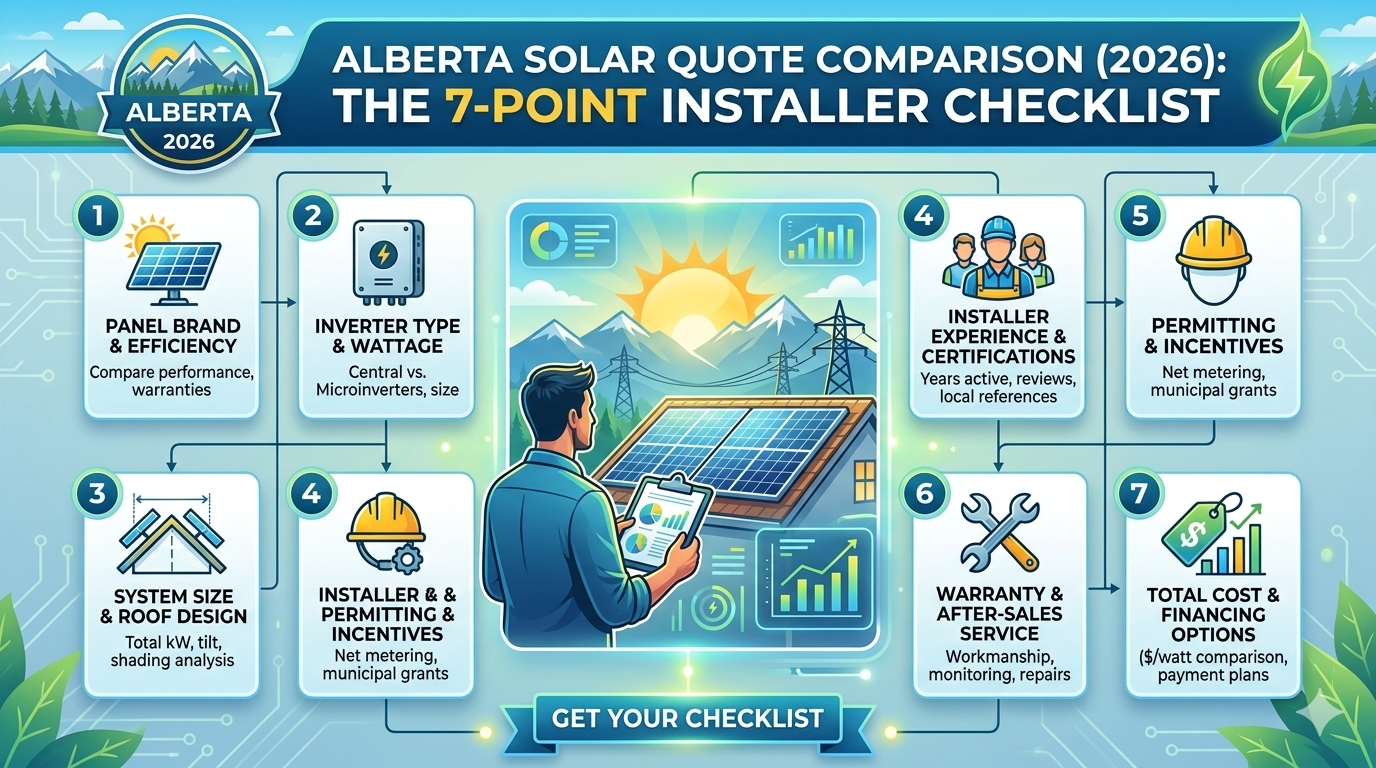
Research and Planning Review your last 12 months of electricity bills. Consult a reputable solar installer for system design and sizing.
Choose and Notify Your Wires Owner Identify your distribution company (wires owner) from your electricity bill. Contact them early to discuss your project.
Prepare Documentation Work with your installer and electrician to complete Form A – Micro-generation Notice. Required documents typically include:
Site plan and single-line electrical diagram
Equipment specifications (inverter, panels)
Proof of compliance with Rule 024 and safety standards
Electrical permit documentation
Submit Application Submit the completed Micro-generation Notice to your wires owner (many now use online portals like PowerClerk for FortisAlberta). The wires owner reviews for technical compliance and hosting capacity.
Review and Meter Installation If approved, the wires owner notifies you and installs the bidirectional meter. Any disputes can be escalated to the AUC using Form B.
Install the System Once approved, proceed with physical installation. Schedule required inspections.
Final Commissioning and Activation After passing inspection, the wires owner activates the interconnection. Your retailer begins applying micro-generation credits.
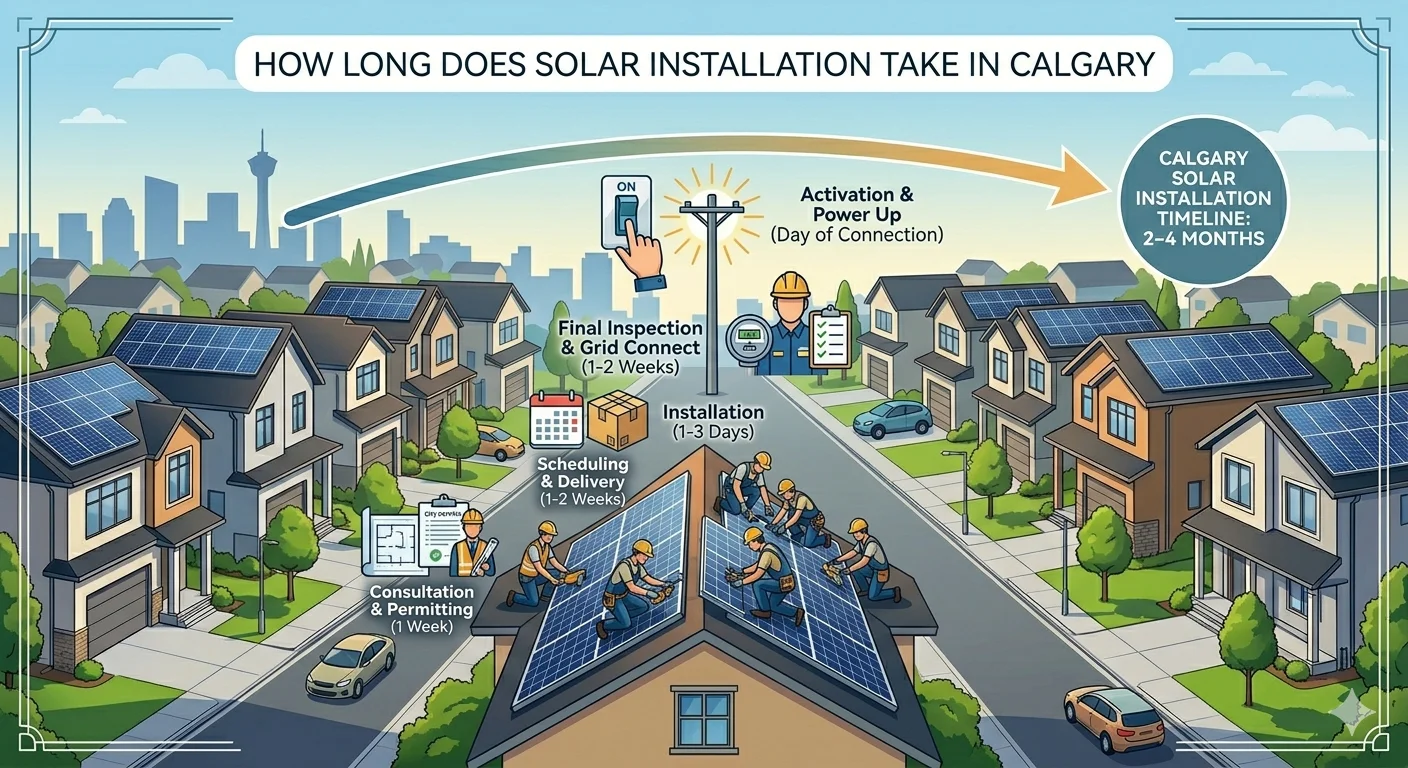
Typical Timeline: From application to activation, expect 4–12 weeks depending on your wires owner and project complexity. Rule 024 updates in 2026 aimed to improve process efficiency through clearer eligibility evidence.
Pro Tip: Experienced installers handle most of the paperwork and coordination with the wires owner, saving you time and reducing errors.
How Credit Rates Work for Small-Scale Micro-Generators
You negotiate the credit rate directly with your retailer.
Credits are applied at the retail rate (not wholesale), making Alberta’s program economically attractive.
Most solar-friendly retailers use a seasonal HI/LO rate structure popularized by the Solar Club program:
HI Rate (High Export): ~35.00 ¢/kWh used during sunny months when you export more than you import.
LO Rate (Low Import): ~8.40 ¢/kWh used in winter months when you import more power.
You can usually switch between HI and LO rates with short notice (often 10 business days, no penalty), allowing you to optimize for seasonal production patterns.
Popular Solar-Friendly Retailers & Rates (2026 Examples)
Retailer / Program | HI (Export) Rate | LO (Import) Rate | Notes |
Park Power (Solar Club) | 35.00 ¢/kWh | 8.40 ¢/kWh | Charity donations, strong solar support |
Solartility | 35.00 ¢/kWh | 5.99 ¢/kWh | One of the lowest LO rates |
Other Solar Club partners (Legacy, Burst, etc.) | ~33–35 ¢/kWh | 7–9 ¢/kWh | Varies; check current offers |
Tip: Always confirm the latest rates directly, as they can be updated quarterly. Some retailers also offer Pre-Solar rates (~7.25 ¢/kWh) while your system is being installed.
Realistic Savings Examples
A typical 8–10 kW residential system in Alberta (producing 10,000–13,000 kWh/year) can deliver strong results when properly sized and paired with the right retailer:
Self-consumption savings: Avoid paying your full retail rate on power you use directly from your panels.
Export credits: Summer surpluses at 35 ¢/kWh build a bank of credits that offsets winter bills.
Annual energy bill reduction: Many households see 60–90% lower energy charges (the variable portion of the bill).
Example Outcome (based on average Alberta household ~750–900 kWh/month consumption):
With a well-sized system + HI/LO switching, homeowners often achieve $1,100–$1,500+ in annual electricity savings (including credits), after accounting for fixed delivery, transmission, and distribution charges that solar cannot fully eliminate.
Key Advantage Over Standard Plans: On a flat ~12 ¢/kWh regulated or fixed rate without solar optimization, the same system might only deliver $700–$900 in annual value. The seasonal HI rate can nearly double the value of your exports.
Important Bill Reality Check
Even with excellent credits:
You will still pay fixed delivery, transmission, and admin charges.
GST applies to the final balance.
In high-export months, your bill can drop to nearly zero or result in a credit balance that rolls over
Recommended System Sizing Guidelines 2026
Under the Micro-Generation Regulation, your system should be sized to meet all or a portion of your annual electricity needs. Most installers and wires owners recommend:
80–110% of your historical 12-month consumption as the sweet spot.
Slight oversizing (up to ~110%) is often ideal with HI/LO retail plans because summer exports at high rates (e.g., 35 ¢/kWh) build credits that offset winter imports.
Example Sizing:
Average Alberta household uses 8,000–10,000 kWh/year → Typical system: 7–10 kW.
Larger homes or those with EVs/heat pumps (12,000+ kWh/year) → 10–15 kW systems.
Alberta’s Seasonal Solar Production Patterns
Alberta enjoys excellent solar resources (2,300+ sunshine hours annually), but production varies dramatically by season due to day length and weather:
Season | % of Annual Production | Typical Output (per kW installed) | Strategy |
Spring/Summer (Apr–Sep) | ~65–75% | High (peak months: 120–160 kWh/kW/month) | Switch to HI export rate |
Fall/Winter (Oct–Mar) | ~25–35% | Low (Dec/Jan: 40–70 kWh/kW/month) | Switch to LO import rate |
Key Insight: A well-sized system generates large surpluses from April to September that roll over as credits. These credits then offset higher winter consumption when solar production drops significantly.
Maximization Strategies for Best ROI
Choose the Right Retailer & Rate Switching Enroll in a Solar Club-style program and actively switch between HI (export) and LO (import) rates seasonally. Many retailers now offer automated or easy switching.
Time Your Energy Usage Shift high-consumption activities (laundry, EV charging, dishwashing, pre-heating/cooling) to daytime hours, especially in summer, to increase valuable self-consumption.
Plan for Future Loads Factor in upcoming additions like electric vehicles, heat pumps, hot tubs, or home additions. A slightly larger system today future-proofs your investment.
Optimize Panel Orientation & Tilt South-facing at 35–45° tilt works best for annual production in Alberta. East/west splits can help with morning/afternoon self-consumption.
Grid as Virtual Battery Alberta’s retail-rate credits make the grid an excellent (and free) storage solution. Most homeowners do not need batteries for strong economics unless they want full backup power during outages.
Monitor and Maintain Use monitoring apps to track production vs. consumption. Keep panels clear of snow and debris for peak performance.
Real-World Example (Edmonton-area home):
A 7.5–8 kW system on a home using ~8,000 kWh/year can produce 9,000–10,000+ kWh annually. With smart rate switching, this often results in very low (or credit) summer bills and significantly reduced winter bills.
Alberta vs. Other Canadian Provinces
Canada’s solar compensation policies vary significantly by province:
Province | Model | Export Credit Rate | Key Features | Sizing Limit |
Alberta | Net Billing (Retail) | Retail rate (negotiated, up to ~35¢/kWh HI) | Seasonal HI/LO switching, 12-month rollover + cash-out | Up to 5 MW (small-scale <150 kW best) |
Ontario | Net Billing | Varies by utility (often retail or tiered) | Strict sizing to historical use | Typically 10–500 kW |
British Columbia | Hybrid / Moving to Net Billing | Market price or proposed fixed low rate | Annual payout, less favorable | Varies |
Nova Scotia | Net Metering | Retail rate (1:1) | Strong but caps and waiting lists | Limited |
Saskatchewan / Manitoba | Limited / Net Billing | Often lower wholesale or fixed | Less mature programs | Varies |
Alberta Advantage: You can shop retailers for the best HI export rates and actively switch seasonally. This flexibility often delivers stronger economics than fixed provincial programs in other provinces, despite no major provincial rebates.
Alberta vs. United States Net Metering Programs
Many U.S. states historically offered 1:1 full retail net metering, but several have transitioned to lower export rates (e.g., California’s NEM 3.0 with reduced export compensation and high grid charges).
Strong U.S. States (2026): Massachusetts, New Jersey, New York, and Florida still offer full or near-full retail credits with good rollover policies.
Challenged States: California, Nevada, and others pay significantly lower export rates (sometimes near wholesale), making payback periods longer.
Alberta Positioning: Alberta’s retail-rate HI/LO structure often competes favorably with top U.S. programs, especially when paired with Alberta’s excellent solar resource and ability to bank credits across seasons. However, U.S. homeowners in strong states may benefit from additional federal + state incentives (e.g., ITC tax credit) that Alberta currently lacks at the provincial level.
Pros and Cons of Alberta’s Model for Homeowners
Pros:
Retail-rate credits (especially HI rates) maximize the value of summer exports.
Flexible retailer choice and rate switching.
Large system size limit (5 MW) and generous 12-month credit rollover + cash settlement.
Grid acts as free virtual storage batteries often not needed for good ROI.
Rapid growth in adoption (micro-generation capacity has expanded significantly).
Cons:
Fixed delivery, transmission, and distribution charges still apply and cannot be fully offset.
Savings depend heavily on choosing the right retailer poor choices reduce returns.
Seasonal production mismatch requires active management (rate switching and load shifting).
No large provincial rebates (unlike some other provinces or U.S. states).
Overall: Alberta’s program ranks among the stronger options in Canada for motivated homeowners who shop retailers and size systems correctly. It rewards optimization more than passive programs in other jurisdictions.
Benefits, ROI, and Potential Drawbacks of Micro-Generation in Alberta (
Alberta’s Micro-Generation program offers one of the more homeowner-friendly solar compensation structures in Canada. When properly designed and paired with the right retailer, it delivers strong financial and non-financial returns.
Key Benefits
Significant Bill Reduction: Many households reduce their variable energy charges by 60–90%. Overall electricity bills (including fixed charges) typically drop by 40–70%.
Protection Against Rate Increases: Credits at retail rates hedge you against future electricity price hikes.
Energy Independence & Resilience: Reduce reliance on the grid and gain peace of mind during price volatility.
Environmental Impact: Each kW of solar installed avoids roughly 0.7–0.8 tonnes of CO₂ emissions per year in Alberta’s coal-and-gas-heavy grid.
Increased Home Value: Solar systems with micro-generation agreements are generally viewed positively by buyers in Alberta’s real estate market.
Free Virtual Storage: The 12-month credit rollover effectively gives you seasonal storage at no extra cost.
Realistic ROI and Payback Examples (2026)
Typical Residential Scenario (Southern/Central Alberta):
System size: 8–10 kW
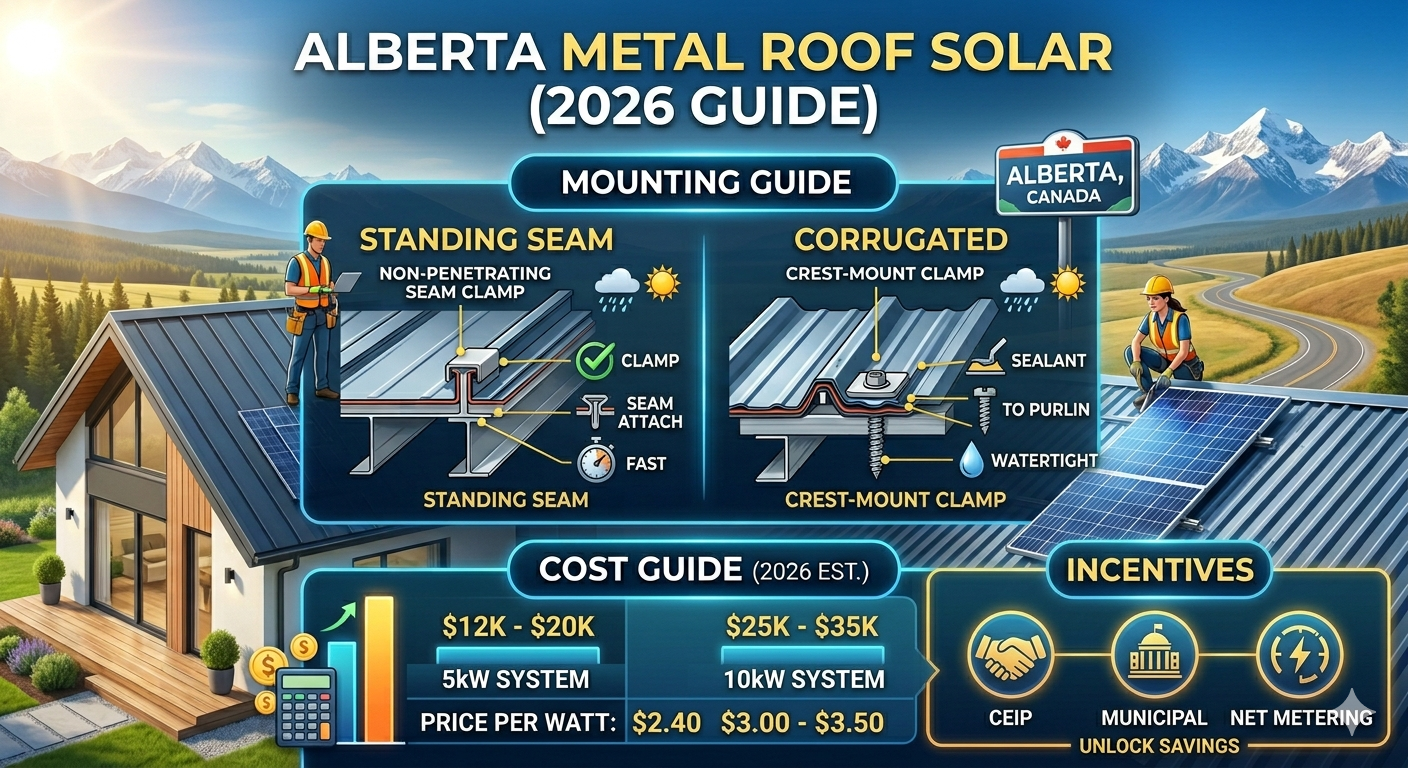
Installed cost (before any incentives): $18,000 – $26,000 (after federal ITC if eligible)
Annual production: 10,000 – 13,000 kWh
Annual savings + credits: $1,200 – $1,800 (with good HI/LO retailer)
Simple Payback: 9–14 years
Lifetime ROI (25–30 year system life): Often 150–300%+ after payback, depending on rate escalation and maintenance.
Factors That Improve ROI:
Choosing a strong Solar Club retailer (35¢ HI rate)
Proper sizing (80–110% of consumption)
High self-consumption through load shifting
Good solar exposure (minimal shading)
Potential Drawbacks and Limitations
Fixed Charges Remain: Delivery, transmission, distribution, and admin fees (often $50–$100+/month) are not fully offset by micro-generation credits.
Upfront Cost: Still requires significant initial investment (though financing options like CEIP or retailer programs exist).
Seasonal Management Required: Best results come from active rate switching and load shifting.
Retailer Dependency: Savings vary widely based on your choice of retailer and plan.
No Major Provincial Incentives: Unlike some provinces or U.S. states, Alberta does not currently offer large rebates or grants.
Conclusion
Alberta’s Micro-Generation Regulation remains one of the strongest and most flexible solar compensation programs in Canada in 2026. By allowing small-scale generators to earn retail-rate credits (especially through competitive HI rates up to 35 ¢/kWh), the program rewards homeowners, farmers, and small businesses who invest in solar while using the grid as a free seasonal storage system.
Final Key Takeaways
Alberta uses net billing, not traditional net metering self-consumption first, then retail credits for exports.
Success depends on three critical factors: right system sizing (80–110% of annual use), choosing a solar-friendly retailer, and seasonal optimization (rate switching and load shifting).
The economics are compelling for most Albertans with good sun exposure: typical payback of 9–14 years and strong lifetime returns.
The 2026 updates to AUC Rule 024 improved safety and process clarity without weakening the core benefits.
Solar with micro-generation is no longer just an environmental choice it’s a smart financial decision that protects you against rising electricity rates and increases your energy independence.