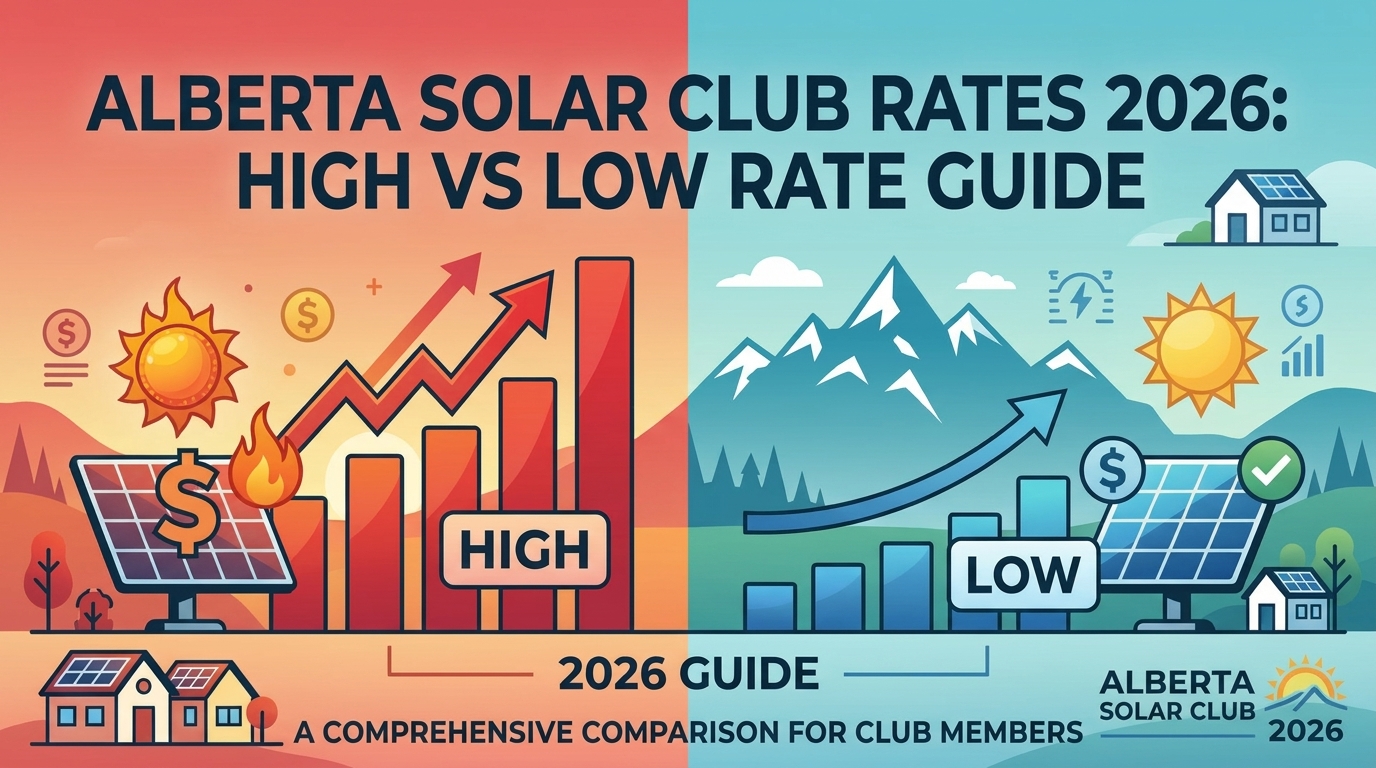
Alberta homeowners with solar panels can earn more value from their system when they understand how Alberta Solar Club rates 2026 work. Solar power production changes throughout the year, so the rate that helps in summer may not be the best choice in winter. That is why the Solar Club high rate, Solar Club low rate, and seasonal Solar Club rate switching matter for many solar owners.
The high rate can help when your panels produce extra electricity and send it back to the grid. The low rate can help when your home uses more electricity than your panels produce. Choosing the right rate at the right time can affect your monthly bill, solar export credits, and long-term solar payback in Alberta.
This guide explains Solar Club Alberta in simple words, including how high and low rates work, when homeowners may switch rates, and how these choices can impact solar savings. If you are planning to install solar panels, this information can also help you compare solar quotes more carefully before making a decision.
What Is the Solar Club Alberta Program?
The Solar Club Alberta program is for people who already have solar panels or are planning to install them soon. It helps solar homeowners get better value from the electricity their panels produce.
During sunny months, your solar panels may make more electricity than your home needs. When this happens, the extra power goes back to the grid. In return, you can receive credits on your electricity bill.
During colder or darker months, your panels may not make enough electricity for your home. Then, you use more power from the grid.
This is where the Solar Club high rate and Solar Club low rate become useful. The high rate can help when you are sending extra solar power to the grid. The low rate can help when you are buying more electricity from the grid.
Alberta Solar Club Rates 2026
The current Alberta Solar Club rates 2026 are built around three main options: the Pre-Solar Rate, the Solar Club LO Rate, and the Solar Club HI Rate. Each rate is used for a different stage of your solar journey.
According to the official Solar Club rate page, the current listed rates are 7.25¢/kWh for the Pre-Solar Rate, 8.40¢/kWh for the LO Rate, and 35.00¢/kWh for the HI Rate. These rates can change, so homeowners should always confirm the latest rate before switching.
Rate Type | Current Listed Rate | Best Used For |
Pre-Solar Rate | 7.25¢/kWh | When your solar installation is not active yet |
Solar Club LO Rate | 8.40¢/kWh | When your home imports more electricity from the grid |
Solar Club HI Rate | 35.00¢/kWh | When your solar panels export more electricity to the grid |
The Solar Club HI Rate is useful during sunny months when your panels produce more electricity than your home uses. In that case, your extra power goes back to the grid, and the higher rate can help increase your bill credits.
The Solar Club LO Rate is useful during colder or darker months when your home uses more electricity from the grid. Since you are buying more power during that time, the lower rate can help reduce your bill.
The Pre-Solar Rate is for homeowners who have signed a solar installation contract but are still waiting for their system to go live. It gives them a lower rate before they officially start producing solar power. Solar Club describes this as a rate for people waiting for solar to be installed and activated.
For homeowners still comparing system cost, this Alberta solar panel cost guide can help explain average installation prices before choosing a rate plan.
Solar Club High Rate vs Solar Club Low Rate
The Solar Club high rate and Solar Club low rate work in opposite situations. The high rate is better when your solar panels are sending more electricity to the grid. The low rate is better when your home is using more electricity from the grid.
The Solar Club high rate is usually helpful in spring and summer. During these months, Alberta gets longer daylight hours, and solar panels often produce more power. If your home does not use all that power, the extra electricity goes back to the grid. With the high rate, those exported units can create stronger bill credits.
The Solar Club low rate is usually helpful in fall and winter. During these months, solar production drops because the days are shorter and darker. Your home may need to buy more electricity from the grid. In that case, the low rate can help reduce the cost of imported electricity.
A simple way to understand it is this:
Situation | Better Option |
Your panels export more electricity than your home uses | Solar Club high rate |
Your home imports more electricity from the grid | Solar Club low rate |
Your solar system is not active yet | Pre-Solar Rate |
So, the best rate depends on your home’s import and export pattern. If you export more power, the high rate may help you earn more credits. If you import more power, the low rate may help you control your bill.
If you live in either city, you can also review Calgary and Edmonton solar pricing before comparing your expected solar savings.
Who Should Use the Solar Club High Rate?
The Solar Club high rate is usually best for Alberta homeowners whose solar panels export more electricity than the home uses. This often happens during sunny months when the system produces strong power and the home does not use all of it.
The current listed Solar Club HI Rate is 35.00¢/kWh, while the Solar Club LO Rate is 8.40¢/kWh and the Pre-Solar Rate is 7.25¢/kWh. These rates can change, so homeowners should always confirm the latest rate with Solar Club or their electricity retailer before switching.
You may consider the high rate if your electricity bill shows that your exported power is higher than your imported power. In that case, the higher rate can help increase the value of your solar credits.
This rate may also work well for homes with a properly sized solar system, good sun exposure, and lower daytime electricity use. If your panels make extra power during the day, the unused electricity can go back to the grid and create stronger credits.
The high rate is not always the best choice. If your home starts importing more electricity from the grid, the high rate can increase your bill. That is why homeowners should check their bill and solar production before staying on the high rate for too long.
When to Switch Solar Club Rates
The best time to switch Solar Club rates depends on whether your home is exporting or importing more electricity. Do not switch only because another homeowner is doing it. Your solar production, home usage, and monthly bill should guide the decision.
Most Alberta solar owners consider the Solar Club high rate when their panels start producing more electricity than the home uses. This often happens in spring and summer because the days are longer and solar production is stronger.
They usually switch back to the Solar Club low rate when solar production drops and the home starts using more power from the grid. This often happens in fall and winter.
Here is a simple guide:
Time of Year | Solar Pattern | Possible Rate Choice |
Spring | Production starts increasing | Consider high rate |
Summer | Strong solar production | High rate may work better |
Fall | Production starts dropping | Review your bill |
Winter | More grid electricity use | Low rate may work better |
The safest way to decide is to check your electricity bill. If your exported electricity is higher than your imported electricity, the high rate may help. If your imported electricity is higher, the low rate may be the better choice.
How Alberta Solar Export Credits Work
Solar export credits Alberta help homeowners get value from the extra electricity their solar panels send to the grid. When your panels produce more electricity than your home needs, the unused power does not go to waste. It moves back into the grid, and your electricity retailer adds a credit to your bill.
The value of that credit depends on your electricity rate. This is why the Alberta solar export rate is important for solar homeowners. If you are on the Solar Club high rate during months when your panels export more power, your credits can be stronger. If you are on a lower rate, the same exported power may create a smaller credit.
Alberta’s micro-generation rules explain that electricity retailers credit customers for excess electricity sent to the grid, and the credit rate is agreed between the customer and retailer. The provincial government does not set that rate.
These credits can help reduce your monthly electricity cost and improve your long-term solar savings. But they may not remove every charge from your bill. Delivery charges, admin fees, and other fixed charges can still apply, even when your solar system produces strong credits.
For this reason, homeowners should look at the full bill, not only the credit amount. The best results usually come when the rate matches the home’s real import and export pattern.
Exported Solar Power | Export Rate | Estimated Credit |
500 kWh | 8.40¢/kWh | $42 |
500 kWh | 35.00¢/kWh | $175 |
How Solar Club Rates Affect Your Electricity Bill
Solar Club rates can affect your electricity bill in two main ways: the cost of power you buy from the grid and the value of power your solar panels send back.
When your home imports electricity from the grid, your bill depends on the rate you pay for that imported power. If you are using more grid electricity during darker months, the Solar Club low rate may help reduce that energy cost.
When your solar panels export extra electricity to the grid, your bill can receive credits based on the export rate. If your system exports more power during sunny months, the Solar Club high rate may help increase those credits.
Still, homeowners should remember that solar credits may not remove every charge from the bill. Delivery charges, admin fees, local access fees, and other fixed charges can still apply. This means your bill may not become zero even when your panels produce strong credits.
The best way to understand the impact is to check the full bill each month. Look at how much electricity you imported, how much you exported, and which rate was applied. This helps you decide whether your current Solar Club rate is helping your savings or increasing your cost.
Solar Panels Alberta Savings with Solar Club
Solar panels Alberta savings can improve when homeowners use the right Solar Club rate at the right time. The main benefit comes from matching the rate with the way your home uses and exports electricity during the year.
In sunny months, solar panels often produce more power than the home needs. When this happens, the extra power goes back to the grid and can create bill credits. The Solar Club high rate may help increase those credits during high-production months.
In darker months, the home may use more electricity from the grid because solar production is lower. During this time, the Solar Club low rate may help reduce the cost of imported electricity.
This rate flexibility can make solar more valuable for Alberta homeowners. It gives them a better chance to earn stronger credits in summer and manage grid electricity costs in winter. Over time, this can support better solar savings and improve the overall return from a home solar system.
Does Solar Club Improve Solar Payback Alberta?
The solar payback Alberta period depends on how much you spend on installation and how much your system saves each year. Solar Club can help improve that payback when your home exports enough power during high-production months.
When your panels send extra electricity back to the grid, the Solar Club high rate can increase the value of those credits. Stronger credits can improve yearly savings, and better yearly savings can shorten the time it takes to recover your solar installation cost.
But Solar Club does not improve payback in the same way for every home. Your result depends on your system size, roof direction, electricity usage, local weather, and how well you time your rate switching.
A properly sized solar system usually gives better results than a system chosen only for maximum size. Before installing solar, homeowners should compare quotes, expected production, and payback estimates carefully.
Is Solar Club Worth It in Alberta?
For many solar homeowners, yes. It can be useful when the home produces extra electricity in sunny months and uses more grid electricity in darker months.
The real value comes from using the right rate at the right time. The Solar Club high rate can help when your system exports more power to the grid. The Solar Club low rate can help when your home imports more electricity from the grid.
Solar Club is usually worth considering if your solar system is properly sized, your home exports extra electricity in spring or summer, and you are willing to check your bill before switching rates.
It may not help as much if your home rarely exports electricity or if you stay on the high rate during months when you are buying more power from the grid. In that case, the higher rate can increase your bill instead of improving savings.
For the best result, homeowners should track their monthly import and export pattern. Solar Club works best when the rate choice matches real usage, not guesswork.
Solar Club Rate Switching Mistakes to Avoid
Solar Club rate switching can help Alberta solar homeowners save more, but only when they use it carefully. The wrong timing can reduce your credits or increase your electricity bill.
One common mistake is staying on the Solar Club high rate for too long. The high rate works best when your panels export more power than your home uses. If your solar production drops and your home starts buying more electricity from the grid, the high rate can become expensive.
Another mistake is ignoring the Solar Club low rate during fall and winter. In darker months, many homes import more electricity because solar production is lower. The low rate can help manage those grid electricity costs.
Homeowners also make mistakes when they switch rates without checking their bill. Your bill shows whether your home is importing or exporting more electricity. That information matters more than guessing based on the season.
You should also look at the full bill, not only the energy rate. Delivery charges, admin fees, and other fixed charges may still apply. Good rate switching means watching your usage, checking your solar production, and choosing the rate that fits your home’s real pattern.
If you are also checking financing or rebate options, review solar incentives by province before making a final decision.
Should You Join Solar Club Before Installing Solar Panels?
You can consider joining Solar Club before your solar panels are fully active if you already have a signed solar installation contract. This is where the Solar Club Pre-Solar Rate Alberta option can help.
The Pre-Solar Rate is made for homeowners who are waiting for their solar system to be installed, connected, or approved. Since the system is not producing power yet, the homeowner is not ready for the high export rate. A pre-solar rate can be a better fit during this waiting period.
Before joining, ask your electricity retailer how the process works. Check when you can move from the Pre-Solar Rate to the Solar Club high rate or Solar Club low rate. You should also ask how often rate changes are allowed and whether any timing rules apply.
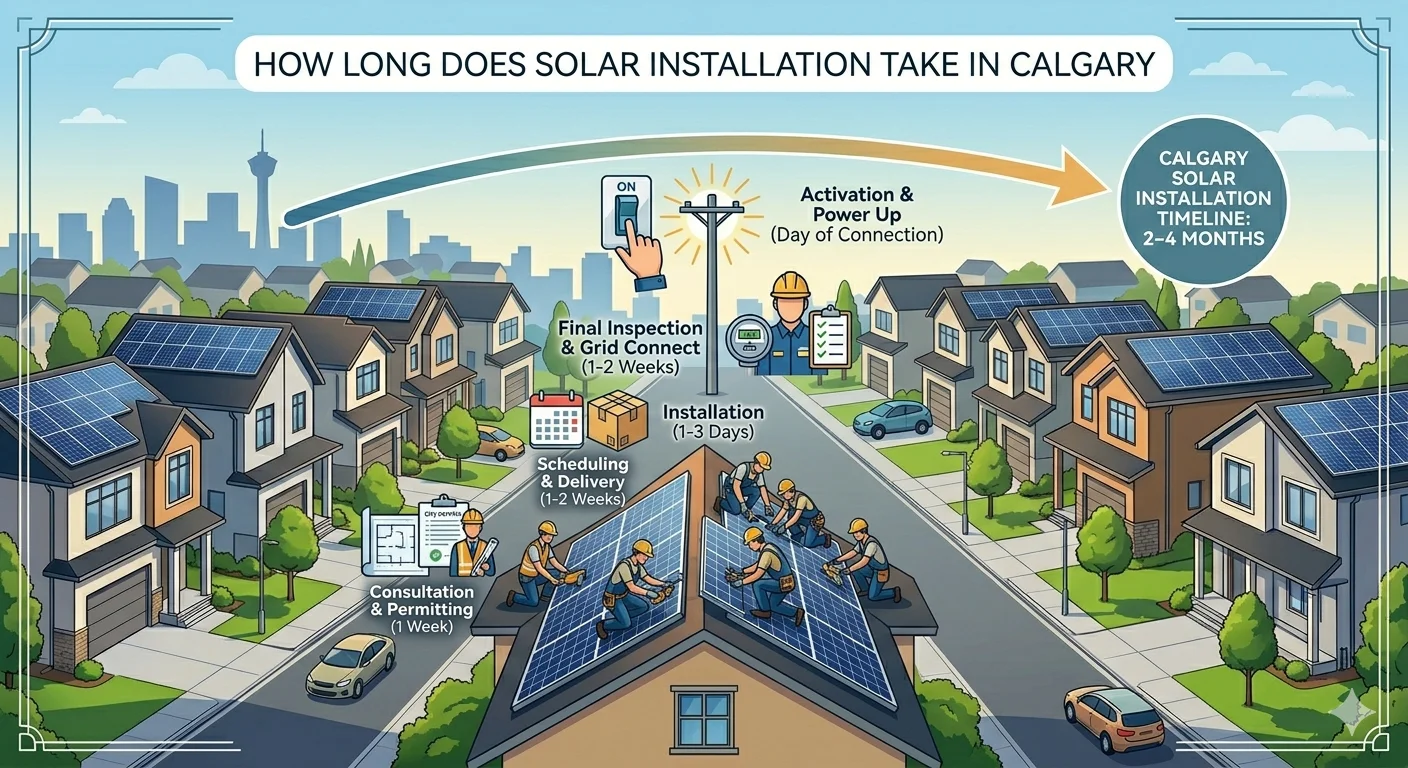
This step is useful because solar installation does not always become active on the same day the panels are placed on the roof. Permits, inspections, and grid approval can take time. The right rate can help you avoid paying more while you wait for your system to start producing electricity.
If you are still in the planning stage, this page explains how going solar works in Canada before requesting quotes.
How to Choose the Best Solar Club Rate for Your Home
Choosing the best Solar Club rate starts with one simple question: is your home exporting more power or importing more power?
If your solar panels are sending more electricity to the grid than your home is using, the Solar Club high rate may be the better choice. It can help increase the value of your export credits during strong production months.
If your home is using more electricity from the grid than your panels are producing, the Solar Club low rate may be safer. It can help reduce the cost of imported electricity during lower-production months.
Do not choose a rate only because it looks attractive. Check your electricity bill, solar monitoring app, and monthly usage pattern. Your best rate can change during the year, especially between summer and winter.
A good rule is simple: use the high rate when your system exports more, and use the low rate when your home imports more. This makes Solar Club rate switching more practical and helps you get better value from your solar system.
You can also check these solar panel FAQs for Calgary and Edmonton if you still have questions about solar cost, installers, or savings.
Solar Club Alberta Competitor Comparison
Several Alberta solar and energy websites explain Solar Club rates, but many of them focus mainly on the high and low rate difference. This guide goes further by connecting Solar Club Alberta with solar savings, export credits, payback, and the decision to install solar panels.
Competitor | What They Cover | What This Guide Adds |
HI/LO rate switching, Pre-Solar Rate, current rates, and Solar Club program details | Explains the same ideas in simple homeowner language | |
Evalence | Solar Club review, 35.00¢/kWh high rate, 8.40¢/kWh low rate, and seasonal switching | Adds clearer savings and payback context for Alberta homeowners |
Legacy Energy | Solar micro-generator rates, Pre-Solar Rate, LO Rate, and HI Rate | Explains when each rate makes sense before and after installation |
Park Power | Solar buyback rates, microgen credits, and bill credit examples | Adds more focus on rate timing and full-bill awareness |
Direct Energy | High solar production credits and monthly rate switching | Connects rate choice with solar quote and payback decisions |
SolarClub.ca lists current Solar Club rates and explains that members can switch to the HI Rate when exporting excess electricity to the grid. Evalence also explains the 2026 high and low rate pattern, while Legacy Energy lists Pre-Solar, LO, and HI rate options for solar micro-generators.
Final Thoughts
Alberta Solar Club rates 2026 can help solar homeowners get better value from their system when they choose the right rate at the right time. The Solar Club high rate can support stronger export credits during sunny months, while the Solar Club low rate can help control grid electricity costs during darker months.
The best choice depends on your home’s real import and export pattern. Homeowners should check their electricity bill, track solar production, and avoid staying on the wrong rate for too long.
Before installing solar panels, it is also smart to compare system size, installation cost, expected savings, and payback. Canada Solar Pro helps Alberta homeowners compare local solar quotes and understand which solar option may work best for their home.