You live in Alberta, and your electricity bills keep going up. You’ve decided to install solar panels to save money and gain energy independence. But now the big question hits you how many solar panels do you actually need?
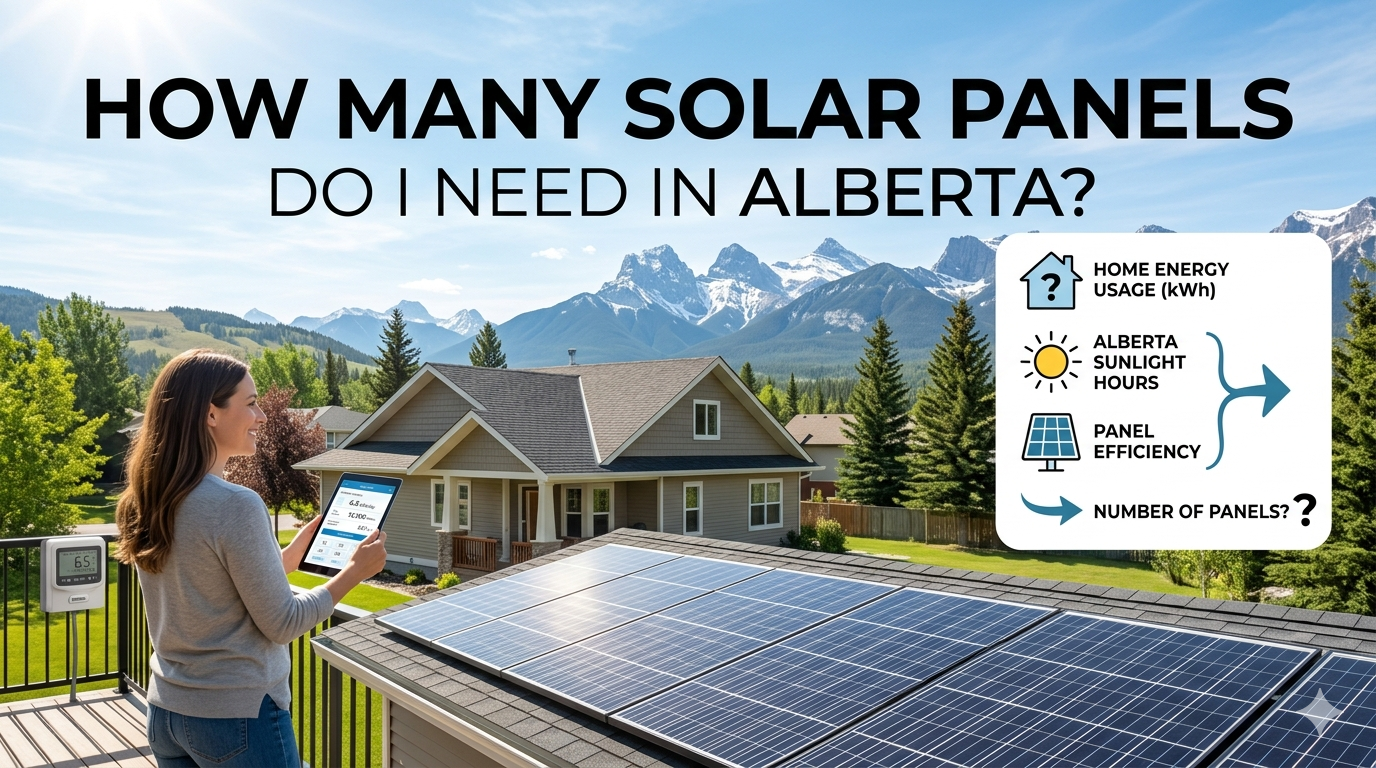
It’s easy to get confused. Too few panels, and your system won’t produce enough power. Too many panels, and you spend more than necessary. Alberta’s changing sunlight throughout the year, your roof size, and panel efficiency all affect how much energy you can generate.
If you want to plan your solar system the right way, this guide will help you understand what affects your solar panel needs and how to make a system that works perfectly for your Alberta home.
5 Factors That Affect How Many Solar Panels You Need in Alberta
Before you install solar panels, you need to think about several important factors that determine how many panels your home will actually need. Ignoring these can lead to underperforming systems or unnecessary costs.
1. Your Annual Electricity Use
Start by checking how much electricity your home uses each year. Look at your electricity bills from the past 12 months to get an accurate number.
Average Alberta Home: Most suburban homes use between 600–900 kWh per month, which totals roughly 7,200–10,800 kWh per year. To cover this, you typically need a 5–8 kW system, which equals about 13–24 standard solar panels.
High-Energy Homes: If you have a large property, heated pools, electric vehicles, or extra buildings, your electricity use is higher. You may need a 10–15 kW system, which means more panels to meet your energy needs.
2. Sunlight Hours and Alberta’s Climate
Alberta gets plenty of sunshine, but it varies by region and season.
Southern Alberta (like Calgary): Around 2,400 hours of sunshine per year, which is great for solar panels.
Winter Effects: Snow and cold weather reduce sunlight exposure, but cold temperatures actually help panels work more efficiently when the sun is shining. Local installers take these seasonal changes into account when deciding your system size.
3. Your Roof’s Size, Direction, and Angle
Your roof directly affects how many panels you can install and how much power they produce.
Direction: South-facing roofs produce the most energy. East- or west-facing roofs still work but may need 10–20% more panels.
Angle: Roofs pitched between 15° and 40° are ideal for solar panels.
Shading: Trees, chimneys, or nearby buildings can block sunlight. You may need fewer or more panels depending on how much shade your roof gets.
4. Panel Wattage and Efficiency
The type of panels you choose also changes how many you need. Most residential panels produce between 370W and 420W.
Limited Roof Space: If your roof is small, using higher-efficiency panels (400W+) can generate the same energy with fewer panels.
Your total panel count depends on electricity use, roof space, and panel efficiency.
5. Alberta’s Net Metering Policy
Alberta allows you to connect to the grid with net metering (or micro-generation).
This lets you store extra energy produced in summer and use it during darker winter months.
Because of this, you only need to size your system to cover your annual energy needs, not your highest winter consumption.
How to Estimate the Number of Solar Panels You Need in Alberta
Before you are going to solar panels, it’s important to estimate your ideal system size. In Alberta, this means looking at your annual electricity use, factoring in the province’s average sun hours, and following local regulations that limit system size to your 12-month electricity consumption. Here’s a simple way to figure it out:
Step 1: Check Your Annual Electricity Use
Start by reviewing your electricity bills from the past year. Providers like EPCOR, FortisAlberta, or ATCO Electric list your monthly usage in kilowatt-hours (kWh).
Average Home: Most single-family homes in Alberta use between 7,500 and 9,500 kWh per year.
Knowing your annual usage gives you the baseline for calculating your system size.
Step 2: Calculate Your System Size
Divide your annual electricity use by Alberta’s solar production factor. On average, 1 kW of solar panels produces about 1,200 kWh per year in Alberta.
Formula:
System Size (kW) = Annual Usage (kWh) ÷ 1,200
Example:
If your home uses 9,000 kWh per year:
9,000 ÷ 1,200 ≈ 7.5 kW
You would need a 7.5 kW system to cover your annual electricity needs.
Step 3: Determine How Many Panels You Need
Next, figure out how many panels your system requires. Most modern residential panels produce 400–500 W (0.4–0.5 kW) each.
Formula:
Number of Panels = System Size (kW) ÷ Panel Output (kW)
Example:
A 7.5 kW system using 500 W panels:
7.5 ÷ 0.5 = 15 panels
This means you would install about 15 panels to meet your electricity needs.
Step 4: Consider Real-World Factors
Roof Size and Orientation: South-facing or southeast/southwest roofs work best. Each 500 W panel takes around 2.5–2.6 m², so a 15-panel array needs about 40–45 m² of clear roof space.
Oversizing for Summer Production: Some Albertans join a “Solar Club” to sell extra summer energy at high rates. Installers may recommend increasing your system to 110% of your annual use to maximize benefits.
Future Energy Needs: If you plan to add an electric vehicle or a heat pump later, increase your baseline energy by 3,000–5,000 kWh before calculating.
Step 5: Use Alberta Solar Calculators
Before buying equipment, check online solar calculators for a more precise estimate:
Municipal Climate Change Action Centre Solar Calculator: Enter your address to see estimated generation and yearly savings.
City of Calgary Residential Solar Calculator: Local tool for Calgary residents to get area-specific result
Key Takeaway:
By following these steps, you can estimate both your system size and the number of panels needed. Most Alberta homes will end up with 13–24 panels, but your exact number depends on your electricity use, roof space, panel efficiency, and future energy plans.
Choosing the Right Solar Panel for Your Alberta Home
Choosing solar panels for your Alberta home doesn’t have to be confusing. There are many options for different brands, wattages, and efficiencies. You want a system that fits your energy needs and roof.
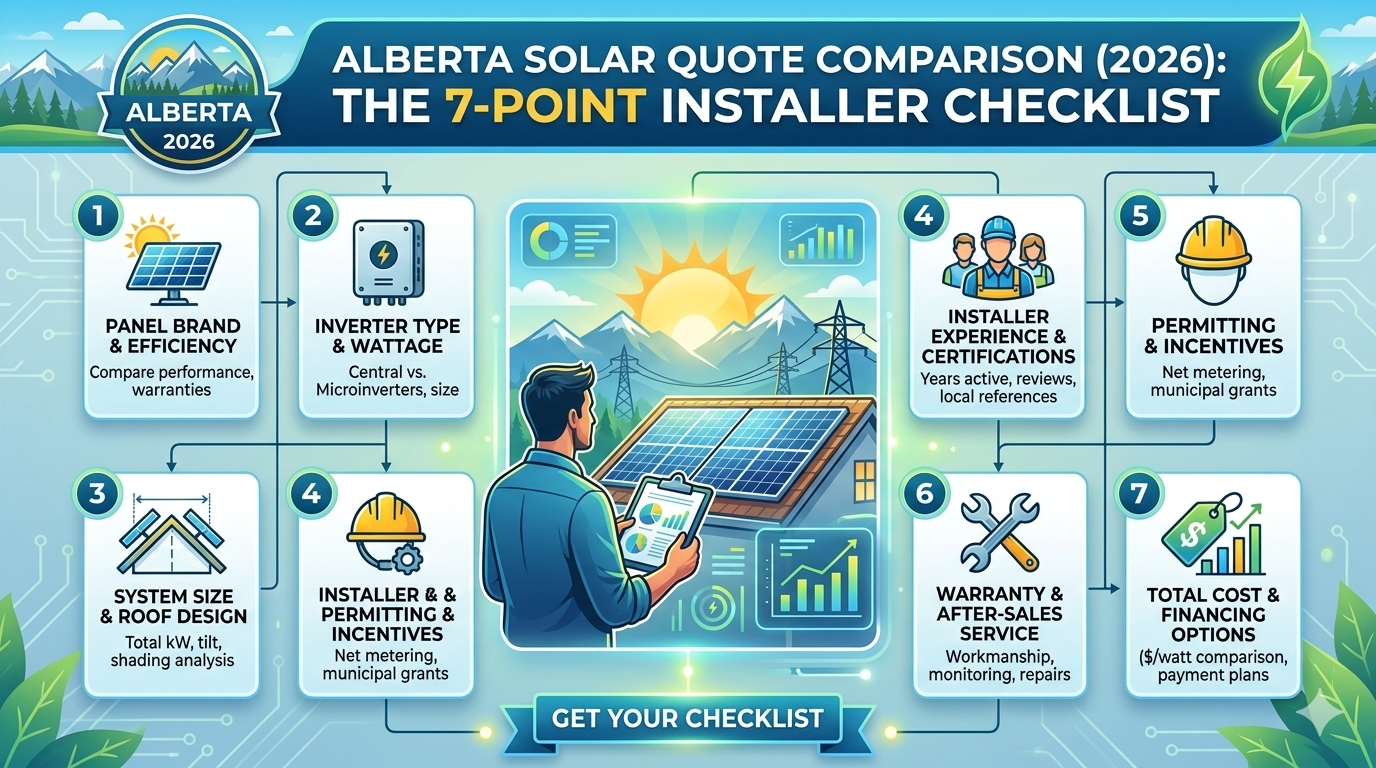
This is where Canada Solar Pro can help. Unlike traditional solar companies that focus only on their own installations, Canada Solar Pro helps homeowners make smart choices. The platform lets you:
Compare local installers in your area
Explore financing options and available rebates in Alberta
See estimated savings before you invest
Since 2019, Canada Solar Pro has helped over 10,000 homeowners across more than 100 Canadian cities find the right solar solutions. Whether you want to understand net metering, compare installer quotes, or choose the best panel type, the platform gives clear and unbiased guidance.
With this support, you can pick the right panels and system size for your Alberta home, making sure your solar system works efficiently and saves you money over the long term.
Installing Solar Panels in Alberta: What to Expect
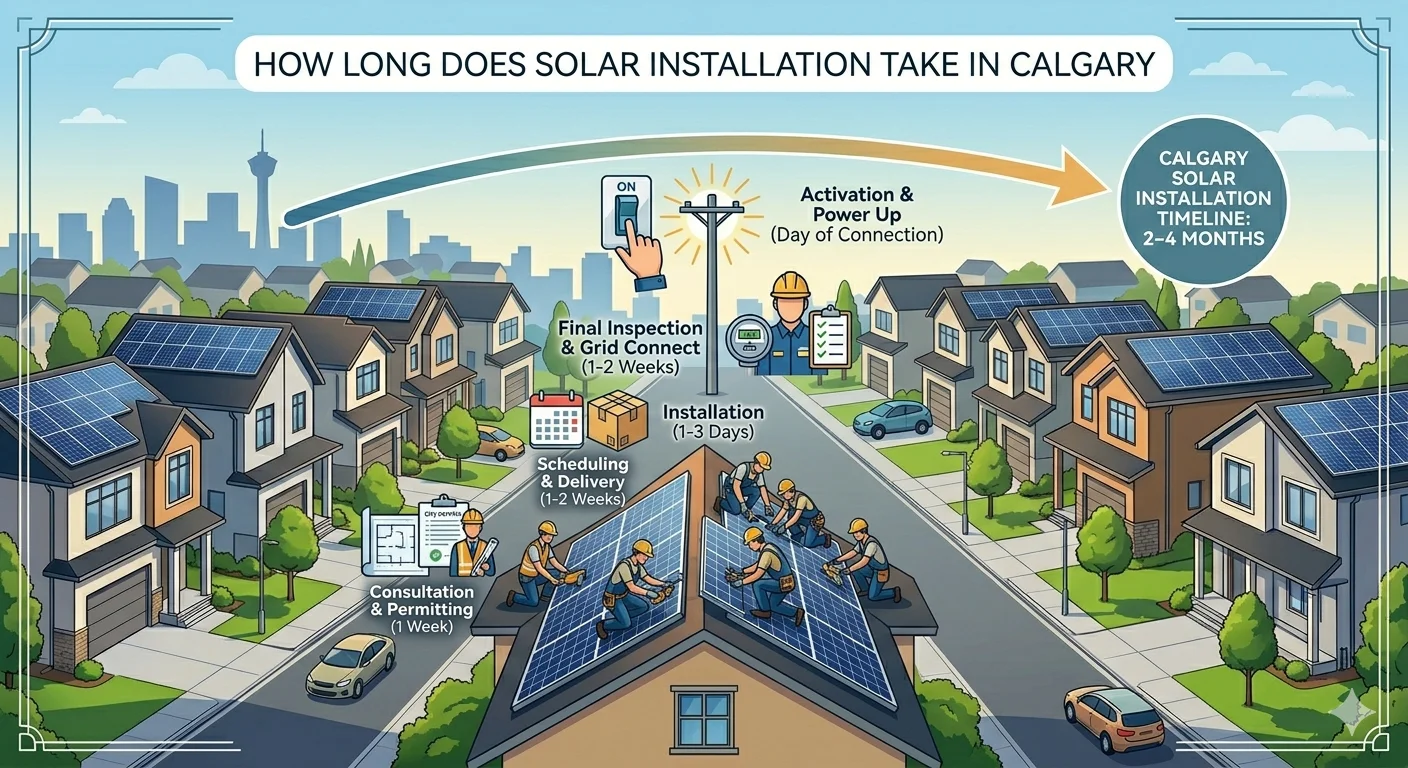
Installing solar panels in Alberta is a smart investment. Most homeowners see a return within 8 to 12 years through lower electricity bills and access to province-specific benefits like Solar Club rates. The process is straightforward, usually involving a site assessment, permitting, 1–2 days of installation, and grid connection. Here’s a simple breakdown of what to expect:
1. Site Assessment and System Design
Your solar provider will start with a remote assessment using aerial images and your past electricity bills. They will design a custom system to match your home’s annual energy use and comply with Alberta’s net-metering rules, which allow you to produce up to 105% of your past year’s consumption.
Tip: If you plan to buy an electric vehicle (EV) or add large appliances like air conditioning in the future, tell your installer. This ensures your system is sized correctly from the start.
2. Permits and Approvals
Before installation, your solar company handles all the required electrical and building permits, development approvals, and agreements with your utility.
Timeline: This step usually takes 1 to 3 weeks, depending on local regulations and your utility company.
3. Electrical Panel Upgrades (If Needed)
Older homes in Alberta often have 100A electrical panels. If you’re installing a large system or adding a battery, your panel may need to be upgraded to 200A.
Time: Panel upgrades generally take one day.
Note: Your utility will temporarily disconnect power during the upgrade.
4. Installation Day
The physical installation usually takes 1–2 days. Crews will:
Mount the racking system on your roof
Attach the solar panels
Install the inverter and connect wiring to your electrical panel
What to expect: Workers, ladders, and equipment around your home. Keep children and pets inside and make pathways clear for safety.
5. Inspection and Activation
After installation, a municipal or utility electrical inspector will check your system to ensure it meets the Canadian Electrical Code. Once approved:
Your utility will authorize your system to operate
Your meter will be swapped, allowing you to generate your own power and sell excess energy back to the grid
Financials, Rebates, and Savings
Understanding costs and incentives will help you get the most out of your solar investment:
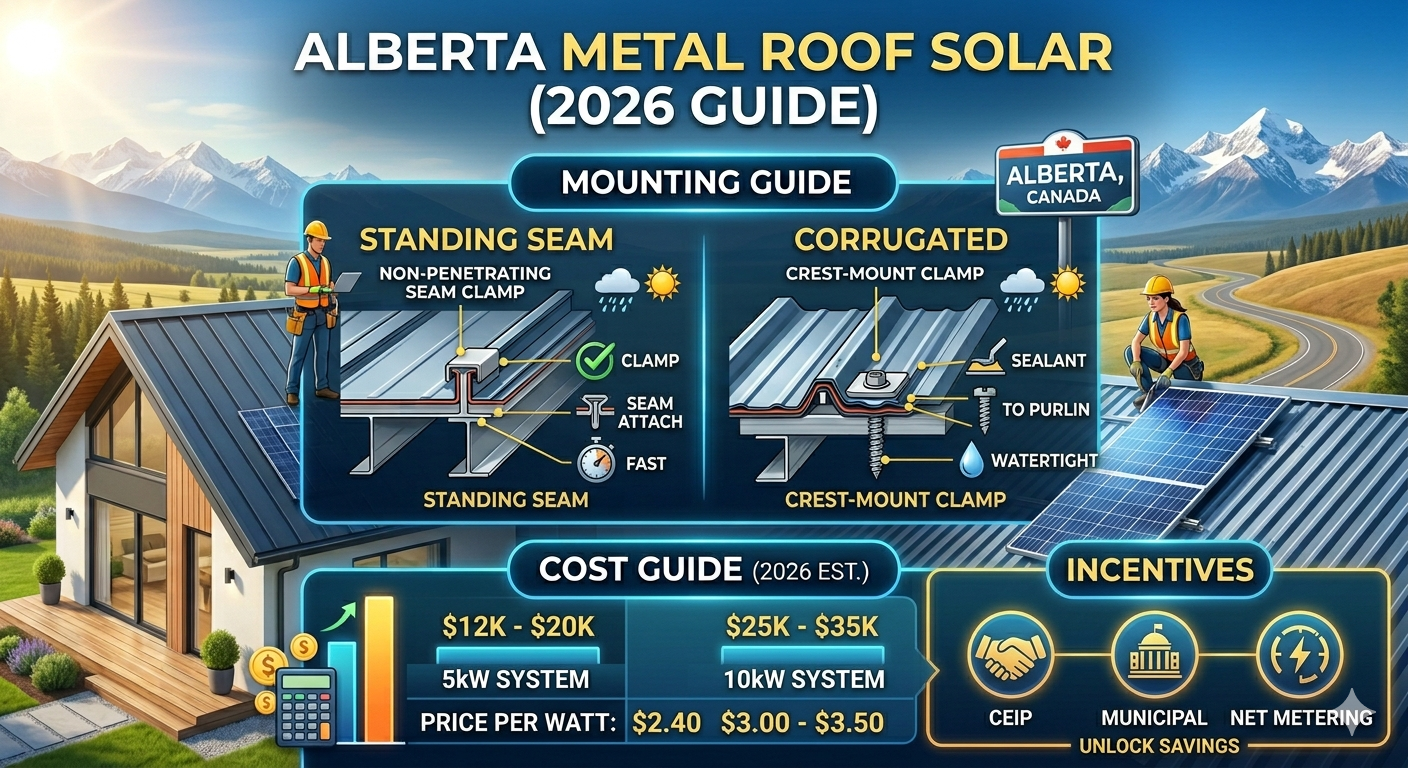
Upfront Costs: A typical 8–10 kW residential system in Alberta costs between $20,000 and $28,000.
Financing: Programs like the Canada Greener Homes Loan provide interest-free financing up to $40,000 over 10 years. Many municipalities also offer the Clean Energy Improvement Program (CEIP), letting you pay for solar through your property tax bill.
Solar Club Rates: Alberta’s deregulated energy market allows homeowners to join a “Solar Club.” This lets you sell extra summer energy at a higher export rate and pay a lower rate when drawing from the grid in winter.
Getting the most out of solar panels in Alberta means combining the province’s high sunlight with smart financial strategies, net-metering programs, and municipal incentives. A typical 6–8 kW residential system usually pays for itself in 7 to 10 years, after which you enjoy decades of essentially free electricity. Here’s how to maximize your savings and returns:
Maximizing Your Solar Investment in Alberta
Getting the most out of solar panels in Alberta means combining the province’s high sunlight with smart financial strategies, net-metering programs, and municipal incentives. A typical 6–8 kW residential system usually pays for itself in 7 to 10 years, after which you enjoy decades of essentially free electricity. Here’s how to maximize your savings and returns:
Alberta’s micro-generation laws let you send extra energy back to the grid, turning it into financial returns.
Energy Arbitrage: By joining a local “Solar Club,” you can lock in high export rates—around $0.30 to $0.35 per kWh in summer—and pay lower rates when you use electricity in the winter.
Shift Your Consumption: Run heavy appliances like EV chargers, air conditioners, or pool pumps during peak sunlight hours to get the most value for exported energy.
2. Stack Municipal and Provincial Incentives
Even though the federal Greener Homes Grant is no longer available, Alberta homeowners still have access to valuable programs:
CEIP (Clean Energy Improvement Program): Finance up to 100% of your solar installation with low-interest loans tied to your property taxes. Cities like Calgary, Edmonton, and Canmore participate in this program.
Municipal Rebates: Some communities offer upfront cash incentives. For example, Banff provides up to $0.75 per watt (up to 20 kW), and Medicine Hat offers additional municipal rebates.
3. Business and Commercial Benefits
If you’re installing solar for a business, farm, or multi-unit building, you can access larger-scale incentives:
Clean Technology Tax Credit: Businesses can claim a 30% refundable tax credit on the cost of the installation.
Accelerated Capital Cost Allowance (CCA): Under Classes 43.1 and 43.2, commercial operators can write off up to 100% of eligible costs in the first year.
4. Optimize Your System Design
Getting your system size right is crucial for maximizing return:
Don’t Oversize: Match your solar array to 100% of your annual electricity use. Exporting far more energy than you consume can push you into less favorable net-billing tiers.
Boost Property Value: Owned solar systems can increase your home’s resale value by 3–4% on average.
Check Local Resources: Use vetted installers and local solar maps from the Solar Alberta directory to ensure a high-quality, efficient installation.
Conclusion: Take Control of Your Solar Future in Alberta
Switching to solar energy in Alberta lets you take control of your electricity bills, save money, and invest in your home’s long-term value. By understanding how many panels your home needs, selecting the right system, and planning the installation carefully, you can enjoy decades of clean, affordable energy.
Keep these key points in mind:
Check your annual electricity use, roof space, and sunlight exposure to determine the right number of panels.
Use trusted tools like Canada Solar Pro to compare installers, financing options, and local rebates.
Follow each step of the installation process to ensure a safe, smooth, and efficient setup.
Maximize your returns by taking advantage of Alberta’s net-metering programs, municipal incentives, and smart system design.
With proper planning, your solar panels can pay for themselves in just 7–10 years, giving you decades of nearly free electricity.
Start your solar journey today. Assess your home, explore your options, and take the first step toward energy independence in Alberta.