The backup power conversation has changed fundamentally. For most of the last two decades, the question was simple: do you want a generator, or are you fine without anything? That binary is gone.
In 2024, US electricity customers experienced an average of 11 hours of power outages nearly twice the annual average recorded across the previous decade, according to the US Energy Information Administration. Homeowners in the South averaged 18.2 hours without power, and those in the West averaged 12.4 hours, largely driven by hurricanes, wildfires, and extreme heat events. Separately, a J.D. Power survey found that 45% of utility customers experienced at least one outage in the first half of 2025 alone.
At the same time, electricity prices are climbing faster than inflation. The national average residential electricity rate rose from 14.92 cents per kWh in 2022 to 18.05 cents per kWh in 2026 a 21% increase in four years, according to ElectricChoice. In high-demand states like California, peak time-of-use (TOU) rates during the 4–9 PM window now reach 74 cents per kWh on certain utility plans.
These two pressures more frequent outages and more expensive electricity have forced backup power to become a year-round financial decision, not just emergency planning.
This guide covers both systems completely: what they are, what they cost, how they perform, and which one fits your home, region, and usage pattern.
What Is a Home Battery Storage System?
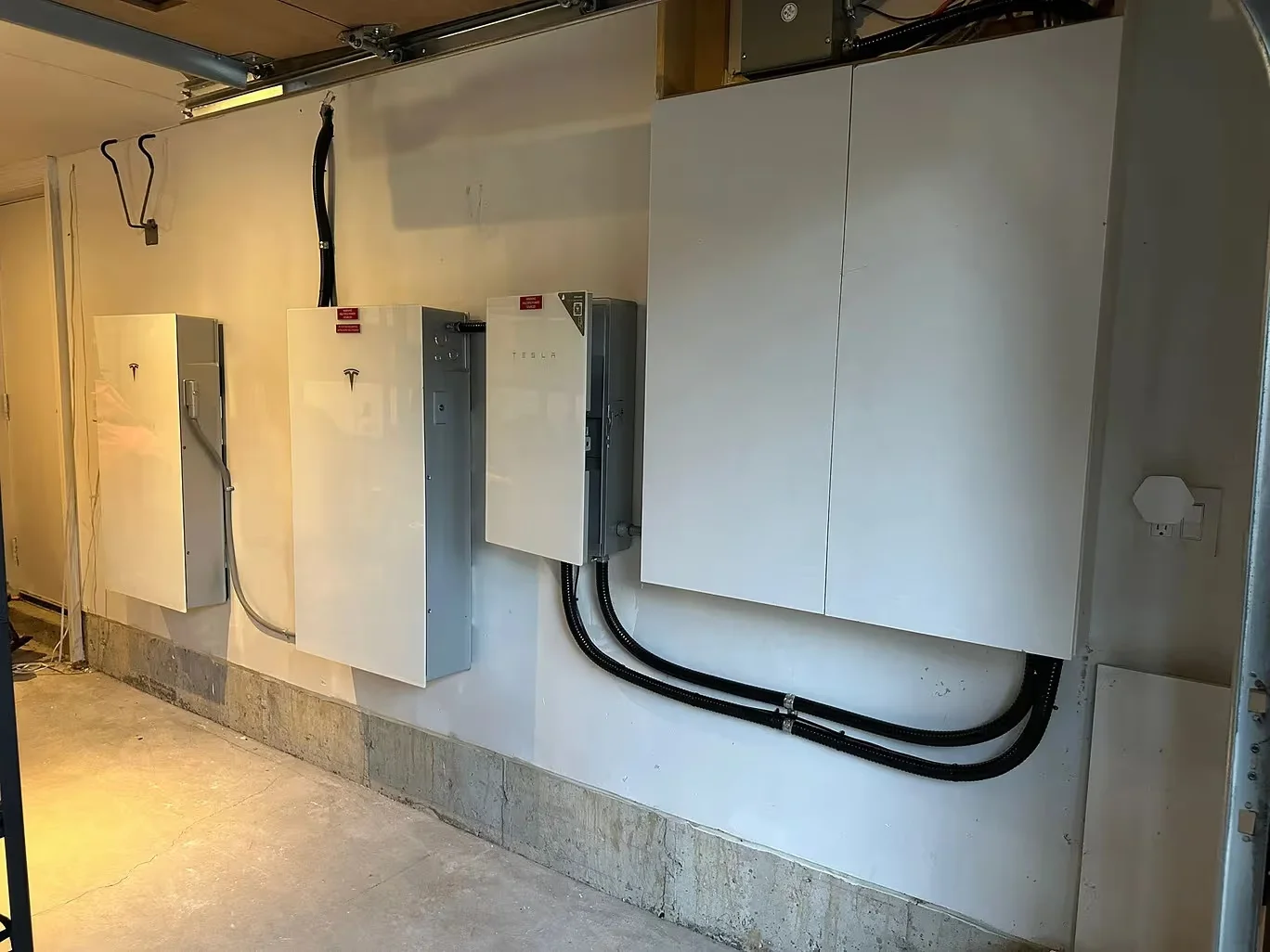
A home battery storage system is an electrochemical device that stores electrical energy and releases it to power your home on demand. The system charges from either your solar panels, the grid, or both, and discharges through an inverter that converts stored DC energy into the AC power your home appliances use.
The two main coupling types
AC-coupled systems connect to your home's electrical panel after the inverter. They work with existing solar installations and are typically easier to retrofit. DC-coupled systems connect directly to the solar array before inversion, making them more efficient for new installations because energy is only converted once.
Lithium-ion is the standard
As of 2026, lithium-ion batteries particularly lithium iron phosphate (LFP) chemistry account for 68.6% of the residential battery market in the United States, according to Coherent Market Insights. LFP cells offer a longer cycle life, lower fire risk than older lithium-cobalt chemistries, and a declining cost curve that has made 10 kWh to 20 kWh home systems widely accessible.
Sizing: what does kWh mean for your home?
A typical US home uses approximately 29 kWh per day. A single 10 kWh battery system covers critical loads only refrigerator, lights, phone charging, and internet router for roughly 8–12 hours. Whole-home backup requires either stacked battery units (most modern systems are modular and stackable) or pairing with active solar generation during daylight hours.
The 6 kW to 15 kW power rating segment currently dominates the residential market, reflecting the growing adoption of multi-battery configurations designed for whole-home coverage.
Want to understand your home's specific load requirements before choosing a system? Our team at Canada Solar Pro can conduct a free energy audit that maps your consumption to the right battery capacity.
What Is a Backup Generator?
A backup generator is a combustion engine that burns fuel to produce electricity on demand. When grid power fails, a generator starts either automatically or manually and supplies power to part or all of your home through a transfer switch.
Standby vs portable: the distinction that changes everything
Most comparison articles treat "backup generator" as a single product. It is not.
Standby generators are permanently installed outside your home, connected to a natural gas or propane line, and monitored by an automatic transfer switch (ATS). They activate within 10–30 seconds of grid failure and can run continuously as long as fuel is supplied. Whole-home standby systems typically range from 14 kW to 24 kW.
Portable generators require manual setup, run on stored gasoline, and must be operated outdoors due to carbon monoxide risk. They are less expensive upfront but significantly less capable and convenient during a real emergency.
This guide focuses primarily on the standby generator comparison, since that is the true functional equivalent of a home battery system.
Fuel types and what they mean for you
Fuel type | Runtime | Storage required | Risk level |
Natural gas | Unlimited (utility line) | None | Low |
Propane | Limited to tank size | Above-ground tank | Moderate |
Gasoline | 8–24 hours per tank | Stored cans | High (ethanol degradation) |
Dual-fuel | Flexible | Both options | Moderate |
Natural gas–connected standby generators offer the most reliable extended-outage performance. Propane systems require a tank that must be sized and maintained. Gasoline portable units face ethanol degradation if fuel sits unused for more than 30 days.
Wattage and what a generator can actually power
A 20 kW standby generator can power a 2,000–3,000 square foot home under normal load. However, starting a central air conditioning unit draws 2–3x its running wattage in surge current, which means generator capacity must account for startup loads, not just steady-state consumption.
Transfer switch: a required installation item
Any permanently installed generator requires a transfer switch either a manual transfer switch ($400–$800 installed) or an automatic transfer switch ($600–$2,000 installed). The ATS monitors grid power and switches your home's electrical supply from grid to generator within 10–30 seconds. This delay means sensitive electronics (computers, smart home hubs, medical devices) may lose power briefly during the switch.
Upfront Cost, Incentives, and Total Cost of Ownership
This section is where most comparison articles fail homeowners. Listing a price range without context is not useful. Here is the complete cost picture for both systems.
Home battery storage: installed cost ranges (2026)
A single lithium-ion home battery unit (10–13.5 kWh) installed by a licensed electrician in the US costs approximately $10,000–$15,000 all-in, including the inverter/gateway, labor, and permit fees. Whole-home battery systems using two or three stacked units run $18,000–$30,000.
Panel upgrade costs frequently required if your home has a 100A service add $2,000–$4,500.
Standby generator: installed cost ranges (2026)
A whole-home standby generator (20 kW, natural gas) installed with an automatic transfer switch costs approximately $8,000–$15,000, depending on whether a gas line extension is needed. Partial-home systems (10–14 kW) run $5,000–$9,000 installed.
Federal incentives: what changed at the end of 2025
This is critical for any US homeowner making this decision in 2026.
The 25D Residential Clean Energy Credit which offered a 30% federal tax credit on home battery storage systems expired on December 31, 2025. Systems installed before that date qualified for the credit. Systems installed in 2026 do not receive the 30% federal benefit, unless new legislation reinstates it.
Backup generators have never qualified for federal residential clean energy credits.
What is still available:
California SGIP (Self-Generation Incentive Program): Rebates of $200–$400 per kWh for qualifying residential battery storage systems. Income-qualified households receive higher rates.
New York NY-Sun program: Battery storage incentives that vary by utility territory.
Massachusetts SMART program: Incentives for solar-paired storage.
Utility bill credits: Many utilities (Eversource, PG&E, ConEd) offer demand response programs where a home battery earns bill credits in exchange for discharging to the grid during peak demand events.
Check your state's current rebate landscape through the Database of State Incentives for Renewables and Efficiency (DSIRE) at dsireusa.org.
10-year total cost of ownership comparison
Cost category | Home battery (10 kWh) | Standby generator (20 kW) |
Installation (2026) | $12,000–$20,000 | $8,000–$15,000 |
Annual maintenance | $0–$200 | $200–$500 |
Annual fuel cost | $0 (solar-charged) | $400–$1,200 (propane/gas) |
Peak shaving savings/yr | $600–$2,400 (TOU states) | $0 |
10-year net cost estimate | $10,000–$17,000 | $15,000–$26,000 |
The battery's daily financial contribution eliminating peak-rate electricity purchases is the factor that fundamentally changes the ownership math over a 5–10 year horizon. A generator produces zero financial return on non-outage days.
Outage Performance: What Actually Happens When the Grid Goes Down
Transfer time: the detail that matters for sensitive devices
A home battery storage system connected to your panel via a gateway transfers to backup power in 20–50 milliseconds fast enough that most electronics and appliances do not register the switch.
A standby generator's automatic transfer switch takes 10–30 seconds to sense the outage, start the engine, and complete the transfer. For medical equipment, desktop computers, and smart home systems, this gap requires an uninterruptible power supply (UPS) as a bridge.
How long each system can sustain your home
Battery storage is constrained by its kilowatt-hour capacity. A 13.5 kWh battery powering critical loads (1.5–2 kW average draw) lasts approximately 7–9 hours without recharging. With active solar generation during daylight hours, the system can recharge and sustain indefinitely through a prolonged outage a significant and underappreciated advantage.
Standby generators run as long as fuel is supplied. A natural gas–connected standby generator has effectively unlimited runtime during a multi-day outage, provided the gas utility itself remains operational (which it typically does even during extended grid events).
Extended outage scenarios: where generators still win
For homeowners in Florida, South Carolina, Texas, Louisiana, and other hurricane-prone states where outages routinely exceed 18 hours and can stretch across multiple days a natural gas standby generator's unlimited runtime provides a level of assurance that a battery-only system cannot currently match.
This is not a knock against battery storage. It is an honest assessment of where each technology stands in 2026. If you live in a region that regularly experiences multi-day outage events, a battery-only system requires solar pairing and careful load management to perform reliably throughout.
Daily Energy Management: The Battery Advantage That Pays Every Month
This is the dimension of the comparison that most homeowners overlook until they see their first electricity bill after battery installation.
Time-of-use pricing: the financial case for batteries
More than 40 US states now have utilities that offer time-of-use (TOU) pricing. Under TOU plans, electricity costs significantly more during peak demand hours typically 4–9 PM on weekdays and significantly less during off-peak hours.
The rate spread varies dramatically by state:
California (SCE): Up to 74 cents/kWh at peak vs 12–15 cents/kWh off-peak
California (PG&E): 35–45 cents/kWh at peak
New York (ConEd): Premium rates from 8 AM to midnight during summer months
Massachusetts: Peak rates 2–3x off-peak rates during summer
A home battery system charges during off-peak hours (or from solar during the day) and discharges during peak hours a process called peak shaving. In California, a homeowner systematically avoiding the 74 cent/kWh peak rate by using stored battery power can save $100–$200 per month depending on consumption patterns.
A standby generator contributes zero to reducing your electricity bill on the 364 days per year when the grid is functioning normally.
Virtual Power Plant programs: a new revenue stream
A growing number of US utilities and energy companies now offer Virtual Power Plant (VPP) programs, where homeowners agree to allow their battery system to discharge small amounts of stored energy back to the grid during grid stress events. In exchange, homeowners receive bill credits or cash payments.
Programs active in the US as of 2026 include:
Tesla Energy Plan (Texas): Battery owners earn revenue during ERCOT peak events
Eversource Connected Solutions (New England): Bill credits for demand response participation
PG&E SmartRate + storage (California): Coordinated discharge during grid emergencies
These programs do not exist for backup generators.
The true cost of generator standby
Every day a generator sits idle, it depreciates. Annual maintenance on a standby generator oil change, spark plug replacement, air filter, coolant check, and a monthly load test runs $200–$500 per year with a licensed technician. Add propane or natural gas consumption during test runs, and the generator costs money even when you never need it.
Installation, Permits, and Maintenance
Installing a home battery storage system
A licensed electrician installs the battery unit, inverter/gateway, and makes connections to your electrical panel. Key requirements:
Panel capacity: Most home battery systems require a minimum 200A electrical service. If your home has 100A service (common in homes built before 1980), a panel upgrade to 200A costs $2,000–$4,500 and adds 1–2 days to the project timeline.
Permits: Virtually all jurisdictions require an electrical permit for battery installation. Some also require a separate solar permit if panels are being added simultaneously. Permit costs range from $150 to $600 depending on municipality.
Timeline: A straightforward single-battery installation with a compatible existing panel typically completes in one day. Multi-unit systems or panel upgrades extend the timeline to 2–3 days.
Maintenance after installation: Lithium-ion home battery systems are solid-state with no moving parts. Required maintenance is minimal: periodic firmware updates pushed automatically through the system's app, an annual visual inspection for any physical damage or connection issues, and monitoring of the battery management system (BMS) health metrics through the manufacturer's app. Most manufacturers offer 10-year warranties guaranteeing at least 70% of original capacity retention.
Installing a standby generator
Standby generator installation involves more trades and more coordination:
Gas line extension: If natural gas is the fuel source and your home does not have an exterior gas connection, a plumber must run a new gas line from the meter to the generator location. This adds $500–$2,000 depending on distance and local rates.
Setback requirements: Most local codes require a standby generator to be placed at least 5 feet from windows, doors, and openings including dryer vents and AC intakes. Verify your municipality's setback rules before selecting a location, as non-compliant installations can fail inspection.
Transfer switch installation: An automatic transfer switch must be installed by a licensed electrician and tied to your main electrical panel. This is a code requirement, not optional.
Carbon monoxide safety: Standby generators produce carbon monoxide exhaust. They must be installed outdoors in a location where exhaust cannot re-enter the home through windows, doors, or HVAC air intakes. Battery storage systems produce zero emissions and can be installed indoors (in a garage, utility room, or basement) without ventilation requirements.
Annual maintenance schedule:
Every 6 months: Run under load for 30 minutes, visually inspect for leaks and corrosion
Annually: Oil change ($40–$80 in materials), spark plug replacement, air and fuel filter replacement, coolant check, battery (starter battery) check
Every 2 years: Full technician service ($200–$400)
Neglecting this schedule can leave a generator that fails to start precisely when you need it most.
Battery thermal management and safety
Modern LFP home batteries operate safely within a wide temperature range (-4°F to 122°F operating). They include built-in battery management systems (BMS) that monitor cell temperature, voltage, and state of charge in real time. If any cell shows abnormal behavior, the BMS automatically disconnects to prevent thermal runaway.
Unlike older lithium-cobalt chemistry, LFP cells do not produce oxygen during thermal failure, significantly reducing fire risk. The NFPA (National Fire Protection Association) and most local fire codes classify LFP battery storage systems in the same category as other household electrical equipment not as hazardous material.
Which System Fits Your Home, Region, and Lifestyle?
Hurricane zone and severe storm-prone regions
Florida, South Carolina, North Carolina, Louisiana, Texas Gulf Coast: These homeowners face the highest risk of multi-day outages. South Carolina customers averaged nearly 53 hours without power in 2024 following Hurricanes Helene and Milton.
In these regions, a natural gas standby generator or a hybrid system combining battery storage with a generator provides the most resilient coverage. A battery-only system can handle short outages and reduce daily electricity costs, but requires careful solar sizing to sustain a week-long outage scenario independently.
High TOU-rate states: battery systems deliver the fastest payback
California, New York, Massachusetts, Connecticut: Homeowners in these states face electricity costs that are 40–80% above the national average, with steep peak-rate surcharges. In California specifically, the shift from NEM 2.0 to NEM 3.0 in 2023 reduced solar export credits by approximately 75%, making battery storage which keeps solar energy in the home rather than exporting it essential for maximizing the financial return on solar investment.
In these markets, a well-designed solar-plus-storage system can achieve payback periods of 6–9 years on the battery portion of the investment, with ongoing monthly savings for the life of the system (typically 15–20 years).
Canada Solar Pro's solar panel installation service includes battery storage design from the ground up, ensuring your system is sized for both your energy consumption and your utility's specific rate structure.
Rural homeowners on cooperative or less reliable grids
Rural co-op customers in the US experience nearly 5 hours of annual outage versus 3 hours for investor-owned utility customers, and face more frequent interruptions due to longer distribution lines and higher tree-to-line exposure. For these homeowners, battery storage provides meaningful outage protection and rural areas with high solar resource hours (the Southwest, Great Plains) often generate sufficient solar energy to keep batteries charged through extended outages.
Renters, condo owners, and HOA members
A significant portion of US homeowners face installation restrictions that affect both options:
Battery storage: Most systems require panel-level installation by a licensed electrician, which requires landlord or HOA approval in shared buildings. Condo owners typically cannot install battery systems without board approval.
Standby generators: Even homeowners with full property rights face HOA restrictions on generator placement, noise levels, and visual appearance. Propane tank storage is frequently prohibited in HOA communities.
For renters, neither system is typically feasible. Portable power stations (not generators or battery walls) are the practical alternative for short-duration outage coverage.
The hybrid approach: pairing battery storage with a generator
For homeowners who want both daily energy savings and unlimited outage runtime, a hybrid system a home battery storage system paired with a small propane or natural gas generator delivers the best of both. The battery handles day-to-day peak shaving and short outages. The generator recharges the battery and supplements power during extended outages that exceed battery capacity.
Some modern battery systems (including certain gateway configurations) can accept generator input as a charging source, automatically managing when to run the generator based on battery state of charge.
Key Questions to Ask Before You Buy
Does my electrical panel support a battery system without an upgrade?
Most home battery systems require a minimum 200A electrical service panel. If your home has 100A service identifiable by the main breaker rating printed on your panel door a panel upgrade is required before battery installation. Panel upgrades cost $2,000–$4,500 and add 1–2 days to the project. Your installer should assess this during the initial site visit.
What size battery or generator do I need for my household?
Start with your utility bill. The average US home uses 29 kWh per day. A "critical loads" battery backup covering refrigerator, lights, internet, and phone charging requires approximately 5–10 kWh of storage. Whole-home backup requires 15–30 kWh depending on your home's size and whether you have electric HVAC or an electric vehicle.
For generators, a licensed installer will perform a load calculation that accounts for your largest motor loads (central AC, well pump, electric range) to select the correct generator wattage, including startup surge capacity.
How do I compare warranties between battery brands?
The industry standard for residential battery warranties is 10 years, with a guaranteed minimum of 70% remaining capacity after that period. Some manufacturers also specify a throughput warranty a guaranteed number of full charge-discharge cycles (typically 3,000–6,000) before the warranty applies. A higher throughput number indicates a more durable battery for daily cycling applications.
When comparing battery brands, check both the duration warranty (years) and the throughput warranty (cycles), and verify whether the warranty is backed by the manufacturer directly or by a third party.
Is my utility's net metering policy compatible with battery storage?
Net metering policy determines how much credit you receive for solar energy exported to the grid. California's NEM 3.0 (effective April 2023) reduced export credits to approximately 8 cents/kWh far below the 25–74 cent/kWh rates charged during peak hours. This gap makes battery storage financially essential for California solar owners: energy stored in a battery saves 5–9x more money per kWh than energy exported under NEM 3.0.
Check your state's current net metering policy through your utility's website or seia.org, as rules vary significantly by state and utility.
Canada Solar Pro's team can review your utility's current net metering structure and show you exactly how battery storage changes the financial profile of your solar system.
The 2026 Verdict: Which System Is Right for You?
The honest answer is that neither system wins for every homeowner. The right choice depends on where you live, how your utility prices electricity, and how long your outages typically last.
Your situation | Recommended system |
High TOU rates, outages under 24 hrs | Home battery storage |
Solar panels already installed | Home battery storage (especially NEM 3.0 states) |
Hurricane zone, multi-day outage risk | Standby generator or hybrid system |
Rural area, frequent short outages | Home battery storage (with solar pairing) |
Moderate rates, 1–3 day outage risk | Hybrid: battery + small standby generator |
No solar, flat-rate utility, rare outages | Standby generator (lowest upfront cost) |
The market data tells a clear story about the direction of adoption. The US residential battery storage segment saw a 92% year-over-year increase in installations in 2025, reaching 2.7 gigawatts driven by daily financial returns, not just emergency use. SEIA projects the residential battery market will expand by an additional 120% by 2030.
The traditional backup generator is not obsolete. In specific scenarios multi-day outage risk, no solar resource, unlimited runtime requirement it remains a practical and cost-effective solution. But for the majority of US homeowners who pay TOU rates, already have or plan to add solar panels, and experience outages measured in hours rather than days, home battery storage has become the more intelligent long-term investment.
Every day your battery is working, shaving peak-rate usage, participating in VPP programs, recharging from your solar array is a day your backup generator would have sat idle, depreciating on the side of your house.