Alberta homeowners are facing rising electricity bills, and many are looking for ways to take control of their energy costs. If you live in a 1,500 sq. ft. home, installing solar panels can lower your monthly bills, reduce reliance on the grid, and protect you from future rate increases.
The cost of a solar system depends on your home’s energy use, roof size, and the system capacity you choose. Incentives and financing programs in Alberta can make solar more affordable and accessible. This article explains how much solar panels cost for a typical 1,500 sq. ft. home in 2026, what system size fits your energy needs, available incentives, and the long-term savings you can expect giving you the information you need to make confident, money-smart decisions for your home.
Understanding Your Home Energy Needs
As an Alberta homeowner, knowing your home’s energy use is the first step to choosing the right solar system. A typical 1,500 sq. ft. house in Alberta consumes about 900–1,200 kWh per month, depending on family size, appliances, and heating needs. Checking your past electricity bills gives a clear picture of your actual energy use and seasonal changes.
The size of your solar system should match your energy needs. For lower usage, a 6 kW system may be enough. For higher energy demands or full home backup, you might need 8.5 kW or more. Simple energy-saving measures like LED lights, smart thermostats, and insulation upgrades can reduce your energy use and let you install a smaller, more affordable system.
Homeowner tip: Review your last 12 months of electricity bills, note your peak monthly usage, and decide how much of your energy you want solar to cover. Accurate numbers make it easier to pick the right system, save money, and maximize long-term benefits.
Typical Solar System Sizes for 1,500 sq. ft. Home
Based on research, a 1,500 sq. ft. home in Alberta usually requires a solar system between 5 kW and 8.5 kW, which can generate around 7,000 to 10,000 kWh of electricity annually. Depending on panel wattage, this typically means installing 12 to 20 solar panels to cover household energy needs.
Here’s how system sizes generally break down:
Small/Efficient Use (5–6 kW): Suitable for homes with gas appliances or lower overall electricity use. This size offsets part of the monthly bills without a large upfront investment.
Average Use (6.5–7.5 kW): The most common choice for 1,500 sq. ft. homes. Usually requires about 16 panels and can cover most of the typical electricity consumption.
High Demand (8–8.5 kW): Recommended for fully electric homes, households with central air conditioning, or those looking to offset nearly all electricity costs.
Several factors influence the exact system size needed:
Energy Consumption: Most 1,500 sq. ft. homes in Alberta use roughly 700–900 kWh per month. Checking a full year of electricity bills provides the most accurate baseline.
Panel Wattage: Standard panels range from 400W to 500W, which determines how many panels are required.
Location & Sunlight: Shorter winter days and cloud cover in Alberta can mean slightly larger systems are needed than in sunnier regions.
Solar Installation Cost Breakdown
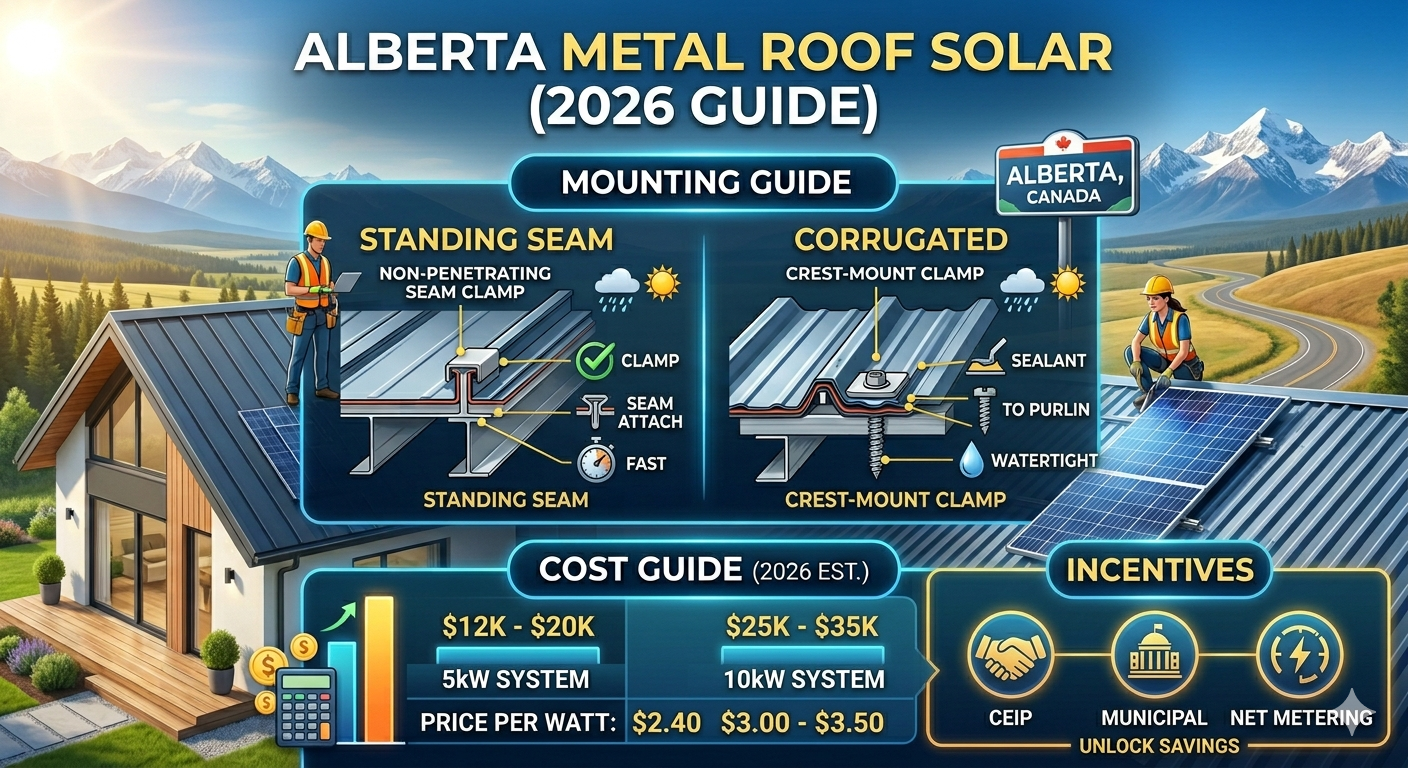
For a typical 1,500 sq. ft. home in Alberta, installing a solar system usually costs between $14,000 and $28,000 before any incentives, depending on system size, panel quality, and roof complexity. Most homeowners choose systems in the 5 kW to 8.5 kW range, which translates to an average cost of $2.40 to $3.50 per watt. With available provincial and municipal incentives, the total can drop to $9,000–$22,000, making solar more affordable.
Here’s how costs typically break down for a 6 kW system, which is common for homes of this size:
Expense Category | Estimated Cost Range | Description |
Solar Panels | $4,500 – $8,000 | The physical modules that generate electricity (~$0.80–$1.30 per watt) |
Inverters & Wiring | $3,000 – $5,000 | Converts DC power from panels into usable AC power and manages grid connectivity |
Racking & Mounting | $2,000 – $3,000 | Hardware to secure panels safely to the roof |
Labor & Permits | $4,000 – $6,000 | Electrician fees, structural assessments, and municipal permits |
Total Gross Cost | $13,500 – $22,000 | Full cost before applying incentives or rebates |
Factors That Can Affect Final Costs:
Energy Needs: Homes with electric heating, heat pumps, or EV charging may need larger systems (8–10 kW), which increases upfront costs but offsets more electricity.
Roof Layout & Pitch: Complex roofs or steep angles may require extra labor and specialized racking.
Battery Storage: Adding a home battery for backup power (like a Tesla Powerwall) can add $10,000–$15,000 to the total cost.
Homeowner Tip: Reviewing past electricity bills and understanding household energy demands helps determine the right system size. Pairing this with Alberta-specific incentives and net-metering programs ensures maximum savings.
Available Incentives in Alberta (2026)
Homeowners in Alberta have access to several programs that can help reduce the cost of installing solar panels and improve energy efficiency. These incentives span clean energy, home affordability, and local financing programs, making solar more accessible in 2026.
Key Programs for Homeowners:
Clean Energy Improvement Program (CEIP): Municipal financing tied to property taxes that can cover up to 100% of solar installation and energy efficiency upgrades. Low-interest rates make it easier for homeowners to invest without large upfront costs.
Canada Greener Homes Affordability Grant: Provides up to $5,000 for eligible lower-income households and offers interest-free loans up to $40,000 over 10 years to finance clean energy projects.
Net Metering & Retail Rates: Alberta homeowners can sell excess electricity back to the grid, potentially earning credit during high-demand periods, especially in summer months.
Federal Clean Technology Investment Tax Credit (ITC): Homeowners and businesses can claim a 30% refundable tax credit on the capital cost of newly installed solar systems.
Additional Considerations:
Reviewing your eligibility for local and federal grants can significantly lower installation costs.
Combining multiple incentives, such as CEIP financing with Greener Homes grants, maximizes savings.
Homeowners should also check Alberta Solar Rebates & Incentives guides to ensure they claim all available programs for 2026.
Homeowner Tip: Before installing a system, calculate your potential savings by combining net-metering earnings and grant incentives — this ensures you choose the most cost-effective solar setup for your 1,500 sq. ft. home.
Comparing Financing & Payment Options
When installing solar panels, Alberta homeowners have several ways to pay for their system. Choosing the right financing method can affect short-term affordability and long-term savings.
1. Upfront Payment:
Paying the full cost at installation eliminates interest and financing fees. Homeowners who can afford this option often get the best overall savings, especially when combined with grants and rebates. The total investment can be offset faster by reduced electricity bills and net-metering credits.
2. CEIP (Clean Energy Improvement Program) Financing:
CEIP allows homeowners to spread payments over time through low-interest, property tax–linked financing. This option reduces the immediate financial burden and makes solar accessible even for those who cannot cover upfront costs. Payments are predictable and often more manageable than traditional loans.
3. Loans & Interest-Free Programs:
Programs like the Canada Greener Homes Affordability Grant offer interest-free loans for eligible homeowners, typically up to $40,000 over 10 years. Combining these loans with CEIP or provincial incentives can significantly lower monthly costs.
4. Return on Investment (ROI):
The payback period for a 1,500 sq. ft. Alberta home typically ranges from 7 to 12 years, depending on system size, energy usage, and incentives. Larger systems may have higher upfront costs but offset a greater portion of electricity bills, shortening the ROI over time.
Homeowner Tip: Compare the total cost of upfront payment versus financing while factoring in grants, net-metering credits, and electricity savings. This ensures the chosen option fits both your budget and long-term energy goals.
Long-Term Benefits
Installing solar panels on a 1,500 sq. ft. Alberta home offers benefits that go far beyond immediate savings.
1. Reduced Carbon Footprint:
Solar energy is clean and renewable, helping homeowners lower their CO₂ emissions. Switching to solar contributes to a healthier environment and supports Alberta’s transition to sustainable energy.
2. Energy Independence:
Generating your own electricity reduces reliance on the grid and provides protection against rising utility rates. Homeowners gain more control over their monthly energy costs, especially during peak demand periods.
3. Increased Home Value:
Homes with solar systems often see a higher resale value, as buyers recognize the long-term energy savings and modern, eco-friendly features. A well-installed solar system can make a property more attractive in the real estate market.
4. Maintenance Expectations:
Solar panels require minimal upkeep. Cleaning the panels occasionally and monitoring the inverter ensures the system runs efficiently. Most inverters last 10–15 years, while panels often come with 25-year performance warranties, offering homeowners peace of mind.
Homeowner Tip: Planning for routine checks and minor maintenance ensures the solar system performs at its best, maximizing both savings and environmental benefits over its lifetime.
Key Considerations Before Installing
Maximizing the benefits of solar panels in Alberta requires careful planning. Homeowners should evaluate their roof, installer, equipment warranties, and seasonal conditions to ensure the system performs efficiently for years.
1. Roof Orientation & Shading
Optimal Tilt & Direction: In Alberta, the best angle for solar panels is roughly 40°–45°, with a south-facing roof being ideal. East- or west-facing roofs are also suitable and can still cover most annual electricity needs.
Shading: Minimize shading from nearby trees or buildings. Homeowners can consult resources like Solar Alberta’s Solar Siting Recommendations or Natural Resources Canada’s Solar Ready Guidelines to identify the best placement.
2. Choosing Trusted Local Installers
Verify Credentials: Look for installers with proven experience and certifications, such as COR-certified or APEGA-certified engineers.
Finding Installers: The Alberta Solar Directory is a good resource for locating vetted local contractors and exploring regional incentive programs.
3. Warranties & Panel Lifespan
Expected Lifespan: Most panels last 25–30 years, maintaining at least 80% of their original efficiency.
Warranty Types:
Product/Material Warranty: Covers manufacturing defects for 10–25 years.
Performance Warranty: Guarantees panels won’t degrade beyond a set efficiency level over 25 years.
Workmanship Warranty: Installer-specific coverage for 2–10 years.
4. Seasonal Efficiency in Alberta Winters
Cold Weather Advantage: Solar panels convert sunlight to electricity, so they often perform better in cold temperatures than in extreme heat.
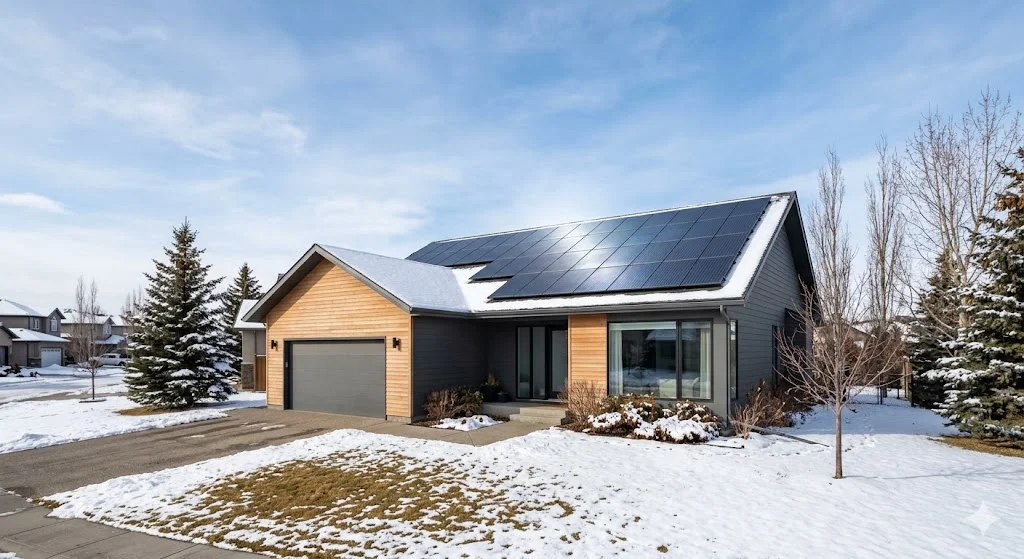
Snow Impact: Alberta’s dry snow typically slides off tilted panels. Studies by NAIT show that snow-covered panels reduce annual energy production by only around 3%.
Homeowner Tip: Considering these factors — roof orientation, trusted installers, warranties, and winter performance ensures your solar system remains efficient, reliable, and cost-effective in Alberta’s climate.
Get Your Free Alberta Solar Quote Today
For Alberta homeowners, the simplest way to explore solar options is through CanadaSolarPro Alberta. This platform connects homeowners with trusted local installers, helping them compare quotes and make informed decisions.
Using CanadaSolarPro Alberta, homeowners can:
Access CEIP financing options to reduce upfront costs.
Calculate potential energy savings for a typical 1,500 sq. ft. home.
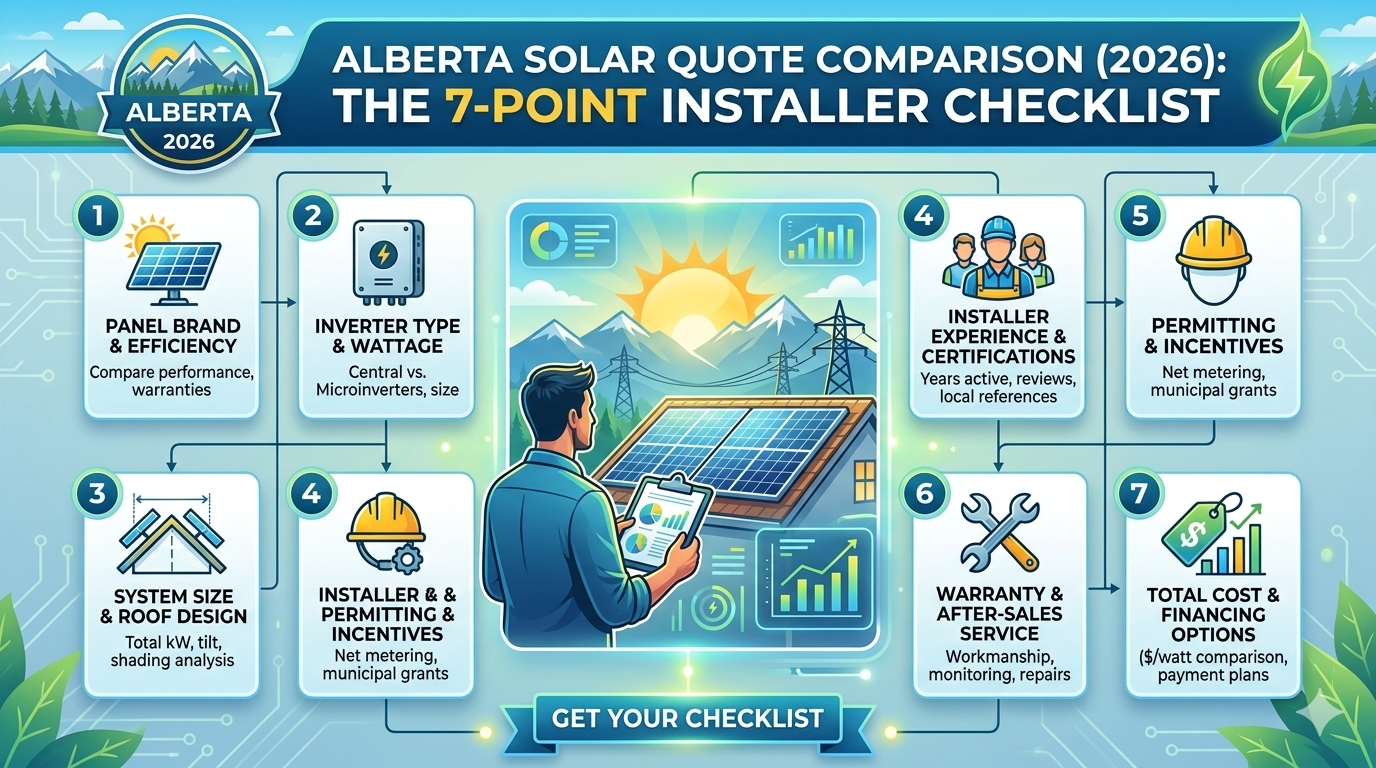
Choose installers with verified credentials and experience in Alberta’s climate.
By using this service, homeowners can see exactly how much they can save, plan the right system size, and start generating clean, renewable energy while contributing to a lower carbon footprint. It’s a fast, reliable way to turn solar goals into reality with confidence.
Homeowner Tip: Visit CanadaSolarPro.com today to request a free, no-obligation solar quote and compare multiple installer offers tailored to your home.
Conclusion
Investing in a solar energy system in Alberta typically ranges from $15,000 to $26,000, depending on system size and installation specifics. By leveraging local installer quotes through CanadaSolarPro Alberta, homeowners can maximize cost savings, available incentives, and long-term energy efficiency. Beyond financial benefits, switching to solar also contributes to a positive environmental impact, reducing your household’s carbon footprint. Comparing options and planning carefully ensures that you get the best combination of affordability, efficiency, and sustainability for your home. Start your solar journey today and enjoy both immediate and long-term advantages.