Ontario electricity rates hit new highs in 2026. Solar interest surged as homeowners sought control over rising energy costs. But not all Ontario solar installers are equal. Licensing gaps, rebate confusion, and warranty risks create costly mistakes.
Canada Solar Pro operates as a neutral platform. We have helped over 10,000 homeowners since 2019. Our role is simple: connect you with vetted installers, provide comparison tools, and explain rebate options. We do not sell installations. We do not take commissions that bias recommendations.
This guide covers how to compare installers, decode Ontario rebates, and avoid the seven most common buyer mistakes. By the end, you will have a framework to evaluate solar quotes Ontario like a professional.
What Changed for Ontario Solar in 2026
Several regulatory and market shifts reshaped the Ontario solar landscape this year. The Ontario Energy Board raised the micro-generation cap from 10 kW to 12 kW in May 2026. This allows homeowners to install larger systems without commercial classification.
Hydro rate increases hit both the regulated price plan and local utility customers. Toronto Hydro, Alectra, and Hydro One all raised delivery charges. These increases make solar economics more favorable than ever.
The HRS rebate program tightened eligibility rules. Load displacement enforcement is now stricter. Systems that export power to the grid for credits cannot claim HRS rebates. We explain this exclusivity rule in detail later.
Electrical Safety Authority (ESA) inspection backlogs vary by region. GTA wait times dropped to two weeks. Northern Ontario still faces four to six week delays. Your installer should know typical timelines for your utility zone.
New solar financing Ontario products entered the market. PACE programs expanded to additional municipalities. Credit unions launched green home equity products. These options compete with traditional solar loans and dealer financing.
Why Choosing Wrong Costs More Than You Think
Scenario A: Sarah's Unlicensed Installer
Sarah hired a contractor who offered the lowest quote in Mississauga. The system was installed in three days. Then the ESA inspector arrived. The electrical work failed code compliance. The installer had no ESA licence. Sarah paid $8,000 to a licensed electrician to fix wiring, panel upgrades, and grounding issues. The original installer disappeared.
Scenario B: Raj's Rebate Clawback
Raj in Ottawa applied for both HRS rebates and net metering. His installer said it was possible. Six months later, the HRS program audited his account. They discovered grid exports in his utility billing data. The $6,500 rebate was clawed back. Raj now owes the province plus interest.
Scenario C: Linda's Dissolved Company
Linda chose budget equipment to save $4,000. Her inverter failed in year three. The installer had dissolved their business. The manufacturer warranty required professional installation proof. Linda could not provide it. She paid $3,200 for a replacement inverter plus labor.
These scenarios share a common thread. Buyers focused on price instead of risk mitigation. The framework below helps you avoid becoming a cautionary tale.
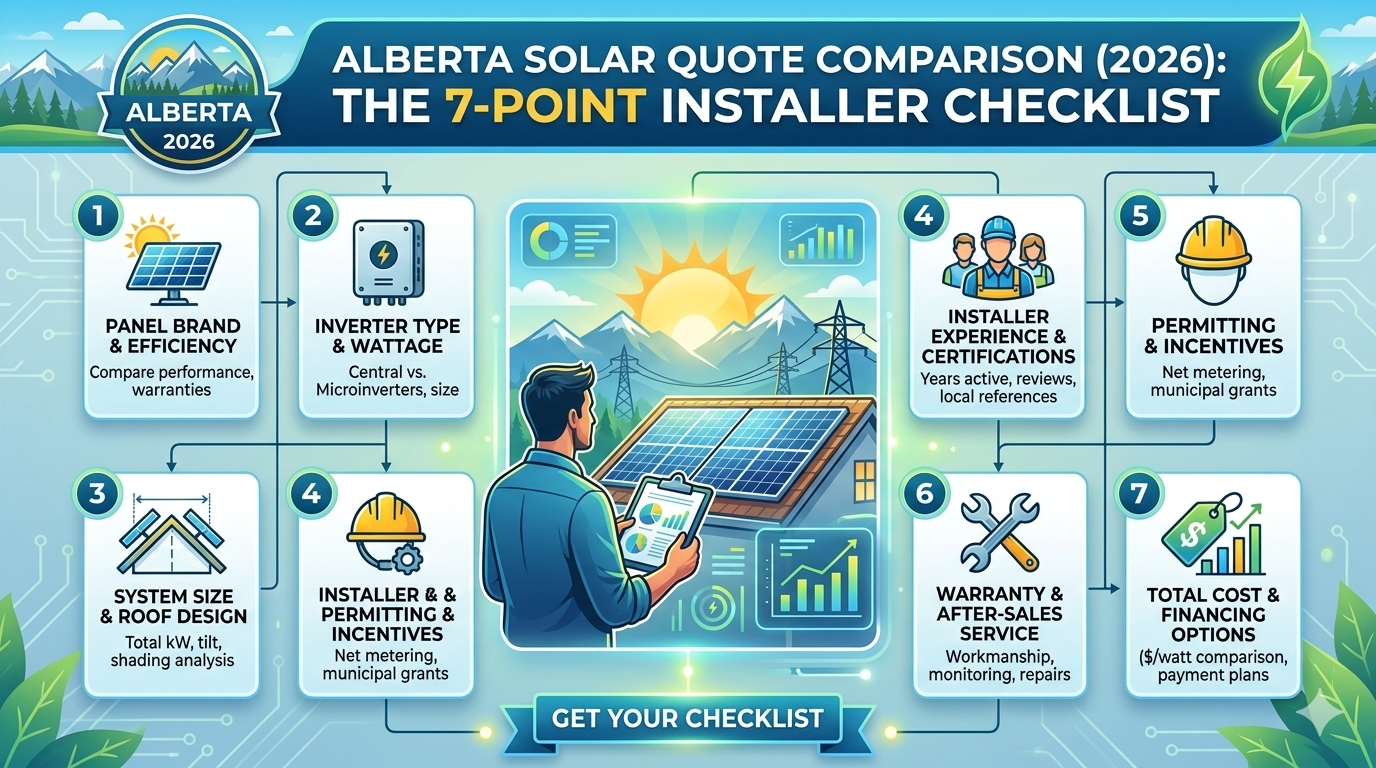
The 7-Point Installer Vetting Framework
1. ESA/ECRA Licensing (Non-Negotiable)
Every solar installation in Ontario requires an Electrical Safety Authority (ESA) licence. The installer or their subcontractor must hold a valid ECRA number. This is not optional. Unlicensed work voids insurance, violates building codes, and creates liability.
Verify the licence before signing any contract. Visit the
ESA contractor lookup portal. Enter the company name or ECRA number. Confirm the licence is active and covers electrical system installation.
Red flag: The installer says "we will subcontract the electrical work." Ask for the subcontractor's ECRA number immediately. Verify it yourself. Do not trust verbal assurances.
2. Turnkey Project Management
Turnkey means the installer manages every step from design to activation. This includes system design, building permits, utility connection applications, ESA inspections, and rebate filing. You should not coordinate with multiple parties.
Ask who handles each task. Professional installers provide a written project plan. It lists their responsibilities and yours. Most legitimate companies handle all regulatory steps.
Red flag: The installer says "you will need to pull your own permit" or "you handle the utility application." This signals inexperience or corner-cutting. Walk away.
3. Equipment Transparency (Named Models, Not Marketing Fluff)
Legitimate quotes name specific equipment models. You should see manufacturer names, model numbers, and spec sheets. Tier 1 panel manufacturers include Canadian Solar, JA Solar, Longi, and Trina Solar. Tier 2 brands may cost less but carry higher failure risk.
Inverter choice matters as much as panels. String inverters work well for simple roof layouts. Microinverters handle shading and complex angles better. Hybrid inverters integrate battery storage. Ask for the inverter model and efficiency rating.
Racking systems secure panels to your roof. Quality racking uses stainless steel hardware and weatherproof flashing. Budget racking rusts and leaks. Ask about the racking manufacturer and warranty coverage.
Red flag: The quote says "premium panels" or "high-efficiency modules" without make and model. This vagueness hides budget equipment. Demand specifics in writing.
4. Triple-Warranty Verification
Solar systems require three separate warranties. Product warranty covers panel hardware for 25 years typically. Performance warranty guarantees output degradation curves. Most panels lose less than 0.5% efficiency per year. Workmanship warranty covers installer labor, roof penetrations, and racking for five to ten years.
The critical question is what happens if the installer goes out of business. Product warranties from manufacturers usually survive. Workmanship warranties disappear with the company. Ask if workmanship coverage transfers to a third-party insurer or bonding agency.
Get all warranty terms in writing. Review the degradation curve. Confirm who honors claims if the installer dissolves. This protects your investment for decades.
5. Local Track Record and Regional Utility Experience
Toronto Hydro connection processes differ from Hydro One and Alectra. Each utility has unique application forms, approval timelines, and technical requirements. An installer experienced with your specific utility moves faster and avoids application errors.
Verify local track record through Google reviews, Better Business Bureau ratings, and references within 50 kilometers of your home. A company with 100 GTA installations but zero in Ottawa may struggle with Hydro Ottawa procedures.
Red flag: The installer has no installations within 50 km of your property. Travel costs aside, they lack local utility knowledge and municipal permit experience.
6. Honest Timeline Communication
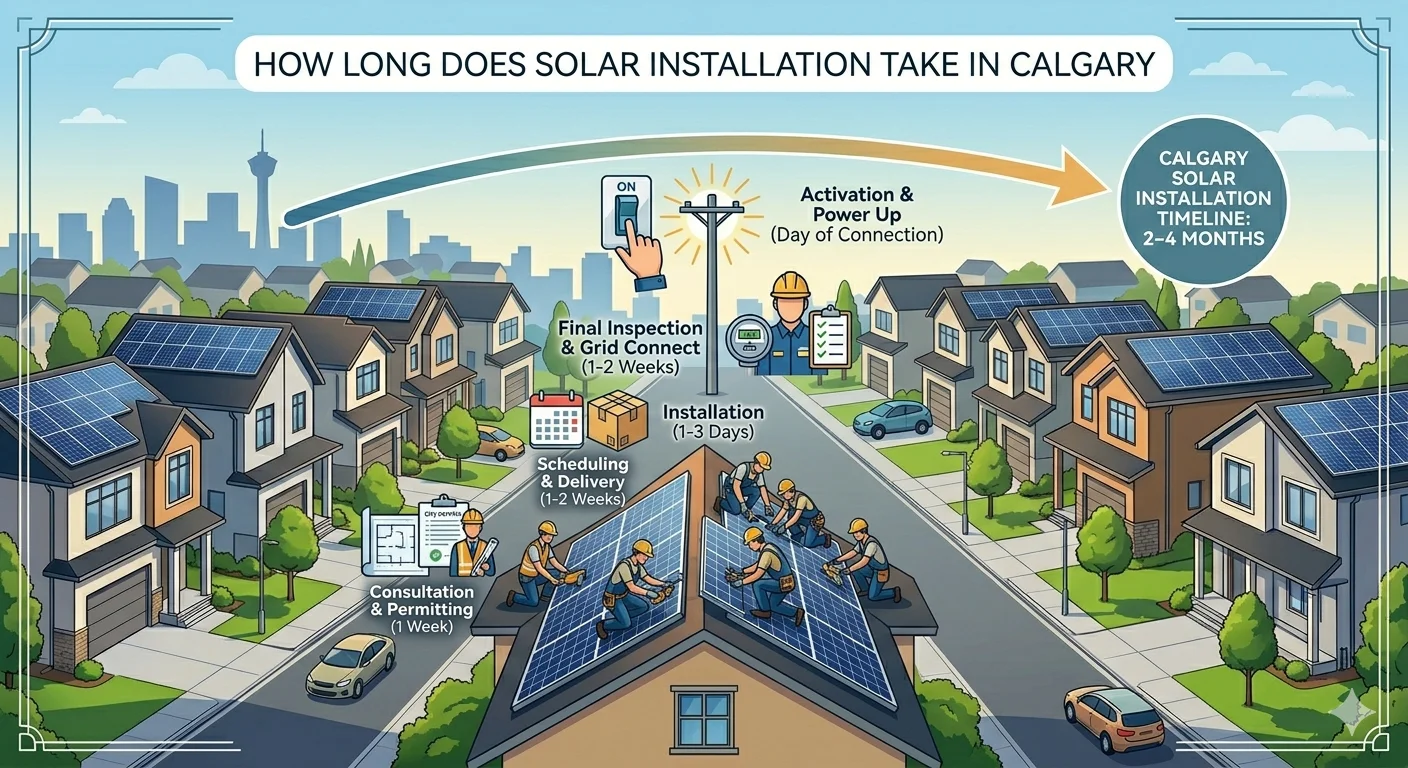
No installer can guarantee installation dates before approvals arrive. Realistic timelines break down into phases. Design takes one to two weeks. Building permits take two to six weeks depending on municipality. Utility connection approval takes three to eight weeks. Physical installation requires one to three days. ESA final inspection takes one to two weeks.
Total timeline from contract signing to grid activation: eight to sixteen weeks for most Ontario homeowners. GTA residents see faster approvals. Northern Ontario faces longer waits due to utility staffing.
Red flag: The installer guarantees "you will be running in two weeks." This is impossible unless permits and utility approval are already in hand. Overpromising on timelines signals desperation or dishonesty.
7. Financing and Payment Structure Clarity
Solar financing Ontario options include cash purchase, secured solar loans, unsecured personal loans, PACE programs, and lease/PPA arrangements. Each has different implications for ownership, liens, and total cost.
Ask who holds the lien if you finance. HELOC and secured loans place liens on your property. This matters when selling your home. Unsecured loans carry higher interest but no lien. PACE financing transfers to new owners through property tax assessment.
Hidden fees include dealer fees, prepayment penalties, and escalator clauses. Some financing products charge 3-5% dealer fees. Read every line of the financing agreement. Calculate total interest paid over the loan term.
Red flag: Pressure to sign same-day for an "expiring discount." Legitimate installers give you time to review financing terms. High-pressure tactics protect the seller, not you.
The 2026 Rebate Rulebook: HRS vs Net Metering
Ontario offers two pathways for solar economics. You cannot use both. This exclusivity rule confuses many homeowners. Understanding the technical and regulatory reasons prevents costly mistakes.
The Exclusivity Rule Explained
The Home Retrofit Savings (HRS) program requires load displacement. Your system must reduce power drawn from the grid. It cannot export excess generation for billing credits. This is enforced through utility meter data audits.
Net metering Ontario operates oppositely. Your meter runs backward when you export power. You receive 1:1 kilowatt-hour credits for grid exports. These credits offset future consumption. The HRS program classifies net metering as grid export. Therefore, net metering participation disqualifies HRS rebates.
Path A: HRS Rebate (Up to $10,000)
HRS rebates provide up to $10,000 for solar plus battery installations. Eligibility requires that you do not export power to the grid for billing credits. This suits homeowners with high daytime electricity usage. Home offices, electric vehicle charging, and heat pumps create daytime demand.
Battery pairing is often necessary. Batteries store excess generation for evening use. This prevents grid export. Consumption monitoring systems prove load displacement to HRS auditors.
Your installer handles the HRS application after system activation. Documentation includes equipment invoices, ESA inspection certificates, and utility connection approval. Processing takes four to eight weeks. Clawback risk exists if you later apply for net metering.
Path B: Net Metering (No Upfront Rebate)
Net metering provides 1:1 kilowatt-hour credits for grid exports. These credits roll over for twelve months. This suits homeowners with low daytime usage. Everyone leaves for work and school during peak solar production hours.
Summer overproduction builds credit banks. You draw these credits during winter when solar production drops. The annual balance resets each May. Unused credits expire.
The Ontario Energy Board raised the net metering cap to 12 kW AC in May 2026. Systems larger than 12 kW require commercial classification. Most residential roofs cannot fit more than 10-11 kW anyway due to space constraints.
No battery is required for net metering. The grid acts as your storage system. This lowers upfront costs by $8,000 to $15,000 compared to battery systems.
Decision Matrix: Which Path Fits You?
Input your annual consumption, usage pattern, budget, and backup power needs into the Canada Solar Pro calculator. The tool estimates 10-year savings for each pathway.
General guidance: HRS suits high daytime users who want backup power. Net metering suits low daytime users prioritizing lowest upfront cost. Both paths deliver positive ROI in most Ontario scenarios.
How to Compare Quotes Like a Pro
Price alone does not tell the full story. A $2.50 per watt quote with budget equipment costs more long-term than a $3.00 per watt quote with premium warranties. Use this five-number comparison method.
The 5-Number Comparison Method
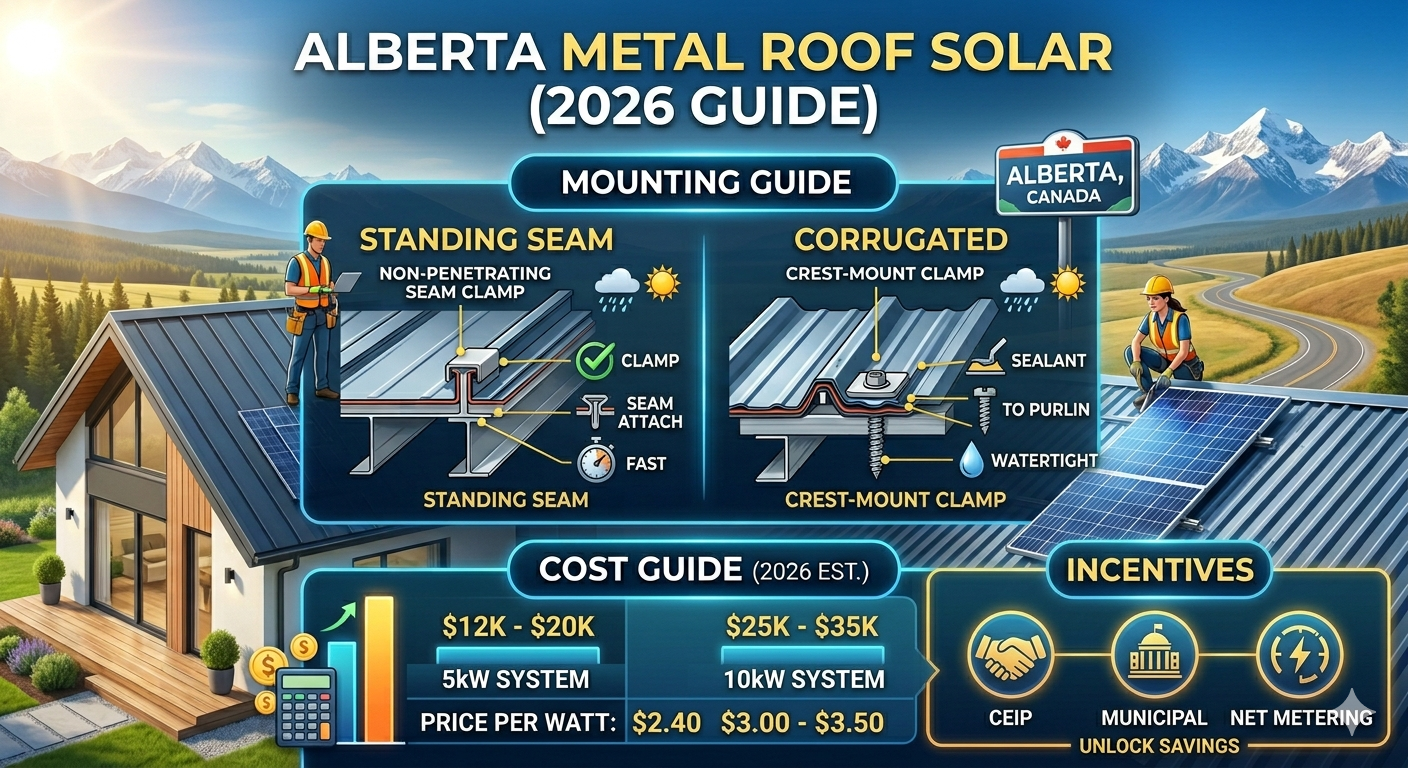
1. Price per watt: Divide total system cost by nameplate capacity. Ontario averages $2.42 to $3.50 per watt in 2026. Higher prices reflect premium equipment, extended warranties, or difficult installations.
2. System size vs consumption match: Compare proposed system size to your annual electricity use. Oversizing wastes money. Undersizing leaves savings on the table. Target 90-110% of annual consumption for net metering paths.
3. Inverter efficiency rating: Check the CEC weighted efficiency percentage. Premium inverters exceed 97% efficiency. Budget models drop to 94-95%. This affects lifetime energy production.
4. Warranty coverage years: Add product warranty plus workmanship warranty. Quality installers offer 25-year panel warranties plus 10-year workmanship. Budget installers offer 25-year panels plus 5-year workmanship.
5. Post-incentive cost: Subtract HRS rebates or calculate net metering savings. This reveals true payback period. A higher upfront cost with HRS rebate may beat a lower cost without rebate.
The Line-Item Audit
Itemized quotes reveal hidden costs. Legitimate quotes break down equipment, labor, permits, utility application fees, monitoring systems, and electrical upgrades separately.
Items often hidden in package pricing include electrical panel upgrades, trenching for ground-mount systems, tree trimming for shading clearance, and old equipment removal. Ask for line-item breakdowns before comparing.
Download the apples-to-apples comparison template to standardize quote reviews across multiple installers.
Regional Installer Landscape: What to Expect by Ontario Region
Installer density, utility processes, timelines, and pricing vary significantly across Ontario. Understanding your region's norms helps set realistic expectations.
GTA (Toronto, Mississauga, Brampton, Vaughan)
Installer density: Over 100 licensed contractors operate in the GTA. Competition keeps pricing competitive. Utility coverage includes Toronto Hydro, Alectra, and Hydro One depending on your postal code.
Typical timeline from permit to activation: 6 to 10 weeks. Toronto building departments process permits faster than surrounding municipalities. Average price ranges from $2.60 to $3.20 per watt.
Unique consideration: Condo and townhome installations require board approval. Strata councils often restrict roof access. Ground-mount and carport systems offer alternatives.
Ottawa and Eastern Ontario
Installer density: 30 to 50 licensed contractors serve the region. Hydro Ottawa and Hydro One cover most areas. Typical timeline: 8 to 12 weeks from permit to activation.
Average price: $2.50 to $3.10 per watt. Prices trend lower than GTA due to lower labor costs and less competition-driven marketing spend.
Unique consideration: Bilingual service availability matters for francophone homeowners. Rural net metering customers face longer utility approval times due to grid capacity studies.
Hamilton, Kitchener-Waterloo, London (Southwestern Ontario)
Installer density: 40 to 60 contractors. Utilities include Alectra, Kitchener-Wilmot Hydro, London Hydro, and Hydro One. Timeline: 7 to 11 weeks. Average price: $2.45 to $3.00 per watt.
Unique consideration: Agricultural solar crossover exists. Farm operations often combine residential rooftop with barn or workshop systems. Some installers specialize in ag solar.
Northern Ontario (Sudbury, Thunder Bay, Sault Ste. Marie)
Installer density: 10 to 20 contractors. Hydro One dominates utility coverage. Timeline: 10 to 16 weeks due to travel logistics and parts availability.
Average price: $2.80 to $3.50 per watt. Travel premiums and winter installation challenges drive costs higher. Snow load requirements increase racking costs.
Unique consideration: Off-grid hybrid systems generate more interest. Battery storage paired with diesel generators provides backup for unreliable grid areas.
Financing Options Decoded: What Each Type Actually Costs
Most Ontario homeowners finance solar installations. Cash purchases are ideal but rare. Understanding financing trade-offs prevents overpaying for capital access.
Option 1: Cash Purchase
Pros: Lowest total cost. Full tax credit and rebate capture. Clean property title with no liens.
Cons: High upfront barrier. Typical systems cost $15,000 to $35,000 before rebates.
Best for: Retirees with liquid savings, high net worth individuals, homeowners with HELOC access willing to pay it down quickly.
Option 2: Solar Loan (Secured)
How it works: Home equity line of credit (HELOC) or green home equity loan from banks and credit unions. Interest rates in 2026: 6.5% to 9.5% typical.
Pros: Spread cost over 5 to 10 years. You still own the system. Tax benefits and rebates flow to you.
Cons: Interest cost adds thousands. Lien placed on property complicates home sales.
Best for: Homeowners with equity, stable income, preference for 5 to 10 year payback periods.
Option 3: Solar Loan (Unsecured)
How it works: Personal loan or dealer financing from solar companies. Interest rates: 8.5% to 14.5% in 2026.
Pros: No lien on property. Faster approval than secured loans.
Cons: Higher interest rates. Shorter terms (5 to 7 years) mean higher monthly payments.
Best for: Quick approval needs, smaller system sizes, homeowners without home equity.
Option 4: PACE Financing
How it works: Property Assessed Clean Energy programs attach repayment to property tax assessments. Availability: Limited Ontario rollout. Check your municipality.
Pros: Transferable to new property owners. Long terms of 15 to 20 years lower monthly payments.
Cons: Not widely available yet. Property tax increase may affect affordability assessments.
Best for: Long-term homeowners in participating regions with low property tax rates.
Option 5: Lease/PPA
How it works: Third-party company owns the system. You pay per kilowatt-hour or fixed monthly fee. Rare in Ontario but emerging.
Pros: Zero upfront cost. Maintenance included in agreement.
Cons: You never own the system. Home sales require buyer assumption of lease. Higher lifetime cost than ownership.
Best for: Homeowners with low upfront budget, short-term ownership plans (5 to 10 years), or those who prioritize simplicity over savings.
Questions to Ask Every Installer Before You Sign
Use this interrogation checklist during sales calls. Legitimate installers answer confidently. Evasive answers reveal problems.
Licensing and Credentials
• What is your ESA/ECRA licence number? Verify it on the spot using your phone.
• Are you the installing contractor or a sales broker?
• Who pulls the building permit: you or me?
Equipment and Warranties
• What is the exact make and model of panels, inverter, and racking?
• Can I see manufacturer spec sheets and warranty documents?
• If you go out of business, who honors the workmanship warranty?
Process and Timeline
• What is your current permit-to-activation timeline for my utility?
• What happens if utility approval takes six months?
• Do you handle the HRS rebate application, or do I?
Pricing and Financing
• Is this quote itemized or a package price?
• What is NOT included in this price? Panel upgrades, trenching, tree trimming?
• If I finance, who holds the loan: you or a third party?
• What are the dealer fees and prepayment penalties?
Post-Installation
• What monitoring system is included, and for how long?
• What is your response time for warranty claims?
• Do you handle the ESA final inspection, or do I book it?
Red Flags That Should End the Conversation Immediately
Dealbreaker Tier (walk away immediately):
• Cannot provide ESA/ECRA licence number
• Requires full payment before installation
• Tells you to pull your own building permit
• Guarantees HRS rebate plus net metering together
• Refuses to name equipment brands in writing
Warning Tier (proceed with extreme caution):
• High-pressure same-day signing tactics
• Price significantly below $2.40 per watt (budget equipment likely)
• No local installation references within 50 kilometers
• Workmanship warranty under five years
• Cannot explain HRS versus net metering difference
Investigate Further Tier (ask follow-up questions):
• New company (under three years in business)
• Subcontracts all installation work
• Financing only through one captive lender
• No online reviews or Better Business Bureau profile
How Canada Solar Pro Helps You Compare Without Sales Pressure
We connect homeowners with vetted installers, provide comparison tools, and offer rebate guidance. We do not sell installations. We do not take commissions that bias recommendations. We do not pressure decisions.
How it works:
• Enter your address and annual electricity usage
• Get matched with licensed installers in your region
• Receive three to four itemized quotes
• Use our comparison tools to evaluate options
• Choose an installer yourself or walk away
Why it matters in 2026: Installer consolidation means fewer independent options. Platforms like ours keep competition honest. Homeowners benefit from transparent pricing and verified credentials.
Real Ontario Homeowner Scenarios
Case Study 1: Sarah, Toronto (5.8 kW, HRS Path)
Home: 1,200 square foot bungalow. High daytime usage from electric vehicle charging and home office.
System: 5.8 kW solar plus 10 kWh battery. Installer choice: Compared four solar quotes Ontario, chose mid-price option with best battery warranty.
Rebate: $7,500 HRS (solar plus battery combined).
Outcome: 72% self-consumption rate. $145 monthly savings. 7.2-year payback period.
Case Study 2: Raj, Ottawa (9.6 kW, Net Metering Path)
Home: 2,400 square foot detached. Low daytime usage (everyone at work and school).
System: 9.6 kW, no battery. Installer choice: Prioritized Hydro Ottawa experience, verified 15+ local installations.
Rebate: None (net metering path).
Outcome: 40% of summer credits rolled to winter months. $182 average monthly savings. 8.9-year payback period.
Case Study 3: Linda, Thunder Bay (7.2 kW, Financing Challenge)
Home: 1,800 square feet. Fixed-income retiree.
System: 7.2 kW. Installer choice: Needed financing, compared HELOC versus dealer loan.
Financing: Green HELOC at 7.2% interest, 10-year term.
Outcome: Monthly payment $195, electricity savings $160. Small cash flow shortfall first four years, then profit every month after loan payoff.
Conclusion
Choosing a solar installer is about risk mitigation, not just price. The lowest quote often hides the highest risk. Budget equipment, weak warranties, and unlicensed work cost more long-term than premium systems from established contractors.
The 2026 Ontario solar market offers more options than ever. Rebate programs stabilized. Financing products expanded. Equipment quality improved. But more options create more need for systematic vetting.
Canada Solar Pro provides neutral comparison tools, installer matching, and education-first guidance. We do not sell installations. We do not take biased commissions. We help you make informed decisions without sales pressure.
Your next step: Get matched with vetted installers in your region. Compare quotes using the frameworks in this guide. Choose the installer that best balances price, warranty strength, and local experience.
Get free Ontario solar quotes now. No obligation. No sales calls. Just transparent comparison.