Alberta homeowners paid more for electricity in 2024 than at any point in the province's history. Rates climbed over 40% between 2021 and 2024 and according to the Alberta Utilities Commission, residential electricity costs are projected to keep rising through the decade.
At the same time, the cost of installing solar has dropped by more than 60% over the last ten years. A technology that once required a significant financial leap has become one of the most straightforward home investments available particularly in a province that receives more annual sunshine than any other populated region in Canada.
Yet most Alberta homeowners still hesitate. Not because solar does not make sense here it clearly does. But because the pricing picture is genuinely difficult to read. Quotes vary by thousands of dollars with no clear explanation. Incentives that closed in 2024 still appear as active on dozens of pages. The difference between a 6 kW and a 10 kW system, and why one home needs one over the other, is rarely explained in plain language.
This guide is the clear answer to all of that. It covers real 2026 solar panel installation costs broken down by system size, every factor that moves a quote up or down, which financing programs are active and which are closed, and what a genuine payback period looks like for a typical Alberta home with actual numbers, not ranges pulled from three years ago.
Want to see what solar costs for your specific home? Get a free Alberta solar quote →
What Do Solar Panels Cost in Alberta in 2026?
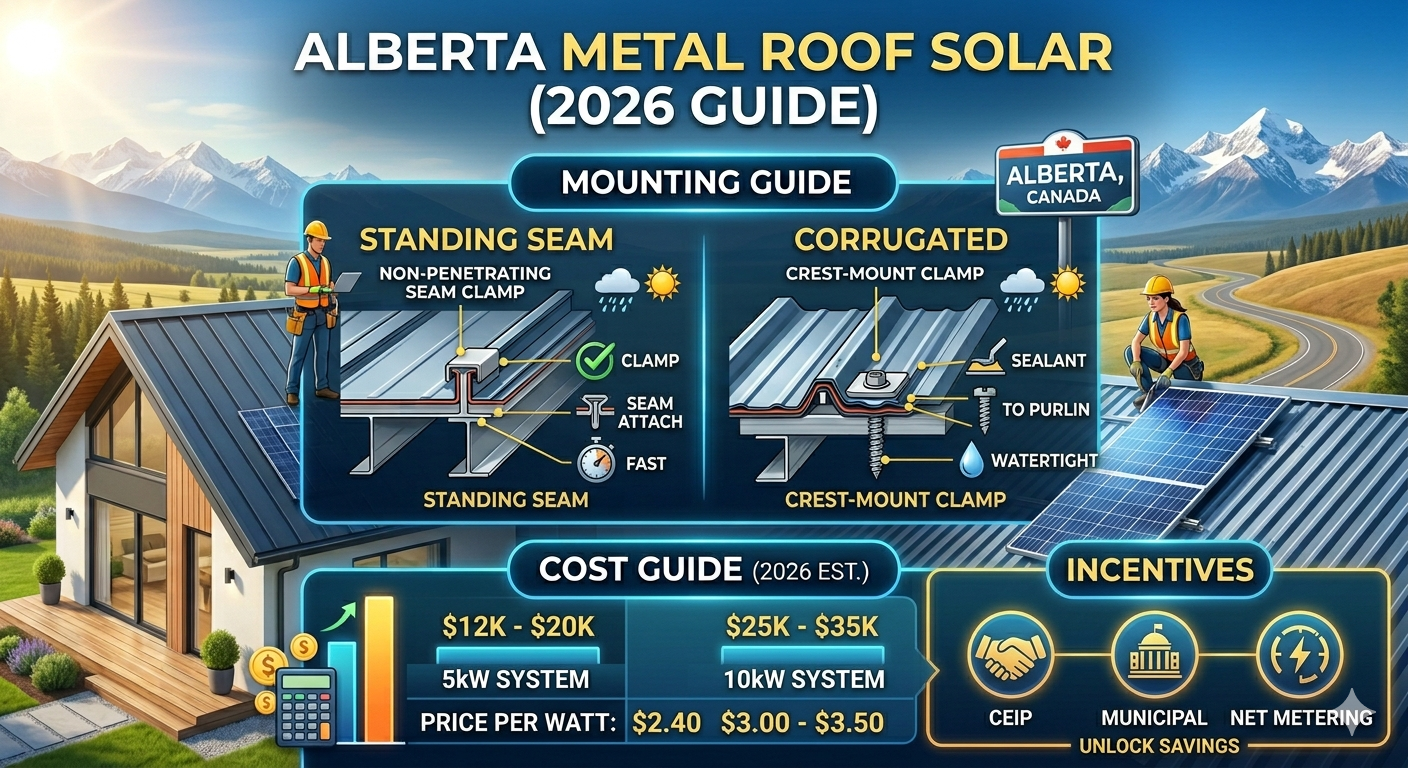
The average residential solar installation in Alberta costs $2.50 to $3.50 per watt installed, before any incentives or financing programs.
For a typical home, that works out to:
System Size | Best For | Cost Before Incentives | With CEIP ($0 Upfront) |
5 kW | Small home / low usage | $12,500 – $17,500 | Possible |
8 kW | Average Alberta home | $20,000 – $28,000 | Possible |
10 kW | Larger home / EV charging | $25,000 – $35,000 | Possible |
12–15 kW | High usage / acreage | $30,000 – $52,500 | Possible |
Most Alberta homeowners need an 8–10 kW system.
The wide cost range exists because every home is different your roof, your electricity usage, your location, and your equipment choices all affect the final number. The most reliable way to know your exact solar panel cost in Alberta is to get a proper quote based on your actual property.
Not sure where to start? See how the quote process works →
What Factors Affect Solar Panel Cost in Alberta?
Two quotes for the same neighbourhood can differ by thousands of dollars. Here is exactly why and which factors matter most.
1. System Size and Your Monthly Energy Usage
System size is the single biggest driver of solar installation cost in Alberta. The larger the system, the more it costs but the more electricity you offset each month.
Alberta homes use an average of 600 – 900 kWh of electricity per month, depending heavily on whether you heat with natural gas or electricity. A home with a gas furnace and gas water heater will sit at the lower end. An all-electric home or one with a heat pump and an EV charger will need a significantly larger system.
A simple starting rule: 1 kW of solar generates approximately 100–120 kWh per month in Alberta conditions.
Pull your last 12 months of electricity bills and add up your total annual usage. That is the number your installer will use to size your system. Alberta's micro-generation regulations also allow you to install panels capable of producing up to 110% of your annual energy consumption your installer will calculate this cap as part of the design.
2. Solar Panel Type and Brand Quality
Not all panels perform equally, and the difference shows over time.
Monocrystalline panels are the standard for residential solar in Alberta. They reach 20–23% efficiency newer N-type TOPCon models now hit 22–23% perform better in cold temperatures, and carry 25–30 year product warranties.
Polycrystalline panels are less common now. They peak at 13–17% efficiency, take up more roof space for the same output, and most quality Alberta installers have moved away from recommending them.
Brand also matters for warranty security. Tier 1 manufacturers with strong Canadian market presence Canadian Solar, LONGi, REC, and Silfab carry better long-term warranty backing than off-brand alternatives. Expect to pay $200–$450 per panel depending on wattage, efficiency, and manufacturer.
3. Inverter Type
Your inverter converts DC electricity from your panels into the AC electricity your home uses. The type affects both cost and long-term performance.
String inverters are the most common and affordable ($1,000–$2,000). They work well for simple, consistent south-facing roofs. If one panel underperforms, it pulls the full string down slightly.
Microinverters attach to each panel individually, optimising each one independently. They are the better choice for roofs with shade, dormers, or multiple angles. They add $1,500–$3,500 to total cost but carry 25-year warranties significantly longer than the 10–12 years typical for string inverters.
Hybrid inverters are required if you want to add battery storage later. Budget an extra $1,000–$2,000 over a standard string inverter.
4. Your Roof: Design, Pitch, and Condition
A simple south-facing roof at a 30–45 degree pitch is the ideal scenario. Every variation from that adds complexity and cost.
East or west-facing roofs produce 10–20% less power than south-facing. Multiple roof planes, dormers, skylights, and roof vents increase labour time and, in some cases, require additional racking hardware. A complex roof can add $1,000–$3,000 to an otherwise identical installation.
Roof condition is also assessed before any installation begins. Most installers will not place panels on a roof with fewer than 10 good years remaining removing and reinstalling them mid-warranty period is an expensive problem. If your shingles are aging, factor in a re-roof cost alongside your solar investment.
One Alberta-specific consideration worth knowing: hail is a genuine risk, particularly in southern Alberta. Experienced local installers often recommend hail-rated panels (IEC 61215 impact resistance tested) and heavier racking systems. This adds upfront cost but is worth the protection in Calgary and Lethbridge hail zones.
5. Battery Storage (Optional Add-On)
Battery storage is not required for a grid-tied solar system in Alberta but it is worth understanding.
A home battery system adds $8,000–$17,000 to the project cost. Popular options include the Tesla Powerwall 3 and the LG Energy Solution RESU. With Alberta's reliable grid and strong net metering Alberta credits available from retailers like ENMAX, most homeowners see a payback of 15+ years on battery storage alone.
The primary reasons to add a battery are backup power during outages, or maximising self-consumption if your utility buyback rate is significantly below your import rate.
6. Electrical Panel Upgrades
This one surprises many homeowners. If your electrical panel is older than 25 years or rated below 200 amps, it may need upgrading before solar can be safely connected. A panel upgrade adds $1,500–$3,000 to your project cost.
A thorough installer will flag this during the initial site assessment. Make sure it is included in your quote as a confirmed cost or listed as a conditional add-on before comparing quotes from multiple companies.
7. Your Location Within Alberta
Alberta is the sunniest populated province in Canada. Calgary averages 333 sunny days per year and Edmonton averages 325 ranking first and second nationally. But location still affects the solar panel cost in Alberta and, more importantly, your production and return.
Southern Alberta cities Lethbridge, Medicine Hat, and Brooks receive more peak sun hours annually, producing slightly more electricity per kilowatt of installed capacity. This improves your payback period meaningfully compared to northern communities.
Full Cost Breakdown What Are You Actually Paying For?
When a quote lands in your inbox, here is approximately where the money goes on a typical 8–10 kW residential solar installation in Alberta:
Cost Component | Approx. % of Total | Typical Range (8–10 kW) |
Solar panels (equipment) | 30–35% | $6,000 – $12,000 |
Inverter(s) | 10–15% | $2,000 – $5,000 |
Mounting hardware & racking | 8–12% | $1,600 – $4,000 |
Electrical wiring & components | 8–12% | $1,600 – $4,000 |
Permits & utility interconnection | 3–5% | $600 – $1,800 |
Installation labour | 15–25% | $3,000 – $8,750 |
Design, admin & overhead | 10–15% | $2,000 – $5,250 |
Always confirm that a quote includes all of the above. Some installers quote panels and equipment only, then add labour, electrical work, and permitting as separate line items. A complete all-in solar panel quote in Alberta should cover every row in that table ask for it in writing before signing anything.
What Real Homeowners Say?
Before getting into incentives, it helps to hear from people who have already been through the process.
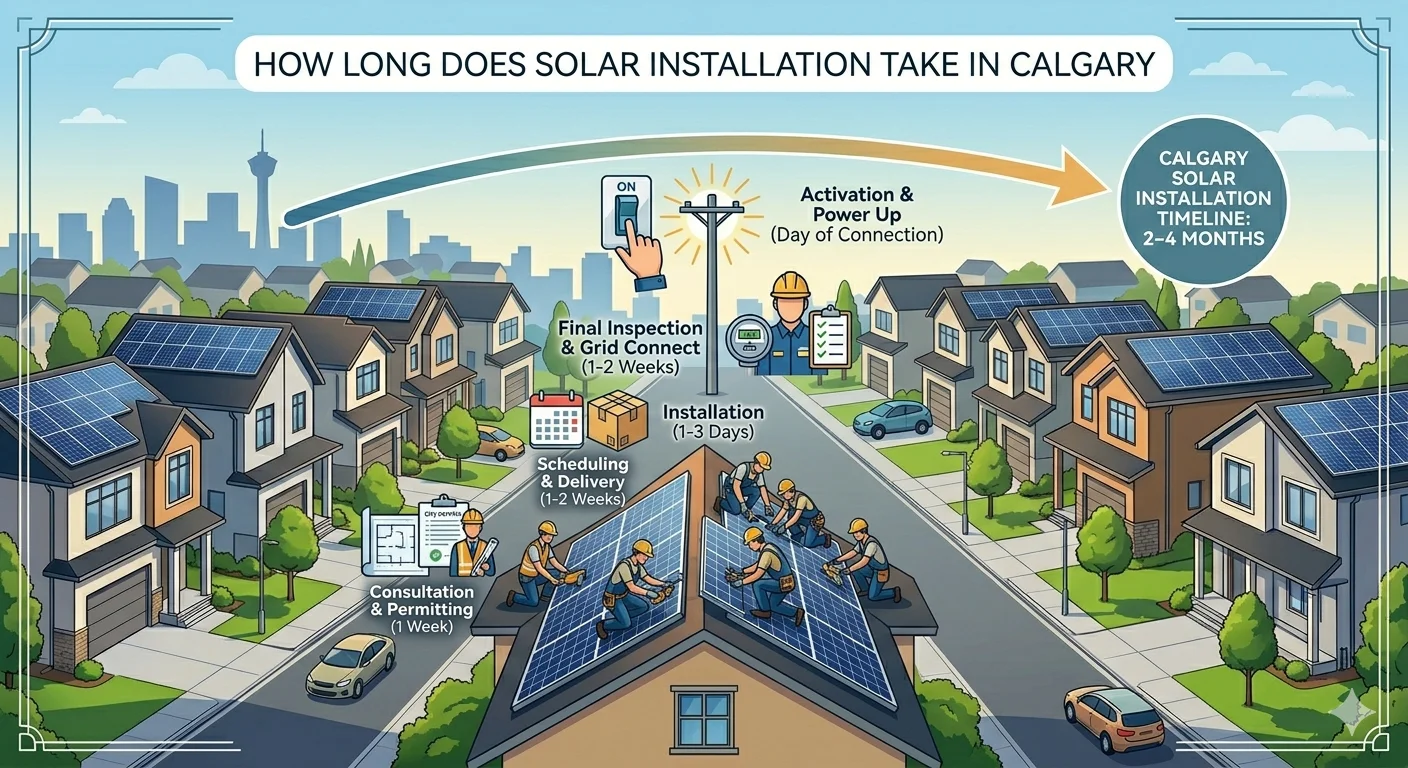
"I was skeptical about whether solar would actually lower my bill. The numbers were broken down clearly with real figures. I was around $220/month and now I'm closer to $70. Took about 3 weeks total. Small permit delay, but communication was consistent throughout." Haley & Neal Anthony
"Way smoother than I expected. From first call to install was just under 3 weeks. Install got pushed a couple of days due to weather, but overall a solid experience. The whole team kept me in the loop the entire time." Alexandra Yun, Calgary, AB
"I had been putting this off for a while because I didn't trust the process. Once everything was explained step by step, it made sense. Communication was consistent throughout." Jaskirat Singh
"My biggest concern was what happens after install. The warranty was explained properly and there was follow-up after the job. A small issue came up and it was fixed within 2 days." Adrian Massey
These are typical experiences. The pattern that comes up consistently: clear numbers upfront, no pressure, and reliable follow-through on the installation itself.
See all reviews on Trustpilot →
Solar Incentives and Programs Available in Alberta 2026
This is where the economics of solar panels in Alberta shift significantly in the homeowner's favour.
For a full breakdown of every active program available to you, visit the Alberta Solar Incentives page →
Alberta Net Metering Program
Net metering in Alberta is the most valuable ongoing financial benefit for solar owners. Here is how it works:
When your panels produce more electricity than your home is using at that moment, the surplus flows to the grid. Your electricity retailer tracks this and credits your bill.
Alberta's deregulated electricity market means net metering Alberta buyback rates vary by retailer. ENMAX's Easymax Seasonal Solar™ program pays up to 30¢/kWh for summer exports among the highest residential buyback rates in Canada. EPCOR, ATCO, and FortisAlberta all offer their own micro-generation programs.
Credits accumulated during summer production offset winter bills when your panels produce less. A properly sized 8 kW system in Calgary can reduce a typical electricity bill to near zero on an annual basis.
To enrol, your installer files a Micro-generation Agreement with your wire service provider. A bidirectional meter is installed typically at no cost from your utility.
Clean Energy Improvement Program (CEIP) $0 Upfront Financing
CEIP is the most powerful solar financing tool available to Alberta homeowners right now.
It allows you to finance up to 100% of your solar installation cost up to $50,000 with repayment through your property tax bill over up to 20 years. The financing is attached to your property, not to you personally. If you sell, the new owner assumes the remaining payments along with the lower electricity bills. You can also pay it off in full at any time with no penalties.
Interest rates vary by municipality ranging from approximately 3.5% (Spruce Grove) to 5.66–5.75% (Calgary, Edmonton) as of early 2026.
For most homeowners, the monthly CEIP payment is less than the electricity bill it replaces meaning you are cash-flow positive from day one with zero upfront investment.
Municipalities currently participating include: Calgary, Edmonton, St. Albert, Leduc, Beaumont, Spruce Grove, Sturgeon County, Grande Prairie, and others. New municipalities are joining the program regularly.
Note: Calgary's residential CEIP intake was closed as of early 2026, with the next window expected in spring 2026. Applications fill on a first-come, first-served basis.
Canada Greener Homes Loan
The Canada Greener Homes Loan (up to $40,000 interest-free) closed to new applications on October 1, 2025. Existing approved applications continue to be processed. No new applications are being accepted.
Canada Greener Homes Grant
The federal grant of up to $5,000 for solar installations closed permanently in February 2024. It is fully closed and there is no announced replacement at the federal level.
Seniors Home Adaptation and Repair Program (SHARP)
Alberta seniors with low-to-moderate household incomes may qualify for SHARP a provincial low-interest loan of up to $40,000 for home upgrades including solar panel installation in Alberta. This program is administered by the Government of Alberta and is separate from CEIP.
Municipal Solar Incentives Worth Knowing
Some Alberta municipalities offer additional incentives on top of CEIP financing:
Wetaskiwin Solar Installation Grant Program $5,000 rebate for residential systems of 4 kW or more. 2025 applications closed; expected to reopen for 2026.
Medicine Hat Smart Existing Homes Incentive Up to $1,000 specifically for solar installations as part of a broader $5,000 home energy upgrade program.
Check directly with each municipality for current application status before planning your installation timeline around these programs.
Solar Panel Cost by City in Alberta
Installation costs, sun hours, and annual production vary enough by city to affect your overall return on investment.
City | Avg. 8 kW System Cost | Peak Sun Hours/Day | Est. Annual Production | Wire Service |
Calgary | $20,000 – $28,000 | 4.5 – 5.0 hrs | ~9,500 kWh | ENMAX |
Edmonton | $20,000 – $27,000 | 4.2 – 4.7 hrs | ~9,000 kWh | EPCOR |
Lethbridge | $19,500 – $27,000 | 4.7 – 5.2 hrs | ~10,000 kWh | City of Lethbridge |
Red Deer | $20,000 – $28,000 | 4.3 – 4.8 hrs | ~9,200 kWh | City of Red Deer |
Medicine Hat | $19,000 – $26,500 | 4.8 – 5.3 hrs | ~10,200 kWh | City of Medicine Hat |
Grande Prairie | $20,500 – $28,500 | 3.9 – 4.5 hrs | ~8,500 kWh | ATCO Electric |
Note: Production estimates are based on south-facing roofs at optimal pitch. East/west-facing installations typically produce 10–20% less.
Southern Alberta Medicine Hat, Lethbridge, and Brooks consistently ranks among the strongest residential solar Alberta ROI locations in the entire country.
Is Solar Worth It in Alberta? Payback Period and Real ROI
Real Example: Average Calgary Home
Monthly electricity bill before solar: $150/month (~900 kWh)
System size recommended: 8 kW
Installed cost before incentives: $24,000
With CEIP financing at 5.7% over 15 years: ~$195/month
Monthly electricity bill reduction: $130–$150
Net cash position from month one: roughly break-even to positive
After the CEIP loan is paid off in year 15, that same homeowner has 10+ years of panel warranty life remaining generating electricity at effectively zero cost.
Payback Period for Cash Purchases
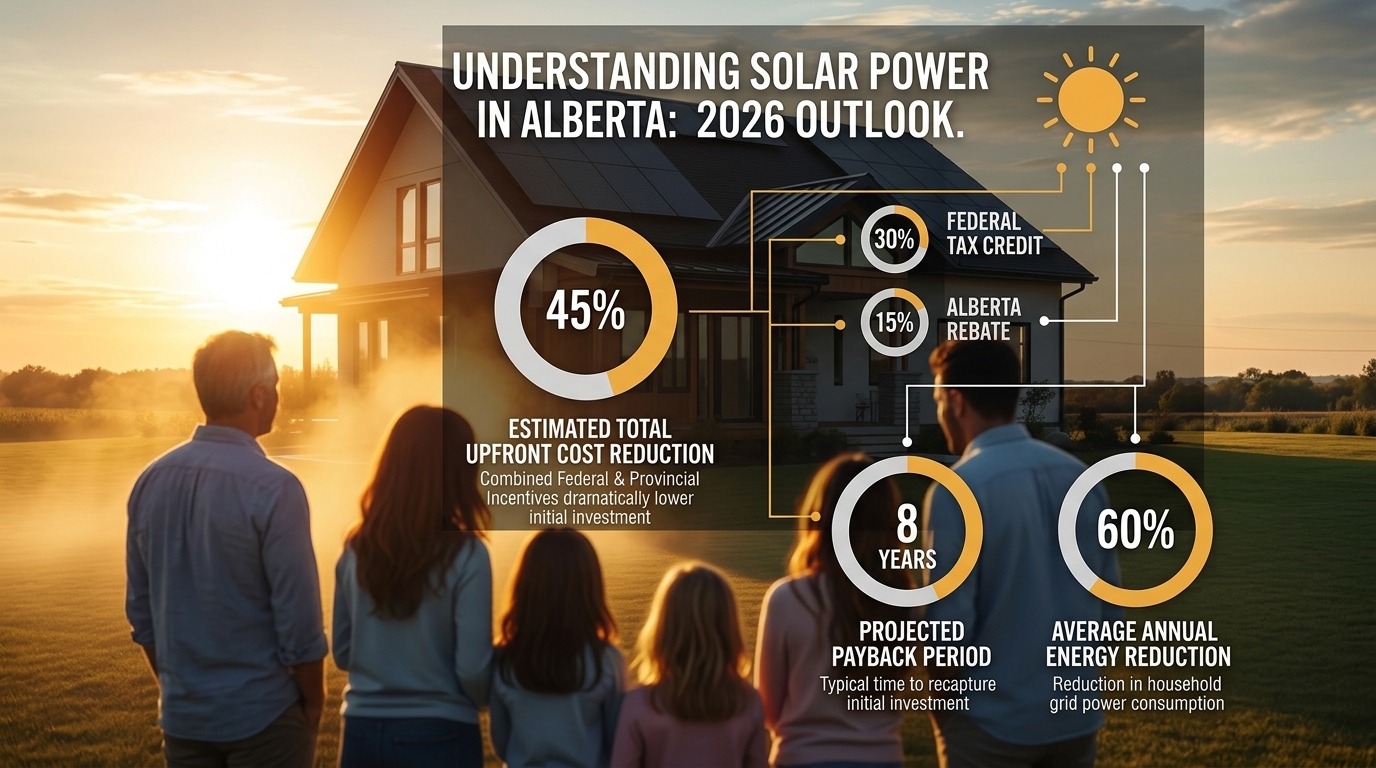
For homeowners paying cash, the typical solar panel payback period in Alberta is 7–11 years, depending on system size, usage, roof orientation, and which incentives apply.
After payback, the system continues generating power for 15+ more years. Most Alberta homeowners calculate $25,000 to $50,000 in lifetime electricity savings on a standard 8–10 kW system.
Does Solar Increase Home Value?
Studies consistently show that solar-equipped homes sell faster and at a premium over equivalent homes without panels. In Alberta's deregulated market where electricity rates have risen over 40% in recent years buyers increasingly factor ongoing energy costs into purchase decisions.
The general consensus across Canadian markets points to a 3–5% increase in resale value for a properly installed system.
When Solar Does Not Make Sense
Solar is not the right move for every home. It is worth being direct about this.
Consider waiting or reconsidering if:
Your roof has fewer than 10 years of life remaining and a re-roof would add $10,000+ to the project
Your roof is heavily shaded by mature trees with no viable south-facing panels
You plan to move within 3–4 years and the CEIP balance would need to be settled on sale
Your electricity usage is very low (under 400 kWh/month) the payback period extends significantly
Even in these cases, a free quote conversation costs nothing and gives you a clear number to work from.
Have questions before committing to a quote? Browse the most common homeowner questions →
How to Get an Accurate Solar Quote in Alberta
What a Complete Quote Should Include
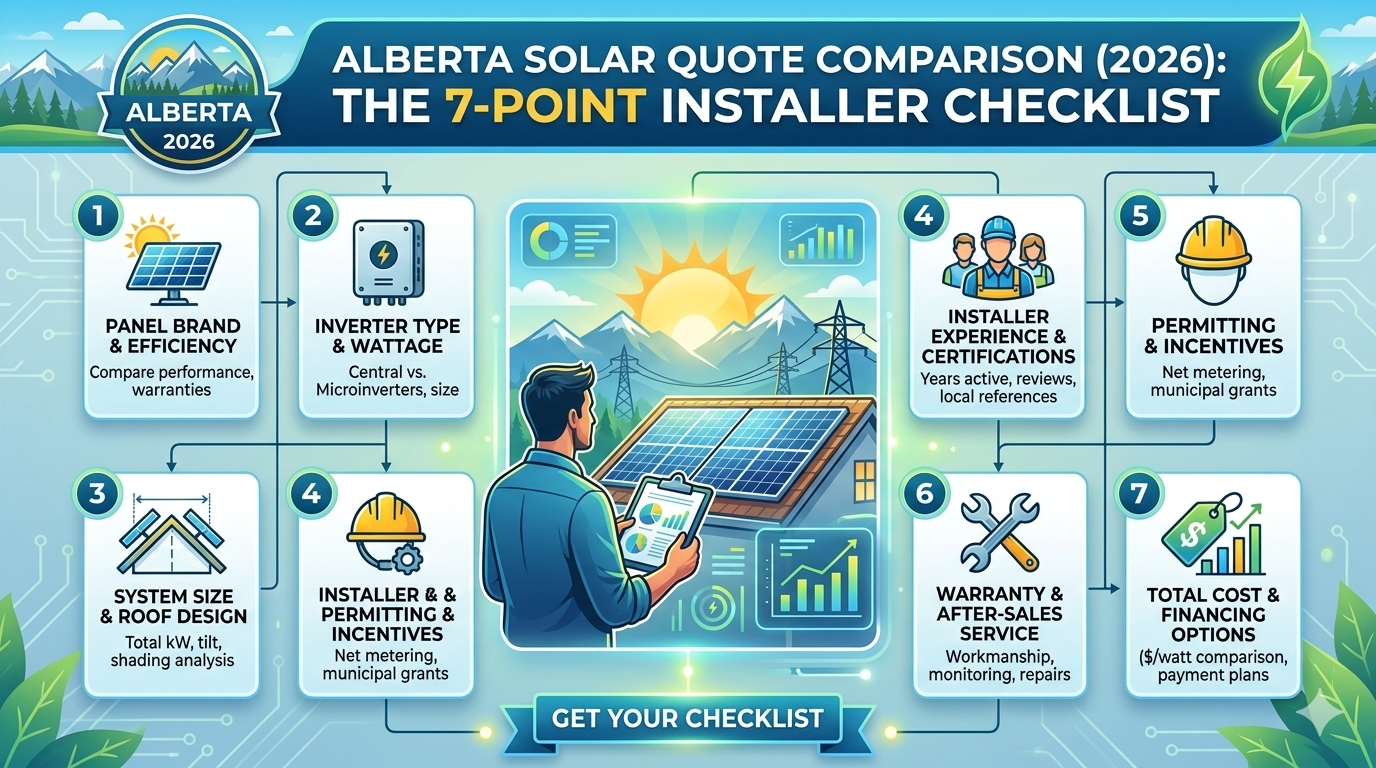
A proper all-in solar panel quote in Alberta should clearly itemise:
System size and panel specifications
Inverter type and brand
Racking and mounting hardware
All electrical work including any panel upgrade if needed
Building and electrical permits
Utility micro-generation application filing
System monitoring setup
All warranties panels, inverter, and workmanship
Use solar panel price per watt in Alberta to compare quotes fairly. Divide the total all-in price by the total system wattage. A $24,000 quote for an 8 kW system equals $3.00/watt. This metric lets you compare quotes of different sizes on equal footing.
What to Look For in an Alberta Solar Installer?
Proper licensing. Solar installations in Alberta require permits and connection by a licensed journeyman or master electrician. Verify this before signing.
Utility experience. Your installer should be familiar with the micro-generation application process for your specific wire service provider ENMAX, EPCOR, FortisAlberta, or ATCO Electric. Each has different paperwork, timelines, and requirements.
CEIP qualified contractor status. If you plan to use CEIP financing, your installer must be listed as a CEIP Qualified Contractor at ceip.abmunis.ca. Confirm this before selecting.
Warranty depth. Look for a minimum 5-year workmanship warranty 10 years is a strong signal of installer confidence. Panels should carry 25–30 year product warranties. Microinverters carry 25 years; string inverters typically 10–12.
Local references. Ask for references from completed installations in your city within the past 12 months.
Red Flags to Walk Away From
Pressure to sign on the same day as the initial quote presentation
Verbal-only pricing with no written itemised breakdown
No clear explanation of which warranty covers what
Not listed as a CEIP Qualified Contractor if you plan to use CEIP financing
"Spoke to a couple of companies before this and most felt pushy. The approach here was straightforward. Best and worst-case scenarios were both shown clearly, which I appreciated. Install took about 3–4 weeks and everything went as expected." Betty Smith, Halifax
That experience transparent, no pressure, full scenario breakdown is exactly what a qualified Alberta installer should deliver on a first consultation.
Compare pre-vetted Alberta solar installers free, no obligation →
Final Verdict: Is Solar the Right Move in Alberta in 2026?
Alberta sits in an unusually strong position for residential solar. The province receives more annual sunshine than any other populated province in Canada. Electricity rates in the deregulated market have climbed significantly over the past several years. CEIP financing removes the upfront cost barrier for homeowners in participating municipalities. And with panel lifespans of 25–30 years, the window of near-free electricity after payback is long.
The hesitation most Alberta homeowners carry comes down to one thing: uncertainty about what it actually costs for their specific home.
That uncertainty is resolvable in one conversation.
A free, no-obligation quote from a qualified Alberta installer gives you a site-specific system design, a real cost figure, a breakdown of every incentive you qualify for, and an honest payback calculation all before you commit to anything.
"Installers were professional and completed the job in 2 days. Hands down the best solar service already seeing the savings on the bill." Shrish Verma
Get your free Alberta solar quote from Canada Solar Pro →